
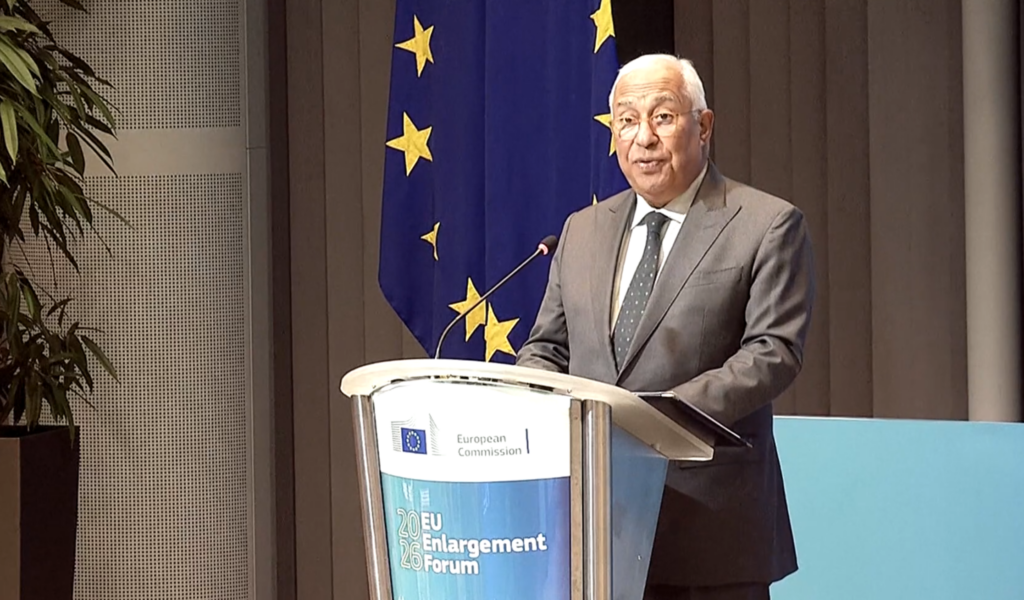
European Commission President Ursula von der Leyen said Montenegro was “approaching the finish line” of EU accession talks as she and European Council President António Costa pointed to “positive momentum” in the bloc’s latest enlargement process at a forum in Brussels on Monday.
Von der Leyen said Albania was “making … progress”, while Moldova and Ukraine were “advancing their European paths” despite “extraordinary pressure”, in remarks delivered at the Enlargement Forum and published by the Commission.
She also called for the EU to use existing treaty tools to keep decision-making effective as the Union grows, and said the Commission was proposing “stronger post-accession safeguards” so that commitments — including the rule of law — are upheld after countries join.
Costa said he had made enlargement a “strategic priority” since taking office and had visited all candidate countries “several times”, according to his speech released by the European Council.
2004 expansion cited in economic figures
Von der Leyen emphasised that real wages had doubled across the countries that joined the EU in 2004, and that enlargement increased incomes per citizen by 10%, according to the Commission.
She said Spanish exports to the member states that joined in 2004 doubled in the following 20 years, Italian trade in goods rose by more than 75%, and Austrian exports to its Central European neighbours tripled.
Costa gave separate figures for the same period, saying that since 2004 more than 100 million people had joined the EU and the shared economy had grown by more than €2 trillion, while countries in Central and Eastern Europe that joined 22 years ago had more than doubled the size of their economies.
He also stressed that the new member states had helped create 26 million jobs, including more than 6 million in their own countries.
Both leaders backed the idea of “gradual integration” — bringing candidate countries closer to parts of the EU Single Market before full membership — with Costa saying benefits “should not begin only on the day of accession”, and von der Leyen linking earlier access to sectors such as energy, transport and digital technologies to reforms by candidate countries.
