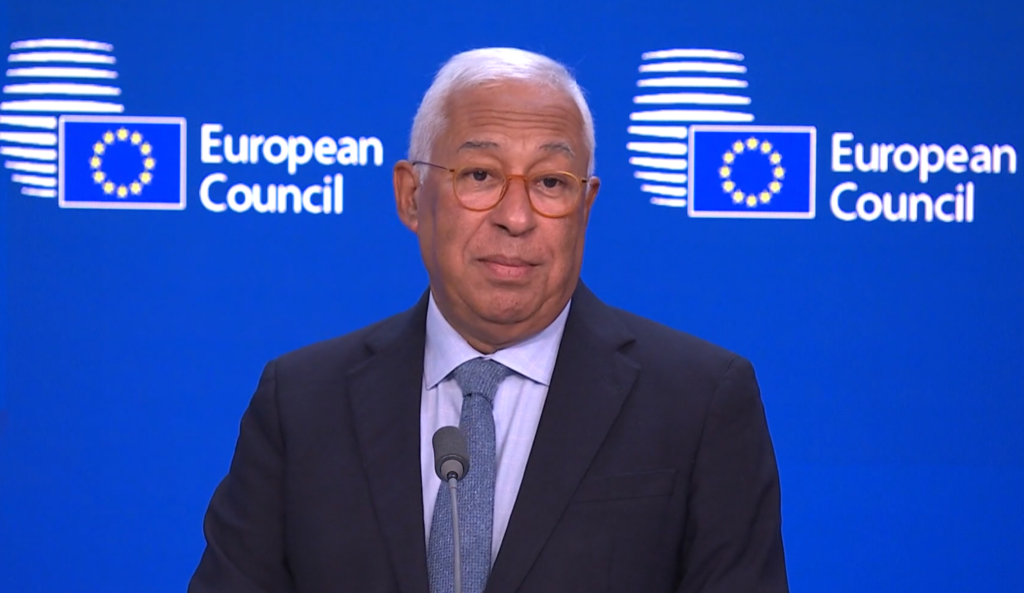
European Council President António Costa has put forward a new proposal to EU member states for the bloc’s next long-term budget, raising planned spending on competitiveness and defence while keeping national contributions close to current levels.
The proposal is part of talks on the EU’s Multiannual Financial Framework — the seven-year budget that sets spending limits and priorities — after the European Commission presented its initial plan in July 2025, the European Council reported on Saturday.
Costa said he and his team met each member state individually to hear concerns and explore options for agreement.
Compared with the current 2021–2027 budget, the proposal would increase funding for competitiveness by 120% and for defence by 232%, while also doubling support for migration management and border control.
Funding to “project Europe in the world” would rise by 23%, the Council added.
Research, students and new housing funding
Horizon Europe — the EU’s main research and innovation programme — would rise by 57% under the plan, while Erasmus, which supports study and training abroad, would increase by 25%.
The proposal includes a target for 35% of spending across programmes to go towards climate and environment measures.
For the first time, the budget would include funding for affordable housing “from the start”, with a focus on areas under housing stress.
Costa also proposed a target for 14% of national and regional funding allocations to contribute to EU social goals.
National contributions would rise on average from 0.80% to 0.82% of member states’ Gross National Income — a measure similar to national income — under the proposal.
To limit the size of national contributions, Costa proposed five new “own resources” — EU-level revenue streams — drawn from large companies’ digital services revenues, the Carbon Border Adjustment Mechanism, non-recycled electronic waste, tobacco products, and the carbon Emissions Trading System.
Together with existing revenue, the package could generate about €60 billion a year, with the ETS and tobacco elements introduced gradually.
Costa’s proposal is 10% lower than the Commission’s original plan — a reduction of €204 billion in current prices — and he said he would continue work with EU leaders over the coming week.
