
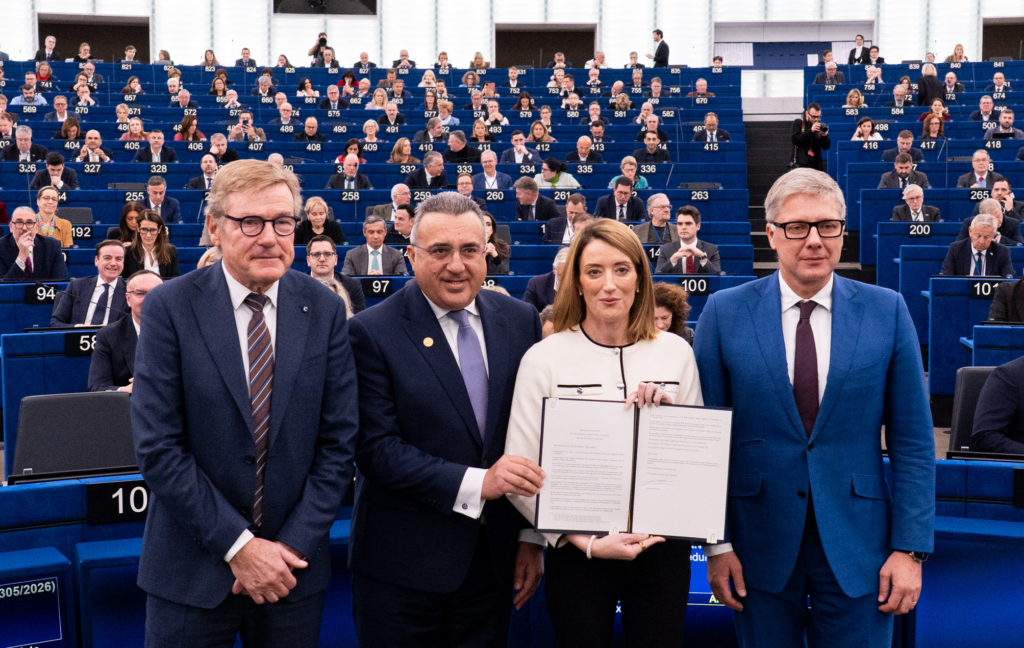
The European Parliament has signed the EU’s 2027 budget into law, setting spending plans that include extra money for research, transport and energy networks, education and civil protection.
MEPs gave the final approval to the last annual budget under the EU’s 2021 – 2027 long-term spending plan in a vote in Strasbourg, the Parliament reported in a statement on Wednesday.
The budget was adopted by 406 votes to 184, with 69 abstentions.
Total spending for 2027 was set at €199.7 billion in “commitments” — legal pledges to fund projects, sometimes over several years — and €211.5 billion in “payments”, meaning money actually paid out.
The commitments figure equals 0.99% of the EU’s gross national income.
Parliament negotiators secured an additional €300 million compared with the European Commission’s original proposal, with the extra funding spread across areas including research, energy and transport infrastructure, Erasmus+ (the EU’s education exchange programme), civil protection, border management, military mobility, neighbourhood policy and humanitarian aid.
Where the extra money goes
The increases compared with the Commission’s proposal include €39 million for the EU’s Southern and Eastern Neighbourhood, €30 million for humanitarian aid and €30 million for border management and migration, the Parliament said.
Research funding through Horizon Europe was increased by €21.5 million and transport and energy networks by €22.5 million.
Erasmus+ was increased by €14 million and the EU civil protection mechanism by €13.5 million, while military mobility and climate and environmental action each received an additional €10 million compared with the Commission’s proposal.
The cost of servicing debt linked to the EU’s Ukraine Support Loan was set at €650 million, in line with the Commission’s proposal, according to the Parliament.
It also said €4.9 billion in additional costs linked to NextGenerationEU — the EU’s post-pandemic recovery borrowing programme — would be handled through a previously agreed “cascade mechanism”.
European Parliament President Roberta Metsola signed the budget into law after its adoption.
The Council of the EU, representing member state governments, endorsed the deal on Monday.
