
MEPs have criticised European Council president António Costa’s compromise proposal for the EU’s next seven-year budget, warning it would set long-term spending at just under 1% of the bloc’s gross national income (GNI).
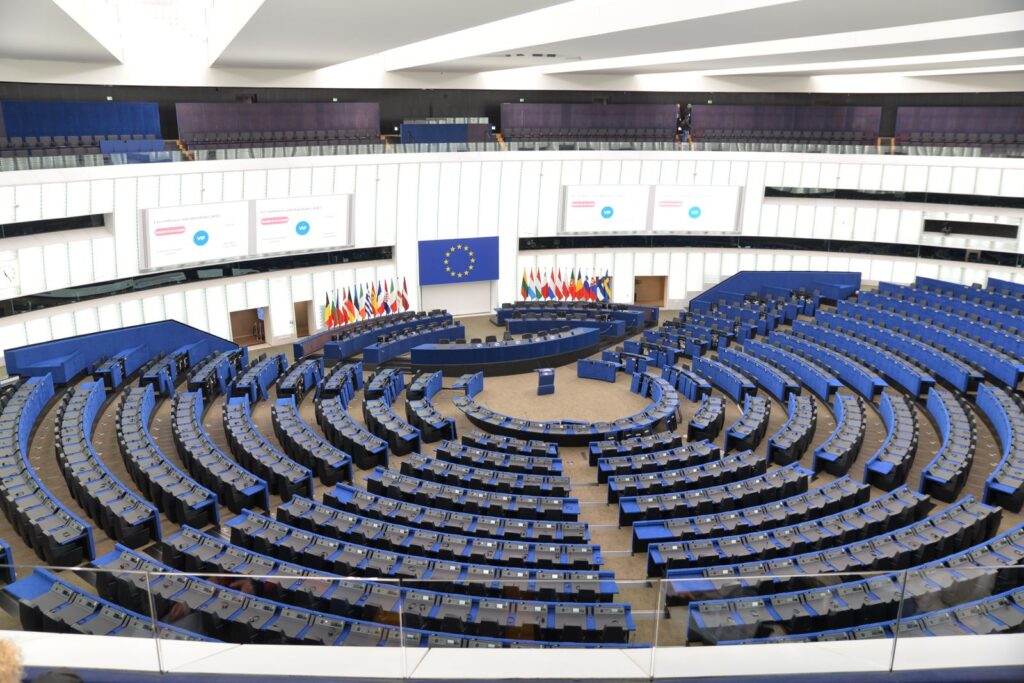
The debate in Strasbourg on Wednesday morning focused on the 2028 — 2034 multiannual financial framework (MFF), the EU’s long-term budget plan, and included Budget Commissioner Piotr Serafin, the European Parliament reported.
Siegfried Mureşan, one of the Parliament’s co-rapporteurs for the MFF, described Costa’s proposal as “a weaker position for a weaker EU”, adding that the European Parliament “cannot support this.”
Carla Tavares, the other MFF co-rapporteur, said a compromise “cannot mean a reduction” and called for a budget that protects social investment, supports the economy, and includes “a fair system of new own resources” — EU-level income streams such as levies.
Several MEPs raised concerns about proposed cuts to spending areas including the Global Europe instrument and policies linked to competitiveness, security and defence, and called for stronger protection for farmers, research, young people and climate-related spending.
Digital and crypto levies discussed as potential new EU income
MEP Danuše Nerudová stated that Costa’s proposal included Parliament’s call to introduce digital and crypto levies as possible new “own resources”, but argued that commitments in those areas were not enough.
Sandra Gómez López said large platforms should contribute to EU finances, and warned MEPs would not accept further cuts “only in exchange” for new own resources,.
Serafin noted that the cuts would leave the budget smaller as a share of GNI than the one agreed in 2020, arguing that comparisons that do not account for inflation are “not convincing.”
In the same plenary week, MEPs endorsed mandates to start negotiations with member states on several budget-related programmes, including Global Europe, the European Social Fund, the Connecting Europe Facility, Horizon Europe, the European Competitiveness Fund, asylum and migration support, and the AgoraEU programme.
The Parliament has previously called for 1.27% of EU GNI for the next MFF, with repayment costs for the Covid-19 recovery fund covered on top of the budget, while the latest proposal would take overall spending below 0.97% of GNI when the Commission’s autumn forecast is used.
