
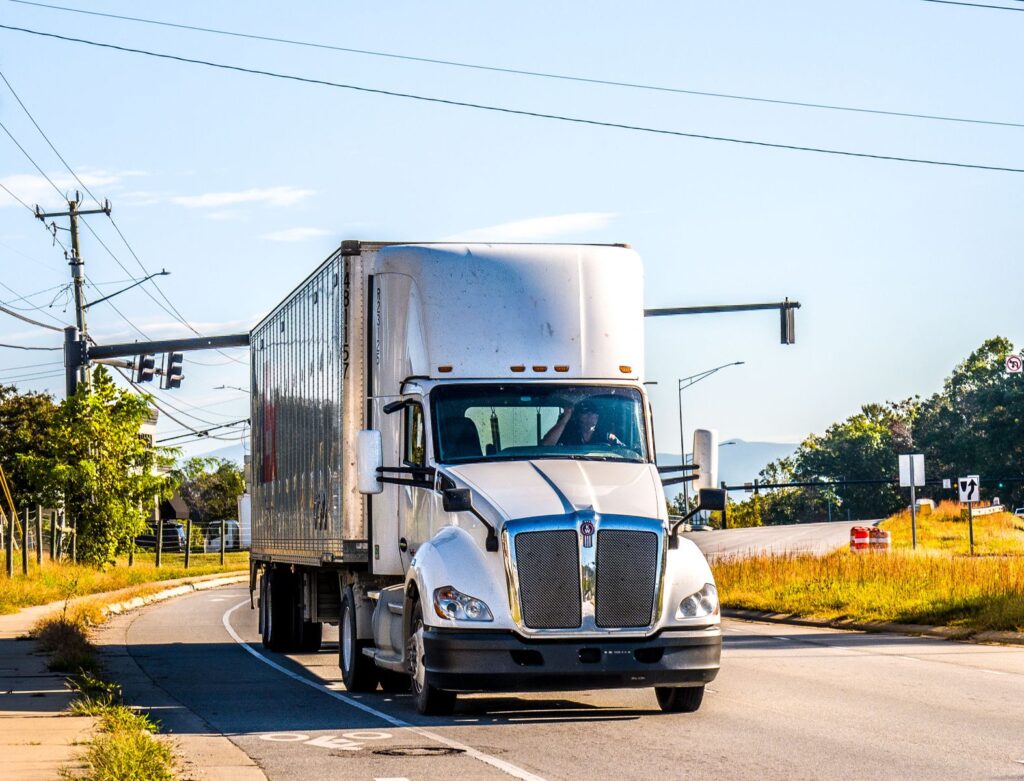
Sales of electric trucks are rising in Europe, but they still make up a small share of new registrations and wider changes are needed to make transport more sustainable.
Electric truck registrations grew by 66% in 2025, reaching 4.2% of new medium and heavy trucks, the European Environment Agency announced on Thursday.
Electric medium trucks accounted for more than 20% of new sales, while electric heavy trucks remained below 2%.
Electric city buses were close to 60% of new sales in 2025, with uptake helped by predictable routes, depot charging and the ability for authorities to buy whole fleets at once.
Heavy-duty vehicles — including trucks, buses and coaches — are a major source of diesel use and emissions, with their greenhouse gas emissions more than a quarter higher in 2024 than in 1990, and accounting for about 42% of the diesel consumed by EU road transport.
Charging networks lag behind truck growth
Most urban and regional operators are expected to rely on depot charging, while long-haul freight will need high-power public charging along major routes, according to the EEA.
The number of public charging points for trucks rose by almost 60% in the first half of 2026, but only about 3% of the trans-European transport network currently meets EU requirements for heavy-duty vehicle charging.
The agency said scaling up would also depend on suitable locations for chargers, sufficient grid capacity and timely connections.
Electric cars and vans are further ahead, with more than one in four new cars registered in the EU in 2025 being electric and public charging covering 73% of the trans-European transport network for cars and vans. Electric vans made up 11.2% of new van registrations in 2025.
Freight activity was about 40% higher in 2024 than in 1995, while rail and inland waterways’ share of inland freight transport fell from 27% in 2012 to 22% in 2024.
Aviation and maritime transport will need efficiency improvements and greater use of renewable and low-carbon fuels where direct electrification is difficult, the agency said, adding that more than 20% of people in the EU are exposed to harmful levels of transport noise.
