
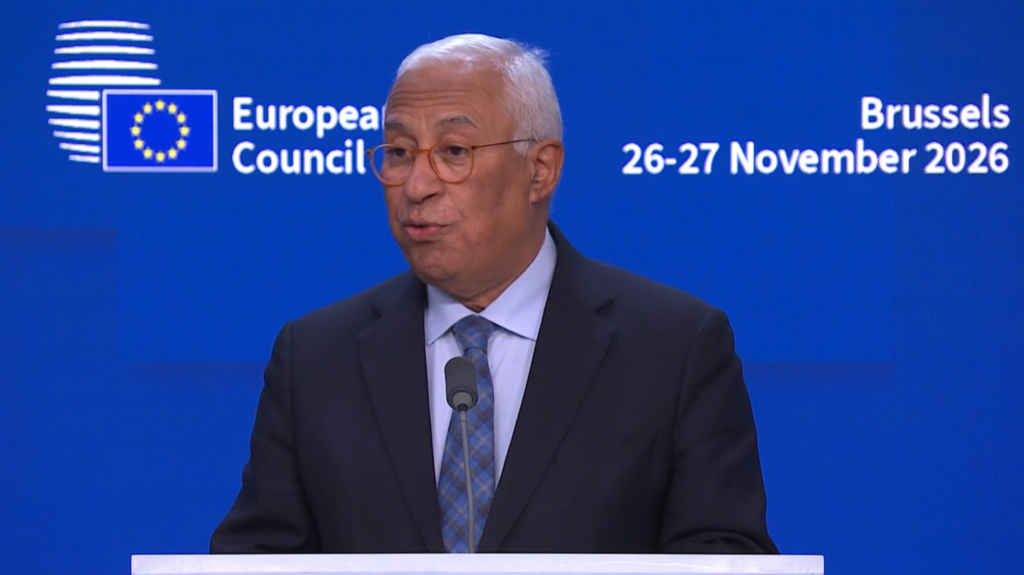
EU leaders have started a formal consultation process on appointing Spain’s Pablo Hernández de Cos as the next President of the European Central Bank, following a Special European Council meeting in Brussels.
The European Council met for the last time with current ECB President Christine Lagarde and commended her work at the head of the eurozone’s central bank, Council President Antonio Costa said in a speech on Thursday night.
He added that EU leaders received a recommendation from the Council of the European Union to designate Hernández de Cos as ECB President, alongside France’s Laurence Boone and economist Markus K. Brunnermeier as the other two members of the ECB’s Executive Board.
The European Council decided to launch consultations with the European Parliament and the ECB’s Governing Council on the three candidates, with a final decision expected at the next European Council meeting in December.
No agreement yet on the EU’s next long-term budget
Leaders also discussed a European Commission proposal for an additional loan to Ukraine, with 24 member states backing the plan, Costa said.
Bulgaria supported the proposal only for its non-military component, focusing on regions with Bulgaria’s national minority, he added, with the issue set to return to the agenda in December.
The meeting’s main item was the EU’s long-term budget for 2028 – 2034, formally known as the Multiannual Financial Framework, Costa said.
Leaders held discussions on the overall size of the budget, how money should be split across priorities, and possible new “own resources” — EU-level revenue sources that help fund the budget — but did not reach an agreement.
Some member states called for further reductions to the overall budget, while most opposed additional cuts and some proposed reversing reductions affecting cohesion funding — money aimed at reducing economic gaps between regions.
A large majority of member states also said funding should not be squeezed for agriculture and cohesion, while work would continue on proposals for new own resources.
