
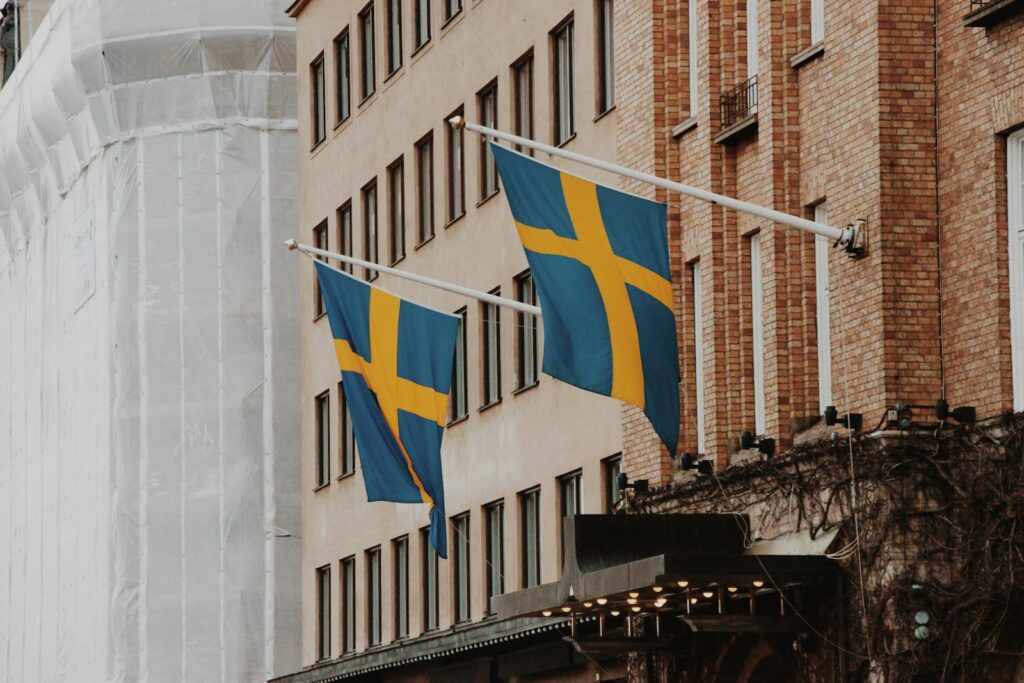
Sweden has agreed to join T2, the Eurosystem’s real-time payment system used by central banks and commercial banks to settle money transfers in central bank money.
The European Central Bank concluded an agreement with Sveriges Riksbank on 25 November, signed at a ceremony involving ECB President Christine Lagarde and Riksbank Governor Erik Thedéen, the ECB informed on Friday.
In a separate decision, the ECB’s Governing Council approved the use of certain securities issued on distributed ledger technology platforms — systems that can record and settle transactions using shared digital records — as collateral for Eurosystem credit operations.
The approval applies to marketable assets issued on platforms licensed under the EU’s DLT Pilot Regime and reachable via TARGET2-Securities (T2S), the settlement platform used for securities transactions in Europe. The change is due to take effect in June 2027.
Banking and financial stability publications
The ECB also published its November 2026 Financial Stability Review on 18 November, after the Governing Council authorised its release earlier in the month.
That edition includes special features on the financial stability implications of artificial intelligence adoption in the real economy and the financial industry, the interaction between AI and cybersecurity, and the implications of large initial public offerings and equity issuance, including links with passive investing.
Separately, the Governing Council approved publication of the ECB’s 2026 study on consumer payment attitudes in the euro area, which found people are increasingly using digital means of payment while cash continues to play an important role.
In banking supervision, the Governing Council did not object to publishing the aggregated results of the 2026 Supervisory Review and Evaluation Process, the annual check-up used by supervisors to assess banks’ risks and set requirements.
The results showed the euro area banking sector continued to be resilient amid heightened economic and geopolitical uncertainty.
