
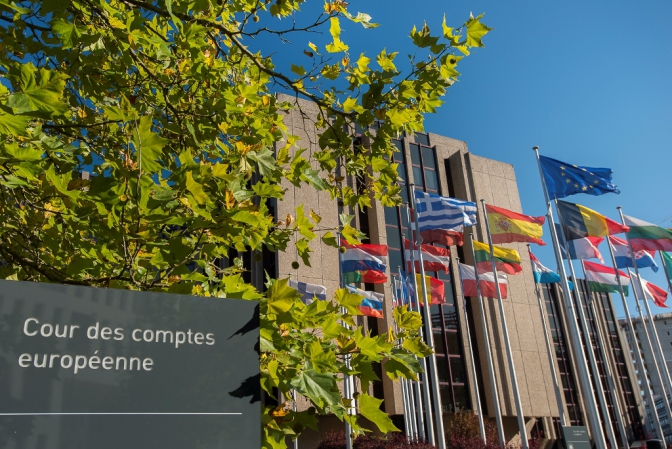
There is little evidence to demonstrate that the bottom-up approach in EU’s programme for support to rural areas in the member states outweigh the extra administrative costs involved, according to a recent audit report by the European Court of Auditors (ECA).
The total budget for the LEADER programme in the 2014 – 2020 period is estimated to €9.2 billion. Out of this, €7 billion come from the rural development component in EU’s common agricultural policy. This is 6.4 % of its total budget and well above the required minimum spending of 5 %.
However, until now, only 39 % of the project costs have been disbursed, which might prove the auditors’ point that the application procedures in LEADER are slow and cumbersome.
The auditors do admit that the LEADER programme, introduced in 1991 for rural areas and later expanded to include urban and coastal areas, has helped to facilitate local engagement. The idea behind the programme is to apply a participatory and bottom-up approach in defining the development needs of local communities.
Local action groups (LAG) are pivotal to this process. They are tasked to design local development strategies and are responsible for initiating and developing projects to meet real local needs on the ground. But this comes at a price as EU is funding up to 25 % of their running costs, a figure much higher than technical assistance in other EU programmes.
The budget for the administrative costs of the LAGs amounts to about €1.7 billion or 17 % of the total LEADER funds. As of end 2020, they accounted for 24 % of the total disbursed money because of the delays in project implementation. Slovakia had not yet disbursed any project money and in Greece and Portugal the administrative cost equaled the project costs.
“The LEADER approach was designed with a laudable goal: to facilitate local engagement and empowerment for the benefit of EU rural areas”, said Eva Lindström, the Swedish ECA member responsible for the audit.
“This entails extra costs and risks, which could be justified if the approach brought additional benefits compared with other types of EU spending programmes. Unfortunately, we did not find tangible proof that this was the case: many of the projects we looked at could have been financed at a lower cost by other EU funds.”
Commission questions audit conclusions
For the Commission, which once initiated LEADER, it is still a success story. According to its reply to the report, the special LEADER method has proven relevant over the 30 years since its introduction and remains valid today. Today, there is a network of 2800 LEADER local action groups in the EU.
The Commission considers that the administrative costs of the local action groups should be seen as investments in local governance and social capital, and that these benefits are intangible and hardly can be calculated. According to the Commission, there is a consensus that social capital is an important growth factor. To this can be added the value of bridging the gap between citizens and EU.
The Commission’s opinion was largely shared by some MEPs at a joint meeting of the European Parliaments’ committees on budgetary control (CONT) and agriculture & rural development (AGRI) on Wednesday, when ECA presented the audit. The MEPs gave examples of how LEADER projects had benefited their countries and were rather in favor of more funding to LEADER.
The audit report presents a wealth of relevant and accessible information on LEADER but gives also the Commission the benefit of doubt when not estimating the benefits of LEADER. Admittedly, such an exercise is not an easy task. ECA preferred to recommend the Commission to include a cost-benefit analysis in its forthcoming evaluation of LEADER. Whether ECA will get the thorough evaluation it expects is not sure.
The audit team drew also attention to the way funding is used. In some EU countries, such as Germany, LEADER or community-led local development money covers projects, such as village roads, street lighting or kindergartens, which are typically statutory tasks to be performed by national, regional or municipal authorities.
Another shortcoming is the underrepresentation of women, young people and other targets groups, such as ethnic minorities, in the local action groups. The Commission does not agree fully on these two issues but will look into them with some caveats.
As regards statutory tasks, which anyway would be implemented without EU funding, the Commission expects member states to respect the eligibility rules but noted that the definition of statutory tasks varies by member states and that flexibility must me allowed for bottom-up approaches to fit the local needs. In other words, one size does not fit all.
Follow-up audit in the right time
In an interview for The Brussels Times, ECA member Eva Lindström described the new audit as a follow-up of an audit in 2010. In that audit, not all recommendations were accepted and implemented by the Commission. “The timing of the audit is good as it coincides with the follow-up of the Conference of the Future of Europe and its focus on the need for citizens’ participation.”
“Strengthening local communities isn’t easy but we definitively noticed a political will to decentralize decisions to the local level.”
That said, she is adamant on that the higher costs in LEADER must be justified. “As auditors, we have an effectiveness approach to EU spending. Citizens do also question how tax payers’ money is spent.” The auditors examined two local actions groups in each of the 10 member states covered by the audit, altogether 95 projects supported by LEADER.
The audit looked into the groups’ own evaluations but they were self-evaluations and cannot be considered as reliable as an independent external evaluation of LEADER.
Just before the LEADER audit, ECA published an audit on the risks of fraud in agricultural spending, in particular its rural development component. No indications of fraud were found in the project sample in the LEADER audit but the audit team noted the risk of conflicts of interest in the LAGs, she said.
A major finding is that statutory local tasks were approved and paid. It is not clear if this contradicted the eligibility rules in LEADER or the overall additionality principle in the structural funds. The audit does not conclude that the rules should be same in all countries.
“We think that there is simpler public funding for such tasks. This is an issue which the Commission should look into,” Eva Lindström explained.
Her own country could serve as an example for other member states. According to the audit, Sweden and Ireland have introduced stricter rules and excluded statutory tasks from LEADER funding.
Overall, the Commission agreed that LEADER is not perfect and that it could be improved. It promised that it will do more to demonstrate the added value of the programme, such as its contribution to social capital and local governance. This rings a bell in the follow-up of the proposals of the Conference on the Future of Europe.
M. Apelblat
The Brussels Times
