
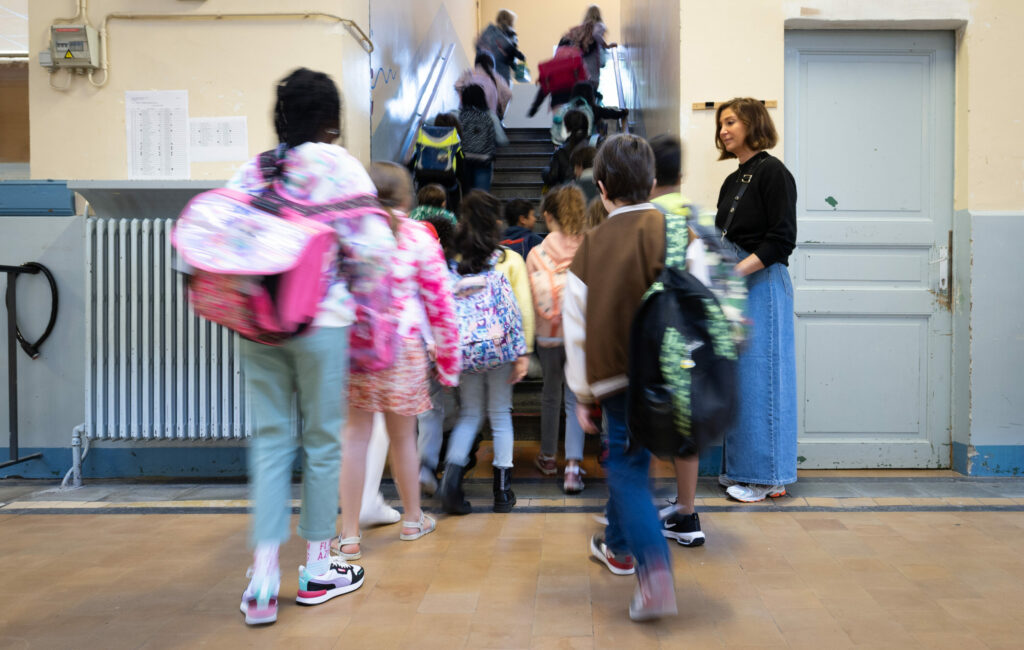
One in four children are at risk of poverty or social exclusion in the EU, according to a UNICEF report published on Monday.
This represents an increase of almost one million children at risk since 2019. After a promising decrease of 3.1 million between 2015 and 2019, the numbers rose again following the Covid-19 pandemic and subsequent economic difficulties such as inflation.
UNICEF's 'The State of Children in the European Union' report also highlights mental health problems, environmental issues and the digital transition as key challenges facing European children and the policymakers responsible for them.
"The EU is one of the most prosperous regions in the world yet high rates of poverty and social exclusion, mental health problems, exposure to pollution, and numerous risks online are depriving millions of children of opportunities, and undermining the potential of the EU’s youngest generation," stated Bertrand Bainvel, UNICEF’s Representative to EU Institutions.
Mental health and 'eco-anxiety'
There are over 11 million children and young adults with mental health problems – predominantly anxiety or depression. These statistics deteriorated significantly during and after the pandemic, when rates of depressive disorders doubled in several Member States.
Anxiety linked to the environment – known as 'eco-anxiety' – impacted almost a third of people aged 15-19 in Portugal (65%), France (58%) and Finland (44%). The report explains that while eco-anxiety should not be pathologised, it should be monitored closely to ensure it does not develop into a disorder.
Environmental issues took a toll on children's physical health as well. UNICEF notes that air pollution has generally improved across the EU since 1990 but urges policymakers to continue pushing for progress. One in 20 young people have been exposed to air pollution, and in 2019, there were 472 deaths as a result of poor air quality. The majority of these individuals were less than one year old.
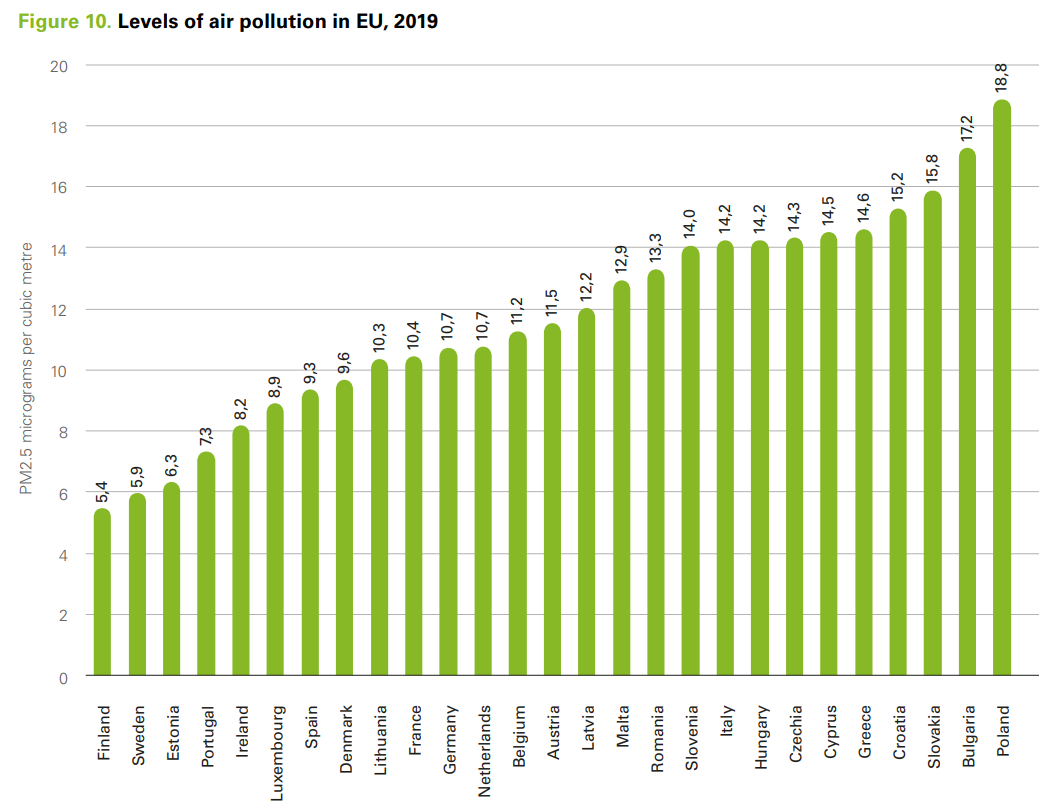
Credit: UNICEF / World Health Organisation
Digitalisation and legislation
UNICEF highlights equally concerning threats in the digital realm. One in eight children as young as 12 regularly receive unwanted sexual requests online. More than one in ten did not feel confident when searching for information online, and one in three said they could not tell how safe a website was.
The timing of the report's publication aims to put children at the top of the EU's legislative agenda following European elections on 9 June. UNICEF is calling on policymakers to improve children's governance (notably by taking health concerns into account in the Green Deal, and safety concerns into account throughout forthcoming digital legislation), invest in critical health services and adopt an EU-wide mental health strategy.
