
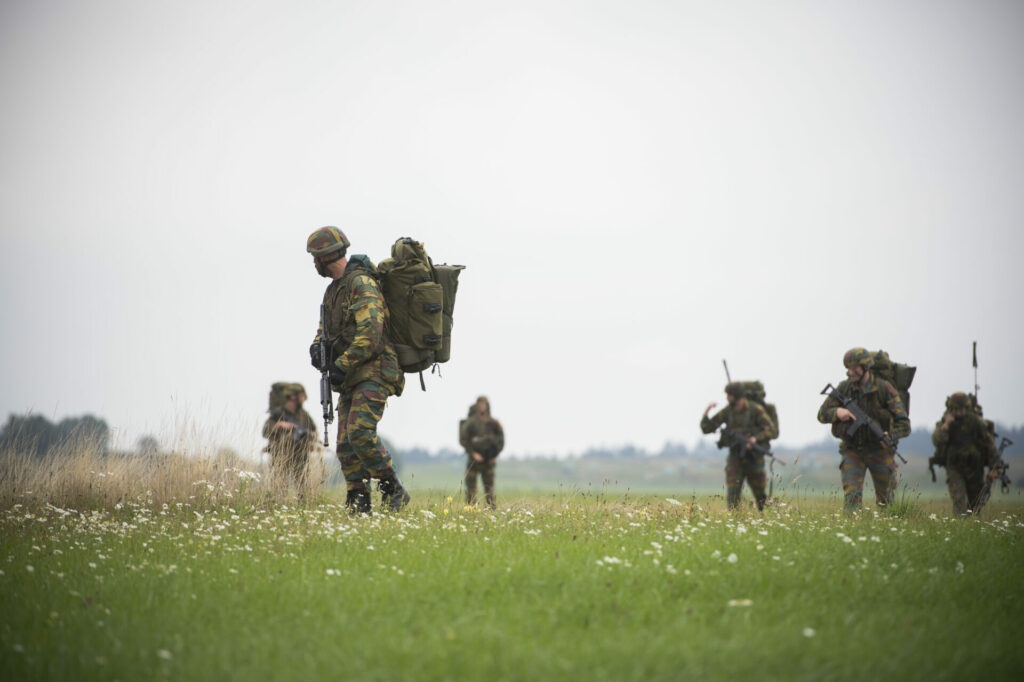
The European Commission presented its first-ever EU defence industrial strategy on Tuesday in a bid to restore European military capacities in the face of growing external hostility from Russia.
Marking the end of a defence policy which dates back to the 1948 Treaty of Brussels, the European Union announced concrete steps to bulk up the readiness of its defence industry. The move comes weeks after Trump's inflammatory remarks about "encouraging" Russia to attack NATO allies who do not meet the spending requirements of membership.
While not directly linked, the prospect of a return of Donald Trump as US President has precipitated a need for higher defence autonomy in Europe.
"Russia's brutal war of aggression against Ukraine has brought back high-intensity warfare to Europe," said High Representative/Vice-President Josep Borrell. "After decades of underspending, we must invest more on defence, but we need to do it better and together."
According to the Commission, to increase European defence industrial readiness, EU Member States must invest "more, better, together, and European". In practical terms, this will mean investing in European production capability rather than relying on exports.
For example, 68% of EU arms purchases for Ukraine are made from American manufacturers, according to European Commissioner Thierry Breton, who is responsible for defence industries.
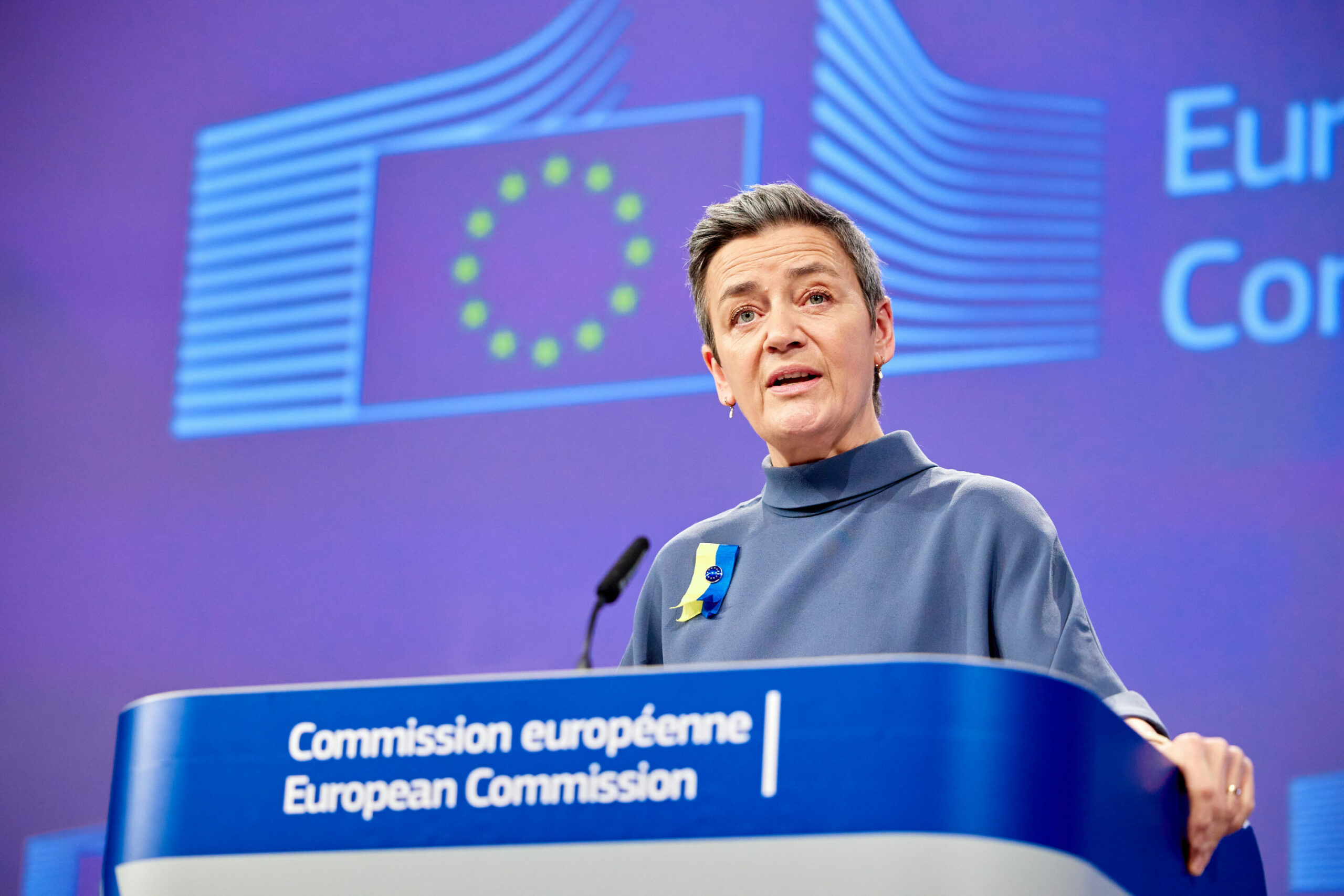
European Commission Vice President Margrethe Vestager. Credit: European Commission
"Our defence spending goes to too many different weapon systems, primarily bought from outside the EU. Now that defence budgets in all Member States are rising sharply, we should invest better, which largely means investing together," said Commission Vice-President Margrethe Vestager.
What is in store?
The European Defence Industry Programme (EDIP) will mobilise €1.5 billion of the EU budget over the 2025-2027 period, which Vestager conceded is "not much money" but will act as an incentive to facilitate cooperation between EU Member States.
National and EU budgets must support the adaptation of the European defence industry to the new security context. This has caused some concern that defence spending will be taken out of public spending.
Under the new strategy, the EU will support initiatives by Member States and European defence companies to develop and bring to the market future state-of-the-art defence technologies and capabilities.
This includes procuring 40% of defence equipment in a collaborative manner by 2030, and ensuring that the value of intra-EU defence trade represents at least 35% of the value of the EU defence market. The Commission wants EU countries to work towards procuring at least 50% of their defence budget within the EU by 2030 – and 60% by 2035.
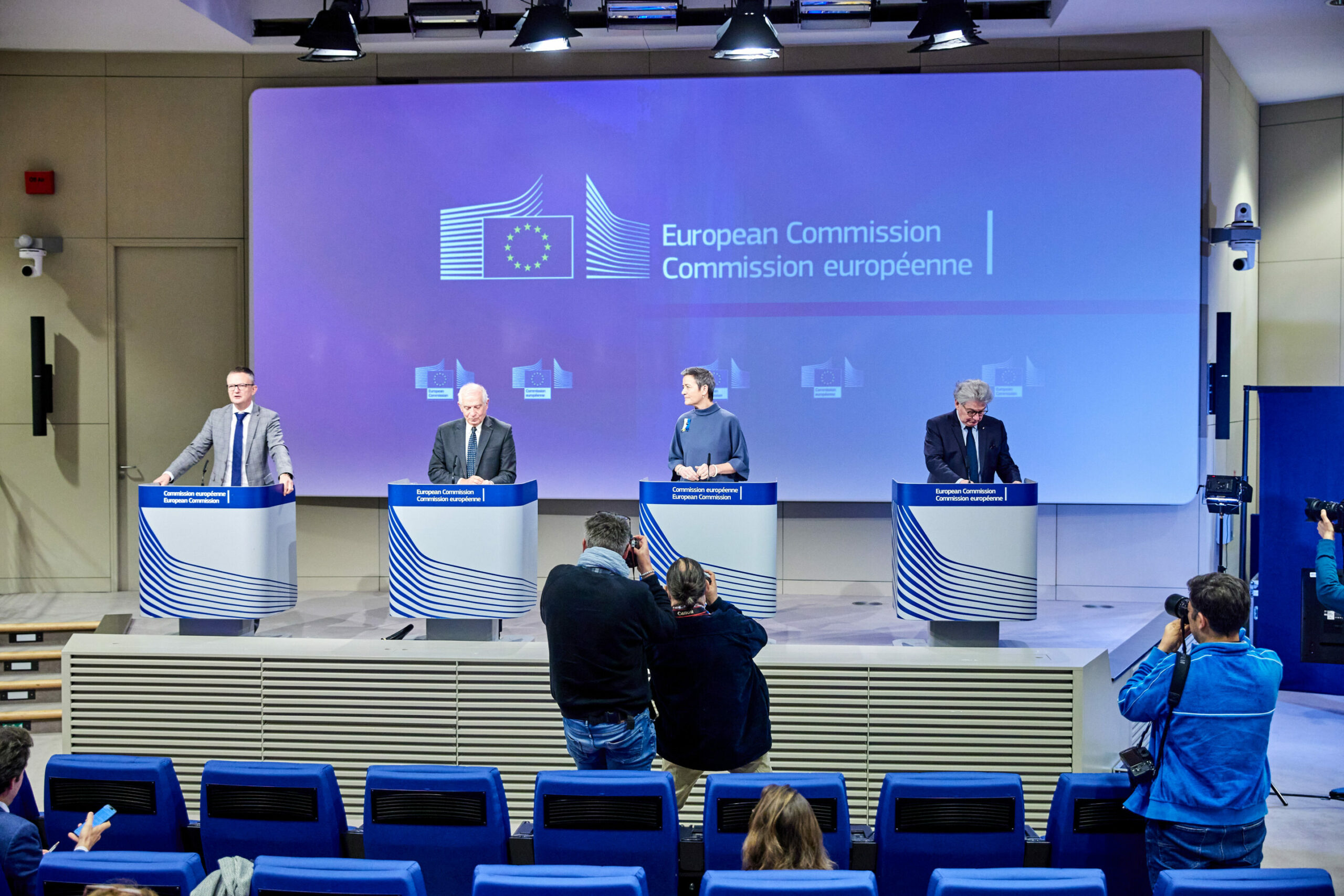
Eric Mamer, Josep Borrell, Margrethe Vestager, Thierry Breton (L-R). Credit: European Commission
Closer defence ties with Ukraine will also form a key bastion, in a bid connect the country's know-how with the European defence industry to facilitate innovation developed on the battlefield.
EU Commissioner for the Internal Market Thierry Breton stressed to reporters that the strategy does not include taking away the competency of defence policy from Member States.
Vestager, meanwhile, stressed the importance of urgently responding to Russia's invasion of Ukraine. "With war on our borders, if not now, then when?" she said.
