
Everyone in the Netherlands has different types of so-called "forever chemicals" per- and polyfluoroalkyl compounds (PFAS) in their blood, according to research by the National Institute for Public Health and the Environment (RIVM).
In almost all people, the concentration of these chemicals exceeds the health limit value (6.9 nanograms/ml), which is considered a safe limit by the European Food Safety Authority (EFSA).
"The fact that people have more PFAS in their blood than the health limit does not mean that people immediately become ill from PFAS. But it does mean that PFAS can have an effect on the body. For example, the immune system may function less effectively," the RIVM said.
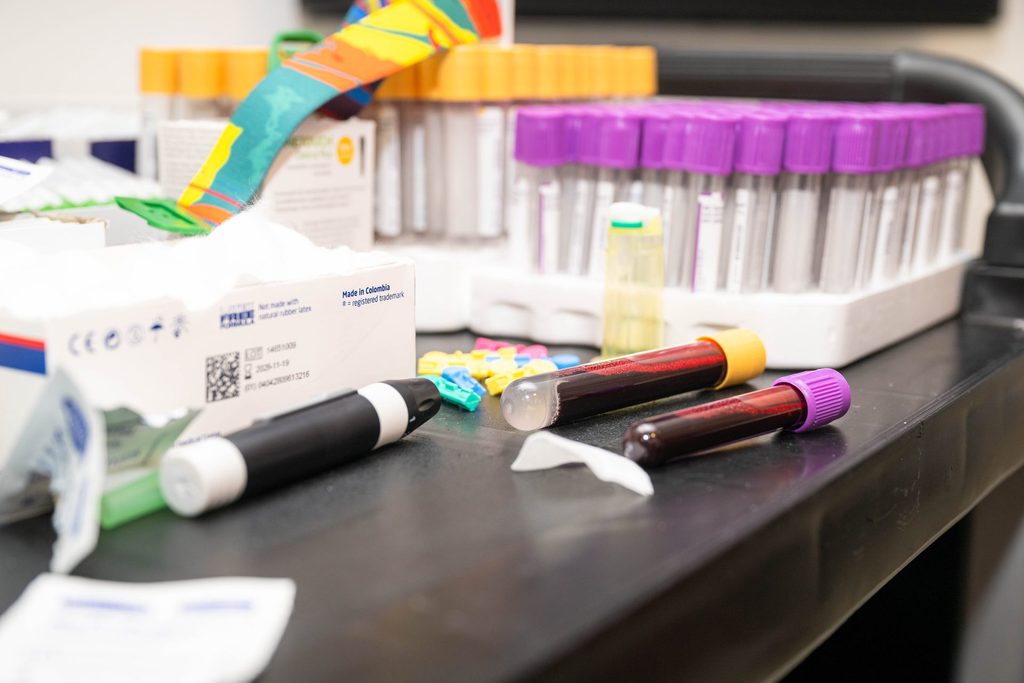
The RIVM examined 28 different PFAS in nearly 1,500 blood samples. At least seven different PFAS were found in almost all blood samples (PFOA, PFNA, PFDA, PFUnDA, PFHxS, PFHpS and PFOS). Five of the substances examined were not found in anyone. The chemical most frequently found in the blood was PFOS (perfluorooctane sulfonates), followed by PFOA (perfluorooctanoic acid).
The effects depend on the amount of PFAS, the duration of exposure and a person's personal health situation.
Monitoring situation
This is the first national study in the Netherlands into chemical substances in the blood. "With this knowledge, we will be able to monitor whether measures to reduce exposure are effective in the future," explained the RIVM.
PFAS (per- and polyfluoroalkyl substances) are chemicals that do not break down easily and accumulate in the environment and in organisms. They are found almost everywhere and are also present in low concentrations in food and drinking water. The substances are used by industry in products such as waterproof clothing, non-stick frying pans, food packaging, carpets, cosmetics and fire extinguishing foam.
"It is almost impossible for people to avoid contact with PFAS. These substances are found throughout the Netherlands in the soil, food and drinking water," the RIVM said. "The Nutrition Centre advises eating a varied diet to reduce PFAS intake."
Previous research has shown that the substances can affect the reproduction and development of the unborn child. PFAS variants can also "affect blood cholesterol levels, have effects on the liver and cause kidney and testicular cancer," said the RIVM.
The RIVM examined 1,500 blood samples from across the Netherlands, taken in 2016 and 2017. In follow-up research, the institute will also analyse samples taken this year.
