
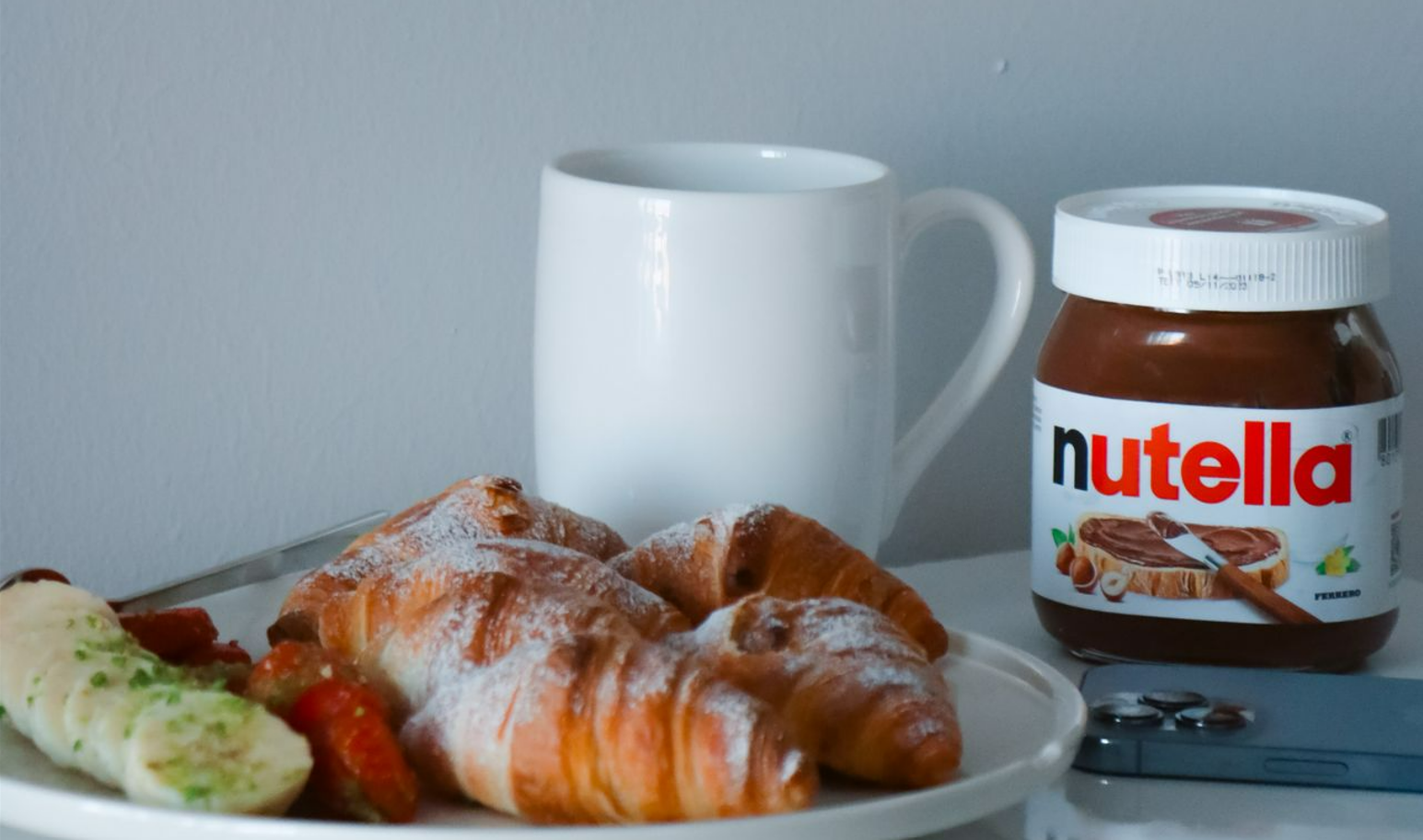
Mention hazelnuts and my mind goes straight to Nutella. That silky, chocolate-hazelnut spread, which makes you want to eat it straight from the jar with a spoon until your back teeth are stuck together and your throat is tingling with an impossible, addictive sweetness.
So, in my very geographically-biased mind, I always thought hazelnuts were quintessentially Italian and che fortuna for the rest of world that they used it to invent the most sinful chocolate spread ever made.
I was therefore quite astonished to discover that the hazelnut is also native to Belgium, and it’s not even the case that some Italian chap settled here and brought it over with him. No, the hazel tree has been part of the Belgian landscape for thousands of years: as the climate warmed after the last Ice Age, the hazel tree made its way northwards into Belgium, where it found exactly the sort of woodland it likes and has been growing ever since.
The hazelnut tree’s official name is Corylus avellana. The Corylus bit comes from the Greek word meaning ‘helmet’, which refers to the cup-like husk that covers the base of the nut. I love it! Now when I’m on the bike, I feel like I’m part of the Odyssey cast with my corylus. The second word refers to Avella, an ancient town in Campania, Italy, (see!), famous for its hazelnuts.
I say ‘tree’, but it’s not exactly a single-trunked tree. It’s more like a shrub. Actually, more like someone dressed as a shrub. If you squint, you can easily imagine Macduff hiding behind it as he marched through Birnam Wood in Macbeth. Look at it, and tell me if it doesn’t look straight out of theatre props.
Smart squirrels and good fats
In a few months’ time, in January, there’ll be another reason to notice it: its flowers, the strange yellow catkins dangling from the branches. By September, they have done their job and the nuts are nice and ripe, which is precisely why it deserves to be the star plant of the month.
As humans, we took a while to warm up to the hazel seed. Squirrels, jays and woodpeckers had got there long before us, harvesting and eating them for thousands of years. At some point, a human must have looked at a squirrel eating a nut, and then looked back up at the tree covered in oily, nutritious seeds and thought: hang on, this looks promising.
What more, the nuts appeared just before winter, at a time when finding food rich in fat and energy was very, very good news. Even better, the hazelnut came in an excellent little package: compact, portable and relatively easy to store for the scarce months ahead.
It’s no surprise, therefore, that our guts love hazelnuts. We have been eating them for thousands of years, and we have the evidence for it: hazelnut shells are a common find at prehistoric archaeological sites across Europe.
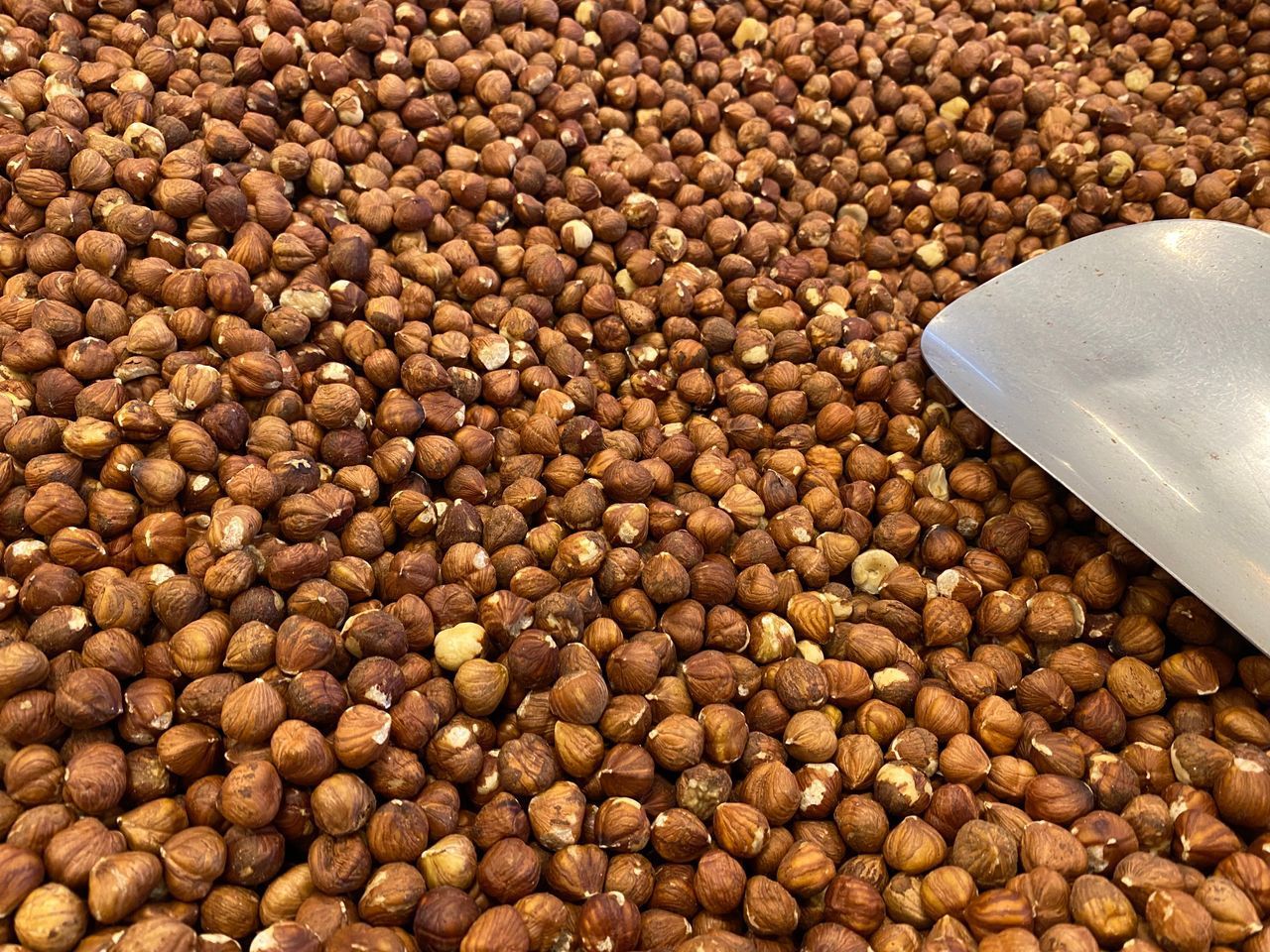
The things is, when you look at what is packed inside a tiny hazelnut, it’s almost enough to make you gasp in awe. For such a tiny seed, it contains an impressive amount of what the body needs: healthy fats, protein, fibre, vitamins and minerals, all wrapped up in one very small speck.
As a minimum, hazelnuts contain a generous amount of fibre, which is great for the digestive system, helps us feel full and, perhaps most importantly, keeps our gut bacteria well fed. There’s some protein in there too. Obviously, we’re not talking sardines or eggs, but just enough to give our muscles a little helping hand.
And then there’s vitamin E, that helps protect our cells from damage, along with magnesium, copper, manganese and folate. All of that in one hazelnut. Isn’t it impressive?
Credit: Pexels/Ercan Evcimen
There’s more: hazelnuts are particularly rich in monounsaturated fat, which is the kind of fat we actually want to be eating. I know fat has had a bad reputation, particularly in some of the westernised countries where we come from (Belgium has largely been spared that).
But (good) fat is important. We need it for energy, for our cell membranes, to make hormones and to absorb certain vitamins. Sadly, this has not been the marketing message from the low-fat industry. And the hazelnut, like all other nuts, has suffered from bad press, which upsets me greatly.
Many of my clients have spent their whole lives avoiding nuts because "they’re full of calories" or "they’ll make me put on weight". Yet study after study suggests that, despite being calorie-dense, nuts don’t appear to cause the weight gain we might expect. Au contraire, people who eat nuts regularly tend to keep the same weight and even have better heart health.
Incidentally, the calories listed on the packet are not necessarily the same as the calories your body actually absorbs. Let’s unravel this a little.
The standard calorie figures on food labels are generally calculated using something called the Atwater system, which estimates how much energy we get from the fat, protein and carbohydrates in a food. But food is more complicated than that. The way a food is structured, how finely it has been chewed or processed, and how much of it our bodies can actually use, all affect how much energy we absorb.
Hazelnuts. Credit: Belga/Maxime Asselberghs
Nuts are a particularly good example. Much of the fat in a nut is tucked away inside its plant cell walls. When you chew a whole nut, you don’t break open every single one of those cells. Some of those tiny fat-containing cells remain sealed and, as you swallow them, they pass through the digestive system without being fully absorbed, and then, ta-da, come out with your stools. Therefore, the number of calories indicated on the packet is higher than the actual number your body gets.
There’s another important detail: how you eat the nut matters. Whole or coarsely chopped raw nuts generally leave more of those fat bubbles untouched. However, when nuts are industrially ground into flour, the process breaks open many more cells, making more of the fat available for absorption by the body.
So, try and eat your hazelnuts whole or chop them in your home food processor – a few pulses in your kitchen won’t have the same breaking walls affect as nuts pulverised into flour on an industrial scale.
In a nut shell (I couldn’t help it), hazelnuts make an excellent addition to our diet. A handful can keep you feeling full and help keep hunger at bay until your next meal.
Of course, at this point you might be asking, erm, so what about Nutella? Well of course, there’s no denying that it’s delicious, but the stark truth is that it is a few hazelnuts which found their way into a jar with lots of palm oil, lots of sugar and a little bit of cocoa. So, I think of it as indulgent dessert rather than breakfast.
The hazelnut itself is another story altogether. Nature has done a good job there – it deserves to be enjoyed in its own right.
How to add nuts to your food repertoire:
Breakfast: Sprinkle chopped hazelnuts over kefir, yoghurt and berries in the morning.
Salads: Scatter a handful over a salad for crunch and a little extra richness.
Soups: Roughly chop and sprinkle over soups.
Snack: Keep a small handful to nibble on when you need something between meals.
Cooking: Use them in pesto, sauces or as a crunchy topping for roasted vegetables.
