

Young Flemish people today are drinking considerably less alcohol according to a study by the Vlaams Expertisecentrum Alcohol en andere Drugs (VAD) that was published last week.
During the 2024-2025 school year, roughly 37,000 Flemish students aged 12-18 from 65 secondary schools were surveyed, and the results suggest that there has been a continuous long-term decline in the frequency that adolescents are using substances.
However, not all trends have been positive.
Young people are drinking less
At the turn of the millennium, 86.5% of students reported that they had consumed alcohol at least once in their lives. Twenty-five years later, that figure has fallen by 40%.
Out of the students surveyed, 53.6% reported they had never consumed alcohol, and another 40.3% claim they had consumed it at least once in the previous year. Only 9% stated they drink at least once a week. How frequently boys and girls drank was relatively similar across all timeframes.
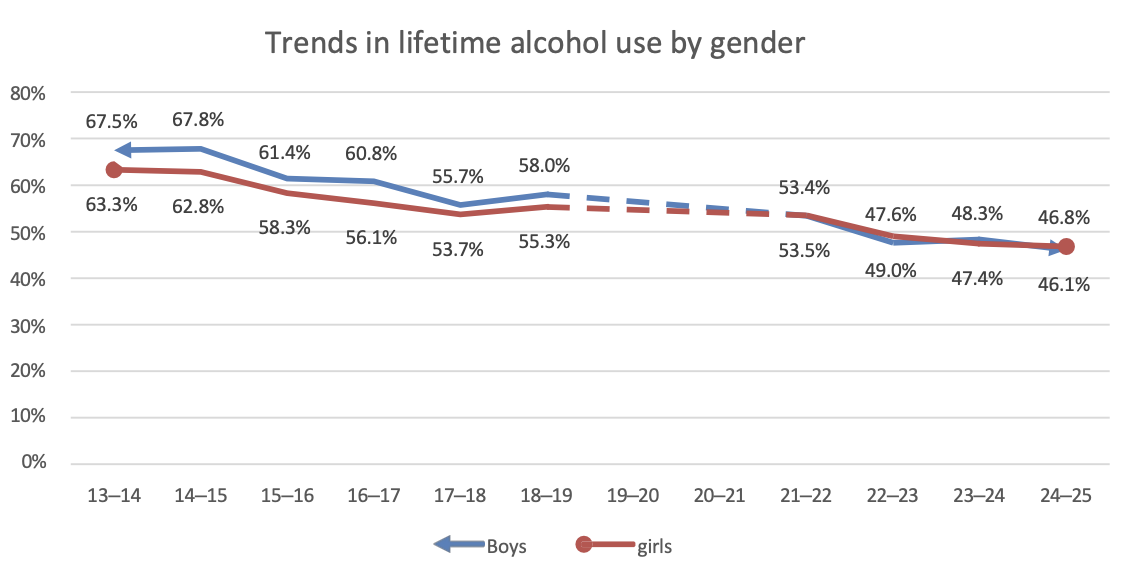
Credit: VAD
The age at which students first drink alcohol has also slightly increased. In 2010-2011, the average age that students first consumed alcohol was 13.6; in 2024-2025 that average rose to 14.7.
The side effects
Despite a positive downward trend in overall consumption, negative side effects from drinking are still heavily affecting young drinkers. Around six out of ten students who consumed alcohol within the previous year reported at least one negative consequence as a result of drinking. These consequences ranged from feeling physically unwell or regretting something they did while drinking, to more serious incidents involving fights, property damage or run-ins with the police.
It’s also important to distinguish that while fewer students are drinking than in previous generations, some alcohol-related problems have become more prevalent compared to a decade ago. According to the study, emergency room visits for young people are much more common after drinking today, a change they attribute to the increase in binge drinking.
From 2024-2025, 23% of students reported binge drinking at least once, a percentage that rises to 46% among 17-18 year olds. Other factors like education level show little to no correlation with how often people engage in heavy drinking, according to statistics published late last year for For a Healthy Belgium.
Binge drinking, as defined by VAD, is categorised as consuming large amounts of alcohol in a two-hour span. For women, consuming four glasses of alcohol in that time span would be considered binge drinking, and for men the number rises to six.
VAD Director Katleen Peleman stated in a press release that the overall decline in youth drinking is encouraging, but continued prevention efforts are needed to combat negative drinking habits, like binge drinking.
“These trends clearly show that prevention works,” she stated. “Young people are drinking less and delaying alcohol use longer than in the past. At the same time, we’re seeing some positive trends weaken. If we want to achieve further health gains, we must continue to invest in prevention among young people, but also in alcohol prevention in society as a whole.”
Broader EU trends
Interestingly, the decline in alcohol consumption among young people in Flanders coincides with changing drinking habits across Europe. A Eurostat report published on Monday suggests that drinking frequency varies considerably by age.
Only 0.8% of 16-24 year-olds reported drinking alcohol daily, a full 8% lower than people aged 65 and over. Men were also more likely than women to drink at least monthly, at 56.5% compared to 35.9%.
However, these figures can’t be directly compared to VAD’s study, as Eurostat's figures don’t cover drinking habits of EU citizens aged 12-15.
Potential causes of the decline
The reasons behind the long-term decline in alcohol consumption can’t be easily defined. One possible explanation is that prevention efforts have become more prominent across Belgium.
Belgium recently tightened its rules on alcohol advertising, including restrictions on advertising in media where a significant share of the audience is under 18. Alcohol advertisements must also now provide an “alcohol is harmful to health” message.
However, it is likely too soon to determine the long-term effectiveness of the recent government restrictions.
Changes in young people's social lives and attitudes towards alcohol may also play a role. Alcohol could be less appealing or drinking might just be less central to how certain young people are socializing.
