
Humans mourn their dead but also their companion pets. A recent scientific paper describes a behaviour among animals which appears human to us and which has been documented in a variety of species - the gathering around the dead.
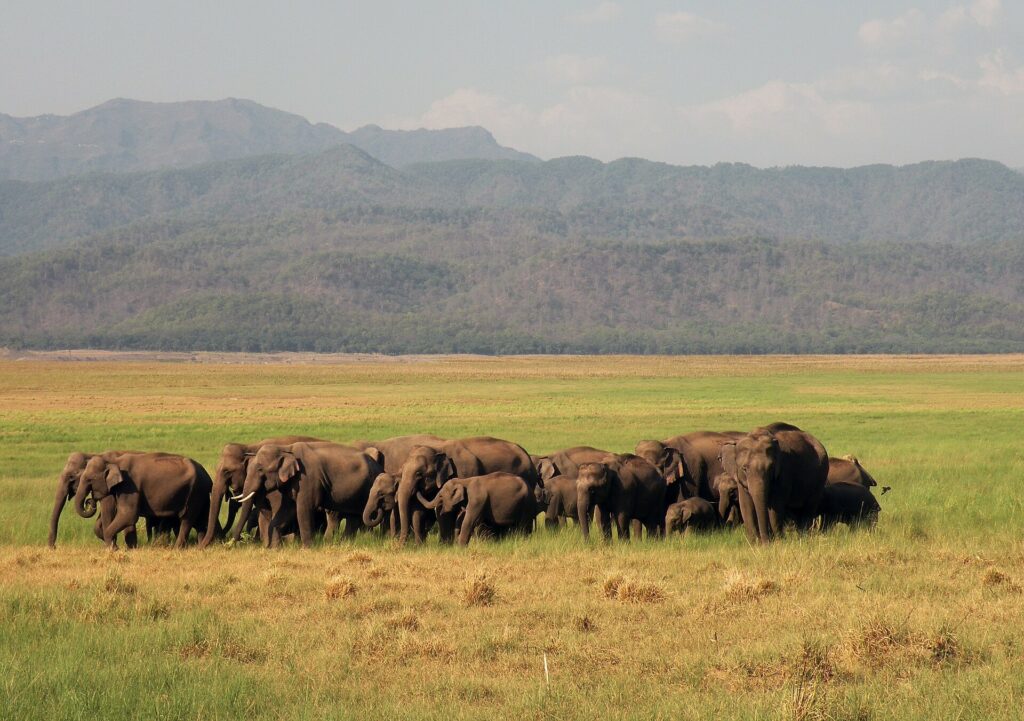
Examples include elephants traveling long distances to visit carcasses, chimpanzee mothers carrying the bodies of their deceased infants for weeks, and crows calling out to others of their kind to congregate around a dead crow. This behavior is both dangerous and costly, leading to exposure to diseases and predators, and raises the question as to why evolution has not eliminated it.
The paper was published last September in Ethology, an international journal of behavioural biology, by co-authors Dr Jacob Dembitzer and Dr Dror Ben-Ami at the School of Zoology and the Steinhardt Museum of Natural History, Tel Aviv University.
In their paper, they reviewed evidence of this behaviour and proposed an explanation: a carcass serves as a repository of information regarding the cause of death. Consequently, gathering around it allows large groups of animals to learn about environmental dangers and adapt to them rapidly.
According to their model, the distress experienced by those close to the dead animal (such as a parent, offspring, or mate) triggers the expression of unusual emotions and behaviors. This, in turn, draws others to congregate—whether out of curiosity or a desire to comfort the bereaved—effectively turning the gathering into an "information center”.
It does remind us about our own mourning but also how companion animals mourn their departed owners. The link to wild animals is not always clear, Jacob Dembitzer told The Brussels Times. But he identifies a common pattern, though more difficult to observe in the wilderness.
“An animal’s grief-related behavior depends largely on its social system,” he explained, “for instance, whether it lives in a multi-level society or within a group, and the nature of its social interactions. There is no fundamental distinction here between primates and other mammals.”
Why do animals gather around a deceased member of their group? According to Dembitzer, they gather driven by various emotions, including, perhaps, grief. “These emotions prompt them to congregate, which allows them to gather information about what occurred—much like at human funerals, where information is exchanged (e.g., determining the cause of death).”
While the animals may seek to understand the cause of death, in most cases, the group member has been killed by a predator. The survivors possess an instinctive drive to avoid such threats. Predation is, in fact, the most common cause of death. Sometimes, remains of the dead animal are left behind.
The costs of interacting with corpses are balanced by consolation of bereaved or stressed individuals, enhancing social bonds, facilitating the renegotiation of social positions, and gaining knowledge of threats in the environment, he summarized the paper.
Gathering around the dead provides individuals with a much-needed time to strengthen their social bonds. Social cohesion has been found to be maintained by elephants that inherit their role in the hierarchy from their poached mothers. Time spent around the corpse was found to be used to assert dominance in the hierarchy by gorillas.
Who "grieves" the most? Often, it is the mother, as she is typically the closest to the deceased. She may emit cries or unusual vocalizations—reminiscent of behaviors seen at human funerals—and other animals may approach to "console" her. This phenomenon has, to some extent, been empirically verified.
Their paper is a meta-study that synthesizes previous observations of such behaviors, combined with theoretical analysis and hypothesis testing—specifically, the "funeral hypothesis" regarding information-gathering events. This field of research has gained significant momentum over the last decade.
The paper proposes empirical studies to investigate factors such as the duration of these gatherings, whether animals return to the site (the "burial" or death site), or whether they conversely avoid locations where group members have died.
Jacob Dembitzer believes that a greater understanding of animals' grief-related behavior can also contribute to improving animal welfare. When an animal has died for example in a zoo, the body is immediately removed for to prevent contamination or distress to the public. However, grief research demonstrates that species like elephants and cetaceans cope better when given time to process a death.
He agrees that wildlife rehabilitation centers should incorporate "social healing", pairing traumatized orphans with surrogate adult matriarchs to actively treat the psychological wounds of grief. This would increase their survival rates when re-released into the wild. If animals can suffer from “emotional heartbreak” because of a loss or separation from their offspring, it should be dealt with in animal welfare.
