
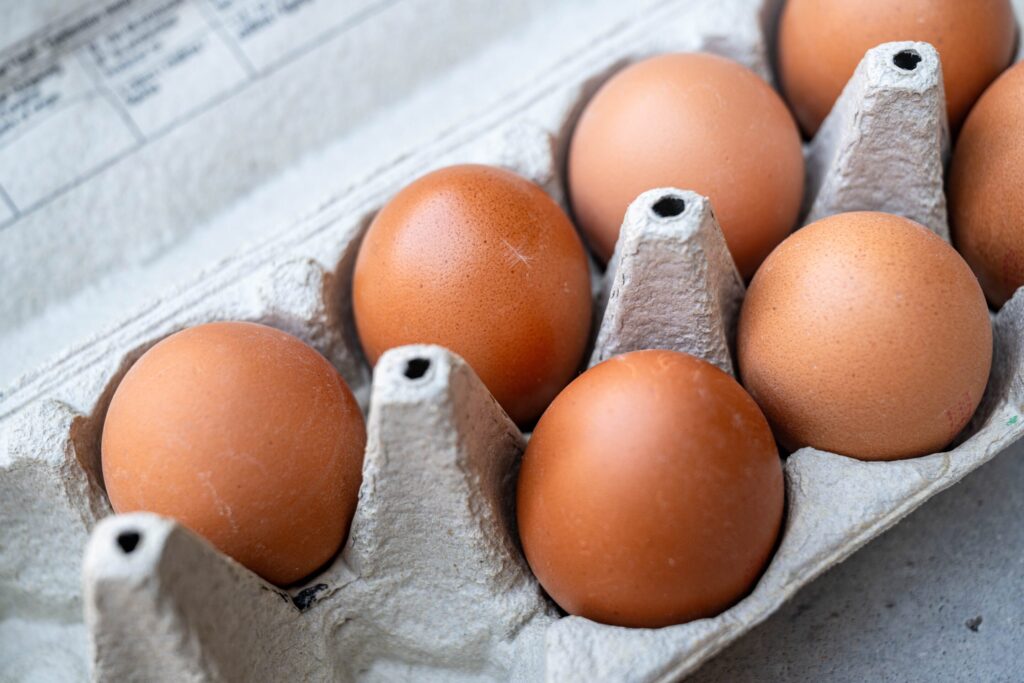
Kristina Chetcuti, a registered health coach (UKIHCA) specialising in behaviour change and lifestyle medicine (ELMO), answers your lifestyle dilemmas.
Q: “I followed the discussion in The Brussels Times about whether we should keep eggs in the fridge with interest. But I actually have a more pressing question: should we be eating eggs at all? Are they good for us or bad for us? I’m so confused.”
A. I’m glad you asked this question because we’re actually all very confused.
Before the 1950s, an egg was just an egg. It was de rigueur to eat it for breakfast, in innumerable shapes and forms: boiled, poached, fried, scrambled or as an omelette, depending on where you lived.
In 1861, Mrs Beeton was already explaining how to cook the perfect (British) breakfast egg.
In Ancient Greece and Rome, eggs from chickens, ducks, geese, quails and other birds were part of the staple diet. Why, the Romans were so fond of their eggs that they even had specialist egg sellers (egg-sperts?!).
And further back still, archaeological finds in South Africa suggest that some 60,000 years ago people were tucking into ostrich eggs (1.5kg, the size of a rugby ball, imagine trying to boil that for breakfast).
So, long before the domestication of chickens, and before cholesterol tests, food pyramids or dietary guidelines came along, eggs were already a happy source of nourishment.
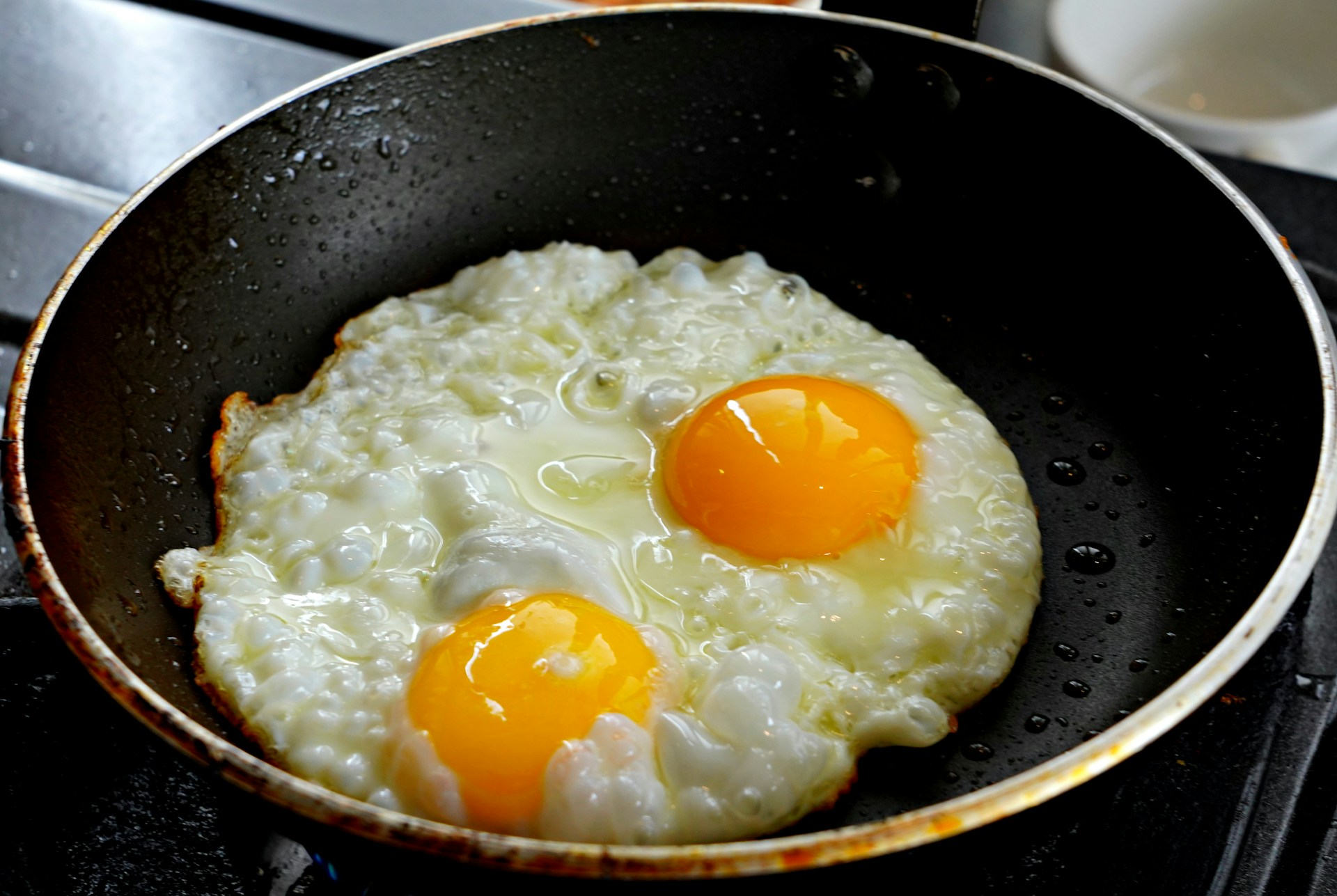
Credit: Unsplash
Then the whole thing went scrambled with Ancel Keys, an American physiologist who came up with what became known as the diet-heart hypothesis. His research suggested that people eating diets higher in fat had higher blood cholesterol levels and more cardiovascular disease.
But there were two problems with the thinking that followed, which would have a particular impact on the poor cholesterol-rich egg yolk: first, dietary cholesterol was lumped together with dietary fat, despite being two different nutritional components; and second, the research was far from conclusive.
Yet, it so happened that in 1955, American President Eisenhower suffered a heart attack. And it so happened that Keys had the ear of the President’s personal doctor, who became a prominent advocate of the diet-heart hypothesis.
By 1968, the American Heart Association was recommending that people go slow with egg consumption because of their dietary cholesterol.
The yellow bogeyman
Suddenly, the humble breakfast egg had become a national nutritional concern, and the message spread well beyond America's borders, setting off a dramatic domino effect. Egg consumption plummeted. People swapped their poached eggs for bowls of Coco Pops or Frosties.
Kitchens across the Western world began ditching the yolk, where all the dietary cholesterol was, and using only the egg whites. The poor yolk became the yellow bogeyman.
This went on throughout the 1970s, 80s, 90s and even into the noughties. What had started as a scientific hypothesis had become a rule about what people should put on their breakfast plates.
Eventually, researchers started speaking up. "Hang on a minute," they said, "cholesterol found in food does not necessarily affect cholesterol in the blood. The liver makes its own cholesterol and can adjust how much it produces."
So, it isn't simply a case of eating cholesterol and watching your blood cholesterol levels rise. In fact, you can avoid eggs and other foods high in cholesterol and still have high blood cholesterol levels.
And so it was that the egg rehabilitation began a mere ten years ago, when the new US guidelines dropped the previous limit on how much cholesterol people should eat, recognising that dietary cholesterol was not, in itself, a major cause for concern for the general population.
Credit: Unsplash
From then on, the focus began to shift towards what we eat overall. Researchers were beginning to recognise that food doesn't operate in isolation, and that the effect of one particular food depends on what else you're eating, as well as your genetics and wider lifestyle.
This is a rather long-winded way of saying that, finally, today we acknowledge the egg's high nutritional value. Yes, the egg white is a trove of high-quality protein, containing all nine essential amino acids.
But the yolk, ah, that’s a totally different story. It contains healthy fats, fat-soluble vitamins A, D, E and K, B vitamins, including B12! It contains important minerals such as selenium, phosphorus and iron! It contains carotenoids, which are great for eye health! And it also contains choline, which helps the brain and nervous system to function better! Franchement, nature is simply incroyable.
This, of course, brings us to the hard-boiled question: how many eggs a day should we be eating? Ouf, we're walking on eggshells here. As things stand, an egg a day is a reasonable choice for most healthy adults.
Of course, this isn't a universal prescription, because we have to factor in the rest of our diets, our individual cholesterol response and our general health. And most definitely, people with cardiovascular or metabolic diseases should follow the advice of their GP.
It’s also good to keep in mind that there are plenty of other excellent protein sources: lentils, beans, chickpeas, tofu, nuts and fish. The trick is not to put all our nutritional, ahem, eggs in one basket. I hope this helps to clear up the confusion.
Fun egg-stra facts
Are brown eggs healthier than white eggs?
The colour of the shell is determined largely by the breed of hen, so it makes no difference to the egg's nutritional quality.
Does a darker yolk mean a healthier egg?
Yolk colour is largely determined by the hen's diet. Hens eating more green plants, grass and certain grains may produce eggs with more intensely coloured yolks. But a pale-yellow yolk isn't necessarily nutritionally inferior. The egg still contains protein, choline, vitamin B12, selenium and other important nutrients.
What came first, the chicken or the egg?
The egg, without a shadow of a doubt. At some point in evolutionary history, two birds that were almost, but not quite, chickens mated. A genetic mutation occurred in their offspring, and the first animal we would classify as a true chicken hatched from an egg laid by a bird that wasn't quite a chicken.
