
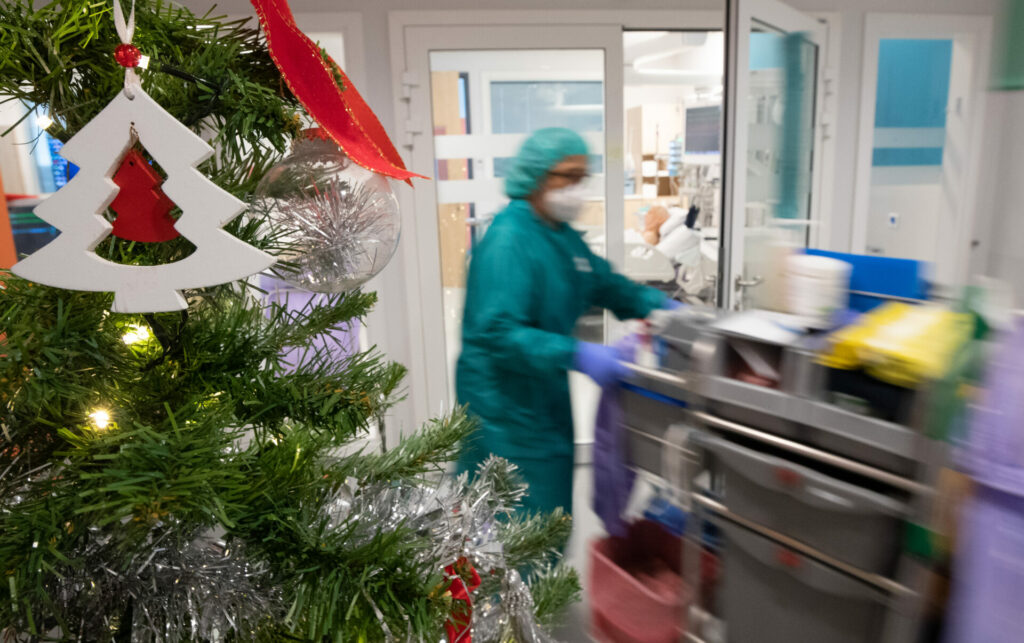
In the last week, an average of 109.4 patients suffering from Covid-19 were admitted to Belgian hospitals each day, figures published by the Sciensano Institute of Public Health on Friday morning showed.
This marks a 37% increase since last week, and double the number recorded just one month ago. This figure only includes the number of people hospitalised because of the virus.
The total number of people infected with the virus in Belgian hospitals has risen rapidly to 1,586 – around 100 more than on Tuesday this week. The average number of patients being treated in intensive care in the last week has started to rise more rapidly, now sitting at 70.
This figure includes people who were admitted for another reason and later contracted the virus.
Cases, tests and vaccination
Between 6 and 12 December, the average number of new Covid-19 infections recorded per day increased by 21% to 1,419, up from some 640 per day recorded just one month ago.
The average number of tests taken per day has risen to about 8,700 per day, while the positivity rate increased to 17.4%, meaning more than one in six tests has a positive result.
In the same week, the average number of deaths from Covid-19 infections per day has increased rapidly to 7.3 (+89%), but remains relatively low compared to this time last year, when this figure was nearing 50. This is largely due to the rollout of the first and second boosters.
The total number of deaths in Belgium since the start of the pandemic is 33,155; however, this includes people who died of another cause but who were infected, meaning it is an overestimate of Covid-19 deaths.
Related News
- WHO hopes 2023 marks the end of the Covid-19 pandemic
- 3,540 calories: Europeans far exceed daily recommendation
The reproduction rate has increased to 1.22. When this figure is higher than 1, it means that the epidemic is growing. The incidence (the number of new cases per 100,000 inhabitants) has slightly increased to 157.
As of Tuesday, more than 7.22 million people received a first booster dose of the vaccine, representing 76% of over-18s and 62% of the entire population, while more than 3.83 million people also received a second booster dose, equivalent to 41% of over-18s and 33% of the total population.
