Money, royalty, love, art, beauty, education, access, altruism, elitism, a better society.
If you haven’t guessed, we are talking philanthropy, a word which is a darn sight easier to write than pronounce.
My interlocutor, Melanie Coisne, head of heritage and culture at the King Baudouin Foundation (Fondation Roi Baudouin/Koning Boudewijnstichting - KBF for short), is evidently used to folk stumbling over the word.
Of course, when she says philanthropy, it trips off her tongue – and, what’s more, in her third language.
We are meeting at the KBF’s neo-classical, three-storey headquarters in Brussels, discreetly tucked away behind the Royal Palace in Rue Brederode. The aim of our tête-à-tête is for Coisne to talk about the achievements of the KBF as it marks 50 years of, in its own words, “acting for the common good…to foster sustainable and positive change in Belgium, Europe and the world”.
A scope that sounds nothing short of ambitious. The KBF’s bold remit covers seven “essential pillars”: Social justice and poverty; Health and medical research; Heritage and culture; Democracy in a changing world; Climate, environment and biodiversity; Education and the development of talents; Europe and international.
Our conversation is mostly limited to the third, my personal favourite. Coisne, 42, is an enthusiastic ambassador. Warm and articulate, she oozes passion for her field. Together with her 10-strong team, she is responsible for ensuring that the KBF’s colossal collection of 29,000 artworks is accessible to the public in museums and cultural institutions across the country. Built largely through donations, the collection spans everything from paintings and manuscripts to jewellery and vintage cars.
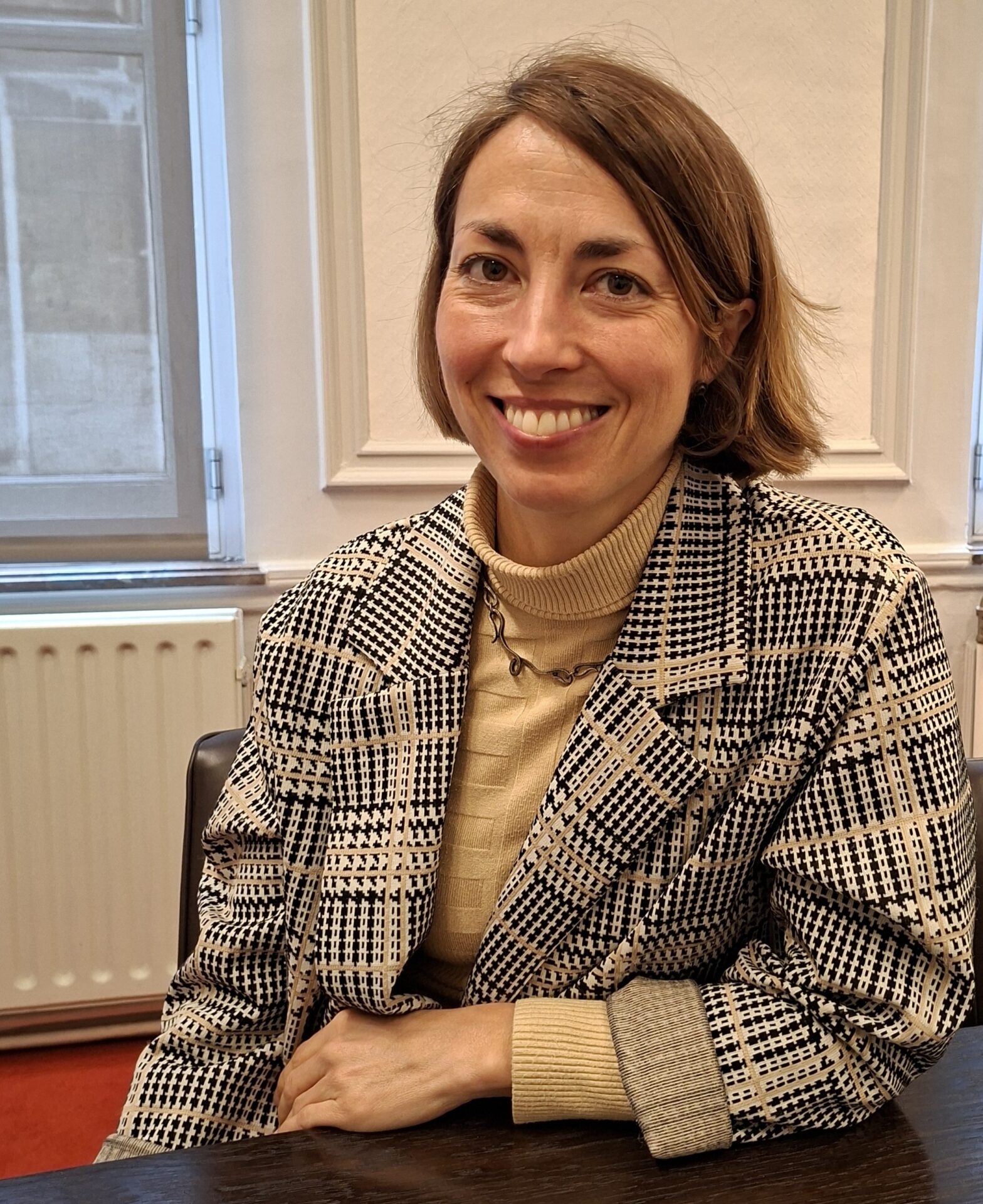
KBF's Melanie Coisne
“Every gift, however small or large, contributes to one and the same goal: to keep our shared history alive, now and in the future,” she says. “Around 90% of the collection is on public display. What’s not is art with a certain fragility, for example works on paper that can't be shown 365 days a year.”
Such objects are kept in a depot in Zaventem.
Coisne’s team also administer funds designed to allow the KBF to make targeted acquisitions. “In general, we only look to acquire an artwork if a museum comes to us with a really well-argued case for doing so,” she explains.
The artworks provided by the KBF are effectively on permanent loan. “We’re a partnership. We have the ownership because the philanthropist has entrusted the KBF to place the artworks. In turn, we entrust museums with preserving them and making them accessible. We’re not a museum and we don't have the ambition to become one.”
There is indeed not a single artwork to be seen in the ground-floor meeting room in which we’re sat. No decorations, just a coffee machine.
Acquisitions
The heritage and culture division has a budget of around €5 million a year, mostly for grants, a relatively small sum in the context of the KBF’s overall spending, which will top €270 million in 2026. Coisne has a pot worth up to €1 million a year for acquisitions. While not exactly a drop in the ocean, it’s hardly a vast sum either in the world of high-stakes art auctions. Big-ticket items are mostly out of reach.
In general, she says the spending power of KBF departments is capped at around 3% of its yearly capital, but it’s “not an absolutely fixed rule” and Coisne has a few workarounds. “Sometimes we’ll team up with other donors in Belgium to boost the amount we can bid,” she says.
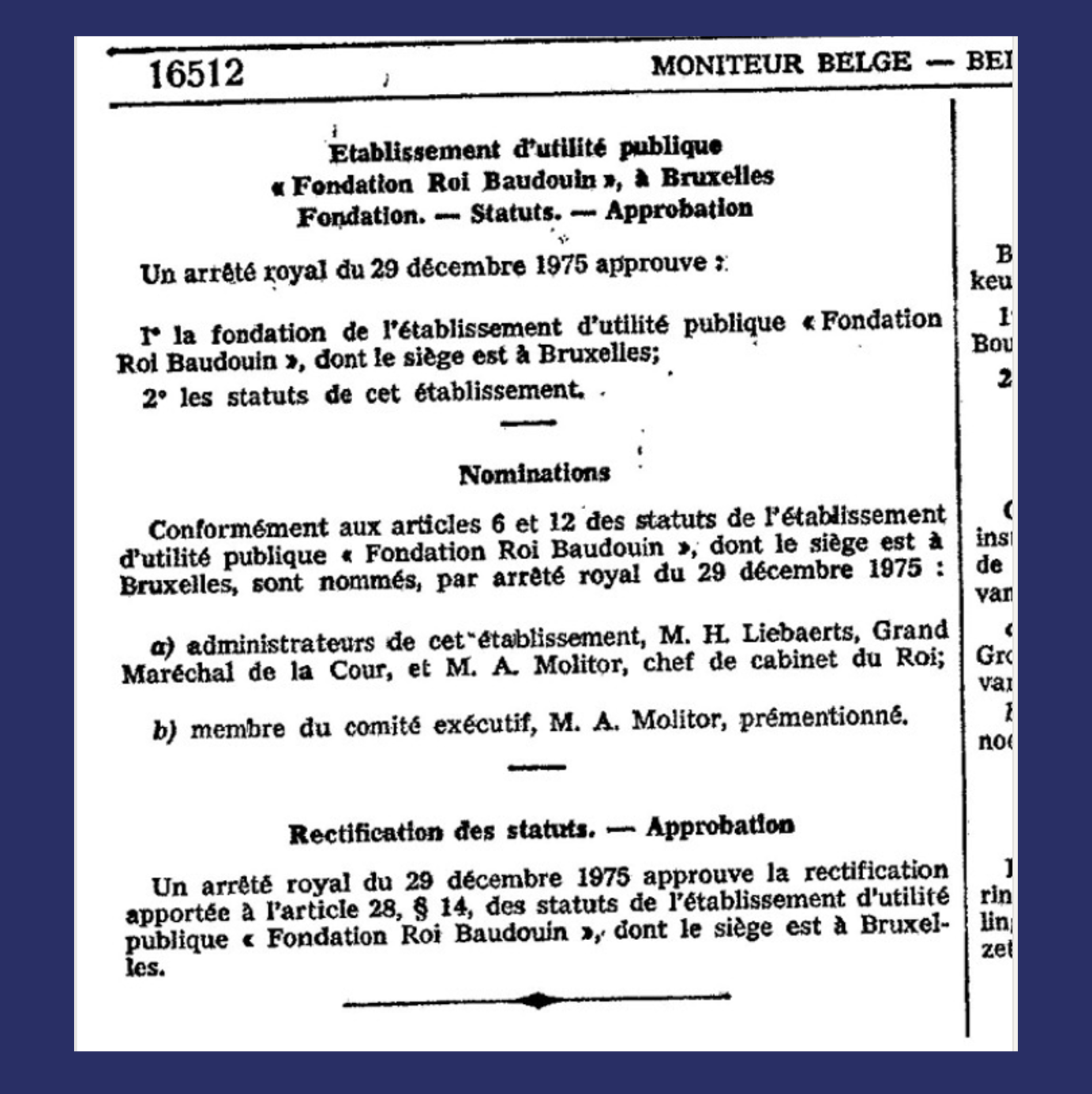
Announcement of King Baudouin Foundation's founding in the Moniteur Belge
The KBF is also a member and co-founder of the Myriad Alliance, a global network of philanthropist organisations that work together to acquire artworks. In 2024, American violinist Charles Castelma donated a 1707 Stradivarius to the Queen Elisabeth Music Chapel in Waterloo through Myriad. “For me, this Stradivarius belongs in an institution where future generations are preparing their careers,” he said.
Rampage
On the day we meet, Coisne is buzzing about two new KBF acquisitions, one a Rubens (“I can’t say more yet”), the other a cache of documents belonging to a medieval religious brotherhood in Antwerp.
Asked if she has a favourite artwork in the KBF collection, Coisne is momentarily lost for words. “That’s difficult but I really, really like a work we acquired last summer by Willem Key. I must admit I’d never heard of him before – and I'm an art historian. But my colleagues hadn't heard of him either, so I didn't feel too bad.”
Key was a leading figure of the Flemish Renaissance in his day. But he was largely forgotten because his works were almost all destroyed during the 1566 so-called Iconoclastic Fury, when fiery Calvinist preachers ordered their flocks to tear down flashy depictions of saints and the like in indecently wealthy Catholic churches and monasteries.
A monumental panel by Key, aptly titled, Lamentation of Christ with Donors, somehow survived the purge and was purchased by the KBF through a donation from the Charles Vreeken Fund.
“The colours are wonderful, the quality exceptional,” says Coisne. “A layer of varnish is being removed to allow the painting to regain its original appearance and the M museum in Leuven will display it from October. It is already recognised as a ‘topstuk’, or masterpiece, by the Flemish government.”
The KBF is believed to have paid around €475,000 for the painting. If true, that would be something of a bargain for such a rare work. When I ask Coisne to confirm the sum, she demurs. “We don’t communicate the price,” she smiles.
One that got away
While the Keys acquisition was a huge success, you can’t win them all. “In February we had a fantastic opportunity to buy a painting by David Teniers the Younger in New York,” she confides. “It was a scene in Ghent with some landmarks that are still recognisable. The minimum estimate was about $600,000. We didn't have enough in our funds for that.”
The painting, Potters' Fair at Ghent, eventually went under the hammer for $1.64 million at the Big Apple branch of Sotheby's. The new owner is a private collector whose identity was not disclosed.
It’s one that got away and it’s clear from Coisne’s look that it still rankles.
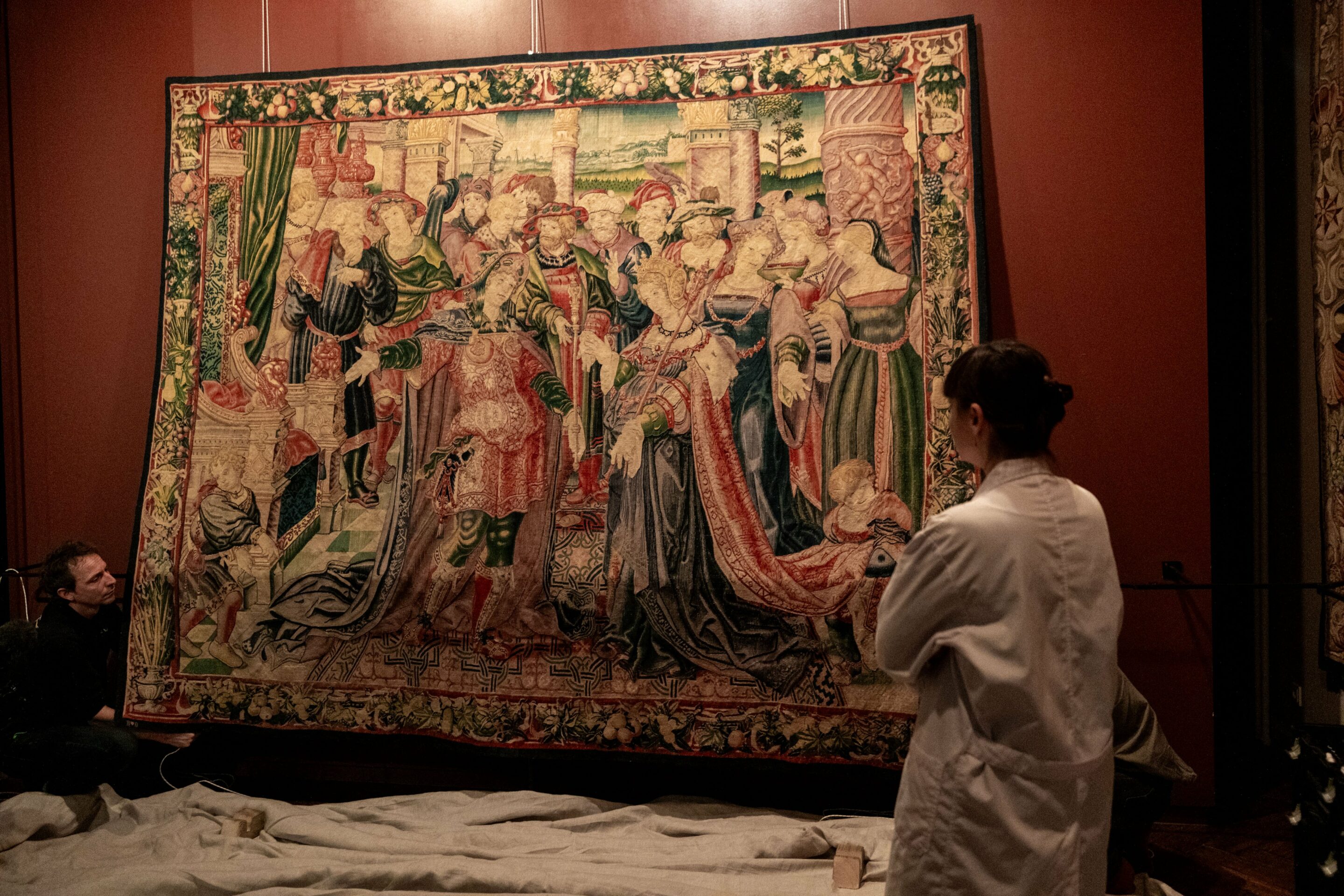
But not every story ends that way. One of the KBF's most significant recent acquisitions was a 16th century tapestry made in Brussels – King Solomon Inviting his Mother Bathsheba to Share his Throne – bought with the Périer-D’Ieteren Foundation and Mechelen non-profit De Wit. It is now in Brussels City Museum on the Grand Place. "The tapestry was put for sale and there was always this risk that it would disappear abroad," Coisne says. "So we were very, very happy."
Pop art and Tintin
The KBF does not focus solely on older works. Another recent acquisition is L'égocentrique 2, a feminist reinterpretation of René Magritte’s controversial Le Galet by Namur pop artist Evelyne Axell. The work was bought through a KBF-managed fund set up in 2022 by Isabelle and Philippe Dewez, a former executive at oil giant BP. It is now on display at the Royal Museums of Fine Arts in Brussels.
The KBF also owns rare documents associated with Tintin creator Hergé. They include 39 letters, some illustrated, that the cartoonist wrote to his personal secretary Marcel Dehaye in the late 1940s. The collection, now loaned to the Bibliotheca Wittockiana in Woluwe-Saint-Pierre, was donated by the late Guy Dessicy, who knew Hergé from childhood and trained with him as a colourist, bought the collection after Dehaye passed away.
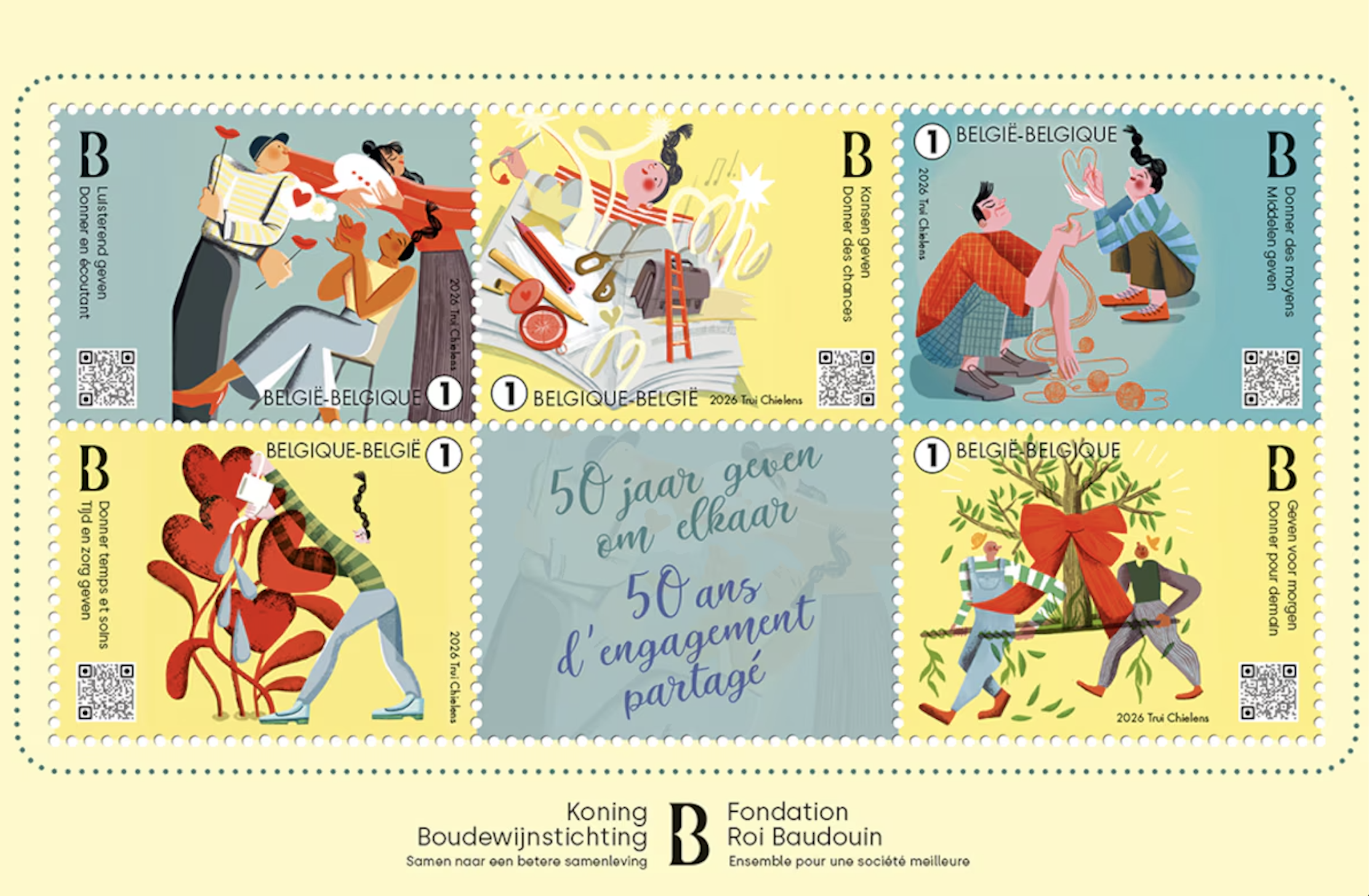
On a similar theme, the KBF provided a grant to the Comics Art Museum (Musée de la Bande Dessinée/Stripmuseum) in Brussels to provide a better experience for blind and visually impaired visitors.
Tangible art and elitism
Coisne says she wants to make art more tangible in this way. She highlights a collection of ethnic objects that photographer Mark De Fraeye and his wife Patricia Verburg donated to the KBF, and which were subsequently loaned to the Museum Dr Guislain in Ghent, a former mental asylum that now focuses on psychological well-being and overcoming stigma.
The exhibition, based on a theme of homesickness, particularly targeted newcomers to Ghent with a migrant background. Supported by community partners, the exhibition encouraged visitors to handle objects and share personal stories.
“We don't like to refer to the ‘instrumentalisation of art’, but this is actually what it achieved,” Coisne says.
Such exhibitions also help the KBF counter a common criticism – that it is rather elitist.
There is no getting away from the fact that the foundation was created in the name of King Baudouin. Proposed by then-Prime Minister Leo Tindemans to mark the 25th anniversary of his reign, it launched in 1976 with an endowment of one billion Belgian francs (€25 million today) provided from the state budget and wealthy benefactors.
Baudouin set out his vision for the KBF in a letter, insisting it should be “resolutely independent”. Fifty years on, the KBF has €1.7 billion in capital: the income this generates allows it to support thousands of projects across its fields of action for the “public good”. The money is mostly spent in Belgium but also internationally. For example, the KBF partnered with the Schréder Together fund to support the reconstruction of Borodianka, a Ukrainian town heavily damaged in the Russian invasion.
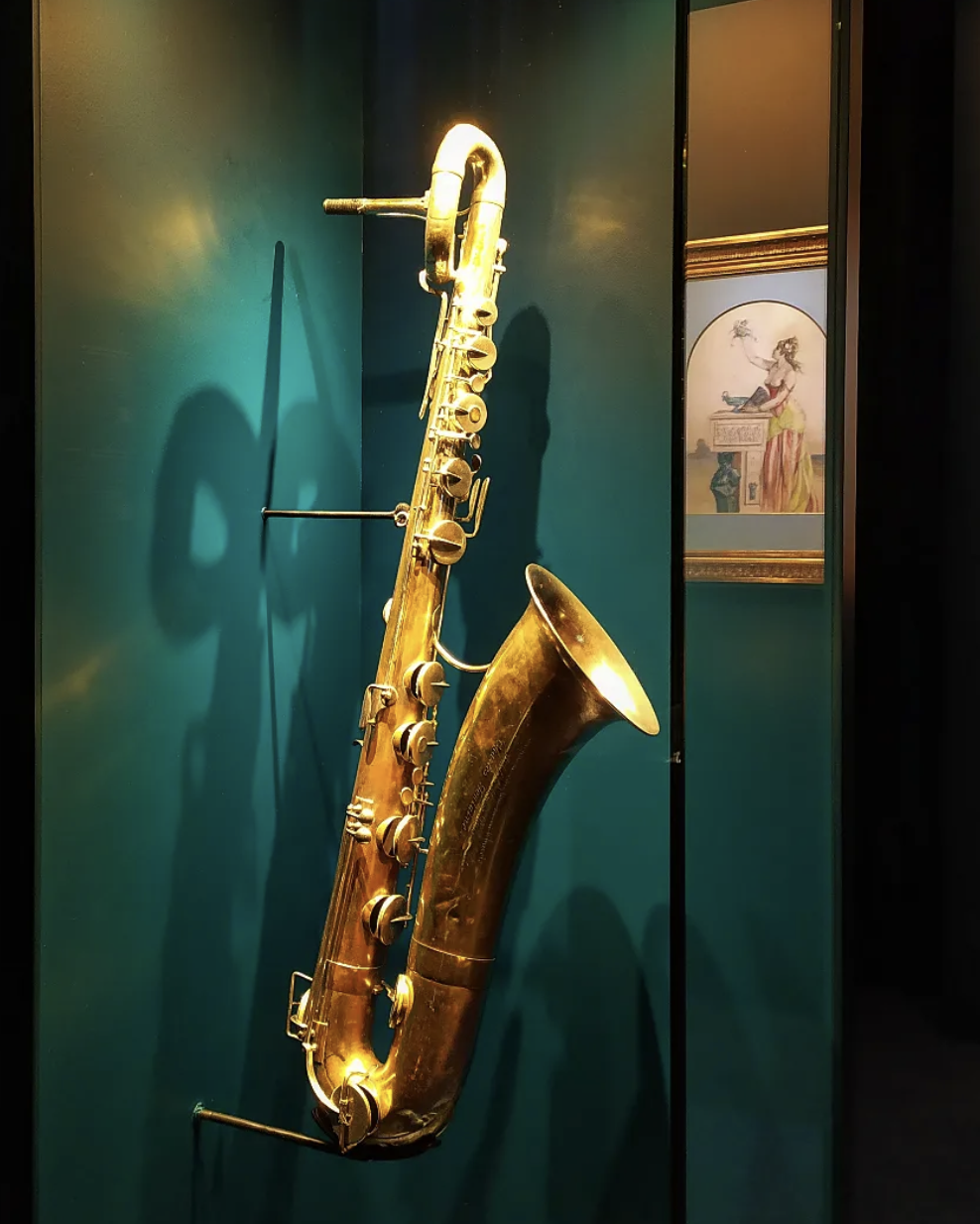
E-flat baritone saxophone invented in 1846 by Adolphe Sax, his oldest preserved item.
On the charge that the KBF is too elitist, Coisne admits: “That is indeed one voice that we hear. But when we read King Baudouin’s letter now, we fully find that spirit in what we still do today. It is almost like a compass for us,” she says.
“Yes, our heritage and culture programme might sometimes focus on quite elite stuff, but the KBF started by helping people living in poverty, by working for social justice, and supporting health and medical research. Those areas have always represented big chunks of our budget and that hasn't changed.”
Coisne recognises that when the foundation spends €1 million on art, it’s €1 million that doesn't go to social projects. “But we believe that art and museums have a really important role to play in our programme’s growing social impact,” she says. “Philanthropists increasingly understand this, too. We have new funds which support not only the preservation of heritage, but also everything around it such as supporting the professionalisation of young people coming into the sector and specific projects for ‘fragile’ audiences. Art can really be a bridge builder.”
For the 50th anniversary, the KBF has quietly dropped the crown which used to sit above the B on its logo and Coisne underlines that, despite their proximity to the office, the Royal Family has no direct role in the running of the organisation, even if it has funds named after King Philippe and Queen Mathilde, and the latter is its honorary president. They don’t just pop across the road, then? “Never.”
Bureaucratic
Belgium is often associated with bureaucracy and Coisne acknowledges this is a headache. Her team administers 150 separate philanthropic funds – and each has its own management committee.
“It's one of the issues we’re confronted with because we are expanding. A lot of new funds were created in the past few years,” she remarks. “One solution is to ‘cluster’ funds. But this tends to work better in other programmes. For instance, the KBF has quite a lot of funds created to support cancer research, so you can cluster around that,” she says.
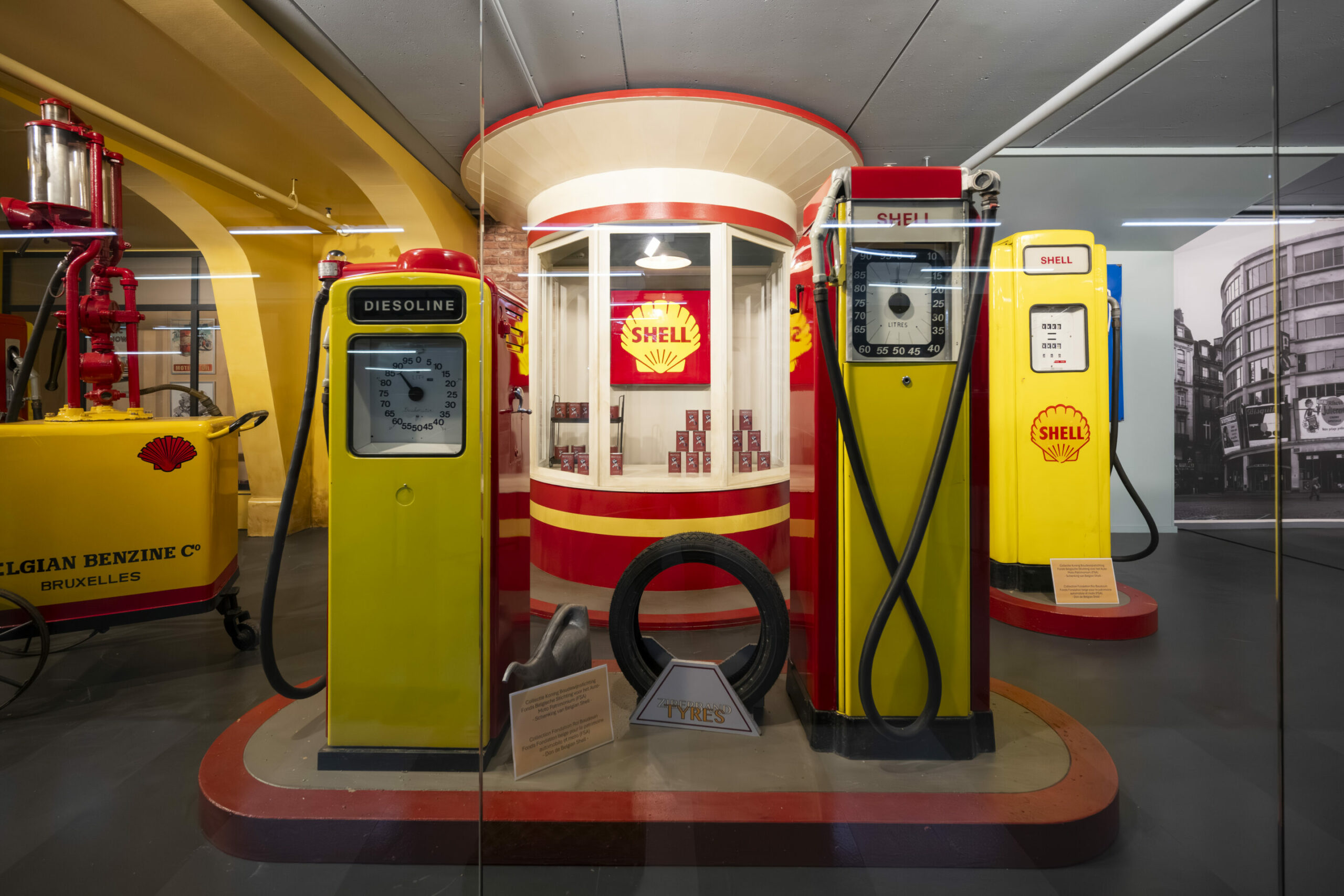
Old petrol pumps, now at Autworld
Some of the older funds are another issue. “They might have been set up to meet a pressing need at the time, but the need has been solved and the fund is still there. We have to constantly raise awareness with the committees and new philanthropists about the real needs of the sector today. But we can't push this too hard because it's always the philanthropist, or representative of the philanthropist, who’s in the lead.”
What happens if a philanthropist donates a collection and not all of the works are wanted by the museums? Can the KBF sell them? “No, unless the donor gave us his or her authorisation,” says Coisne. In general, collections are given “in perpetuity”. “That’s the spirit of donations to the Foundation. The KBF is entrusted with taking care of the works for future generations,” she adds.
I ask if the current uncertain economic climate is affecting giving. The answer is yes and no.
“Around 80% of Belgians believe that philanthropy and giving to good causes really contribute to making society a better place,” Coisne replies. “But while that number is growing and more people are giving, what they are giving, on average, is a bit smaller. That in turn means the amount we can give through grants is diminishing.
“We still provide a lot of grants. We supported around 160 organisations in our field last year, but the world of philanthropy is shifting so the KBF has to constantly work out how to respond.”
There’s just time for one more question.
I ask Coisne what she would do if she won a fortune on the EuroMillions lottery and became a KBF philanthropist herself.
“Museums are places where people come together. They’re not only for the rich or people who know about art. They’re about physical encounters and real-life experiences,” she says. “A visit to a museum should be a discovery and fun.”
