
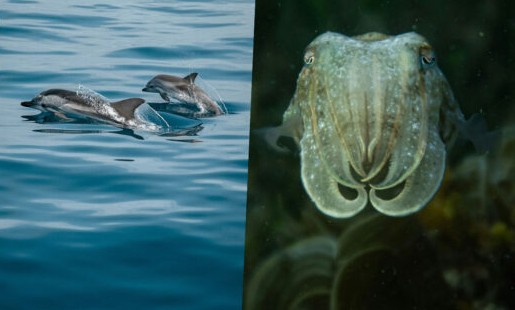
The Coller-Dolittle Prize for inter-species two-way communication was awarded last week to a decade-long research project on dolphins in the waters of Florida but there is still some way to go to understand animals and communicate with them.
The $100,000 prize was launched by a foundation of British entrepreneur Jeremy Coller in cooperation with Tel Aviv University, Israel. Inspired by Doctor Dolittle, the character in the child books on a physician who can speak with animals, Coller believes that research can develop methods for better understanding how animals communicate and even promote communication between animals and humans.
“People think that our future lies in space but there’s still so much we don’t understand here on Earth”, Coller said at an on-line ceremony when the annual prize was awarded for the first time. For him, expanding mankind’s knowledge about inter-species communication is like discovering the Rosetta Stone which deciphered the Egyptian hieroglyphics.
The research very much relies on the collection of vast amounts of data on endogenous communication and applying artificial intelligence (AI) algorithms to analyse the data. The end goal is to facilitate communication between animals and humans, something that might be achieved within the next five years in the most optimistic scenario.
To win the prize, researchers must develop an algorithm to allow animals to communicate independently without recognising that they are communicating with humans. This is inspired by the Turing Test, where a machine demonstrates intelligence when engaging in a conversation with a human without being detected as a machine.
The participating research projects had to meet three criteria to participate in the competition: using a non-invasive approach to communicate with or decipher an organism’s communication, demonstrating the endogenous communication of the organism in more than one context, and proving a measurable response of the organism to the signals broadcasted to it.
The judging panel was led by Yossi Yovel, professor of zoology at Tel Aviv University, whose own team has previously used machine-learning algorithms to study bats. One study showed that newborn pups learn their communication from the adults around them. Another study, using AI, showed that the communication conveys information about the identity of the emitter and the context.
Out of 20 research projects, four projects from the US, Germany, France, and Israel were shortlisted and presented their projects at the award ceremony.
The projects studied different animals in the taxonomy of animals: dolphins (mammal), nightingales (bird), cuttlefish (squid), and marmoset monkeys (mammal). They all used fascinating ways to communicate with each-other, such as whistles, songs, wave signs and sounds. While the researchers started to “understand” the meaning of their communication, there is still a long way to go.
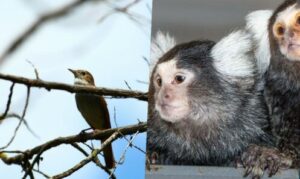
Credit: Coller-Dolittle Prize
Professor Yovel admitted that the projects did not really meet all criteria of the Dolittle challenge and were hard to compare because they studied different types of communication. Why was the dolphin project selected for the prize?
“The dolphin project was awarded the prize because it was based on a long-term natural communication data set with huge potential and elegant controlled field manipulation using drones and two testing contexts of animal communication,” he replied. The project showed also progress in understanding of dolphin endogenous communication.”
We can obviously conclude that the animals in the project communicate with other in different ways which are not yet fully understood. Is it too early to say that they also communicated with the researchers?
“For sure. That us the underlying assumption of the competition,” he replied. “In the next round of the competition, I think that we’ll see more elaborated versions of the studies. With improved datasets and technology, we are constantly improving.”
Most people with dogs would say that they communicate with them. Dogs show their emotions and can be trained to understand words and obey by them. Are dogs more intelligent animals than those in the research projects?
“Not necessarily. The competition focuses on animals’ endogenous communication. That is how they communicate with their peers. Dogs are actually not very developed in that. Communication and cognition are not necessarily linked directly. Animals with limited communication can be trained to do many things. But we’ll be able to better understand dogs, for example their emotions.”
He is still on the skeptical side about understanding animal “language” or learning to communicate with different species. “I don’t think that animals talk the way many people might imagine but I do believe that we’ll be able to understand the complexity of animal communication better with AI.”
An important question for animal welfare NGOs is if the research might influence how we treat animals - be they companion animals, farmed animals or wild animals - and lead to improvement of animal welfare?
“Yes. For sure. I think that it already is affecting the way we treat animals. The better we understand and realize how complex they are, the more we’ll appreciate their rights.”
Compassion in World Farming agreed under some caveats. “Being able to understand what farmed animals need to improve their wellbeing would be a fantastic achievement, but the reality of how doable this is would be questionable,” commented Dr Morgan Humber, Research Officer at Compassion in World Farming.
He added that the development of the ability to communicate with animals should not lead to the scientific evidence that already exists to understand animals gets overlooked or undervalued. “We are already aware of the signals farmed animals send when experiencing poor welfare during farming.”
