
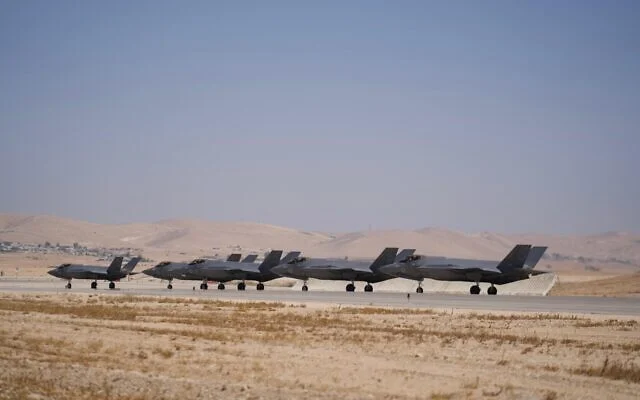
Since Israel’s surprise attack against Iran on Friday morning last week, the war is dangerously escalating towards mutual destruction with constant Israeli air strikes and Iranian bombardments while the outside world is scrambling to impose a ceasefire to enable diplomacy to work towards a solution to Iran’s nuclear program.
Israel’s attack took Iran by surprise because it lulled the regime in Tehran, but also its own population, into a false sense of security that no attack was imminent as long as the US – Iran talks on a diplomatic solution continued.
The initial attack shocked the regime and inflicted heavy damage to some of Iran’s nuclear facilities, military bases, air defence systems, and ballistic missiles launchers and storages. The Israeli intelligence agency also managed to establish a secret base inside Iran from where explosive drones were sent to eliminate a number of top military commanders and nuclear scientists.
But the Iranian response was not long in coming. The first wave of drones was successfully intercepted by the Israeli air defence. However, the following indiscriminate barrages of hundreds of ballistic missiles, until now mostly overnight, have already wrought havoc in Israel, killing at least 21 people and wounding hundreds more since Friday. On the Iranian side, the death toll is also mounting. It will become worse if both sides retaliate with strikes against civilian infrastructure.
Most Iranian missiles are intercepted but the Israeli air defence system is not hermetic. Some missiles will slip through and hit residential areas. The Israeli population is getting alerts to take protection in safe rooms inside apartments or public shelters but most buildings still lack bomb shelters. The impact of the Iranian missiles is enough to destroy surrounding buildings, leaving the inhabitants trapped in the shelters until they are rescued by emergency response workers.
The Israeli government justified the attack as a “window of opportunity” to struck the Iranian nuclear program at a “moment of no return” before it would be too late. But the government knows very well that it cannot destroy all Iran’s underground nuclear sites without American support.
Even Israel’s national security advisor admitted that Iran still has “thousands of ballistic missiles” at its disposal despite the Israeli strikes and that “this is not a battle that over the long term will be able to bring an end to the Iranian (nuclear) threat.” For that a diplomatic solution on banning all or most enrichment of uranium in Iran is necessary.
Instead, the far-right Israeli government took a “calculated” risk to, at best, extend the time it would take Iran from producing nuclear weapons. To achieve this limited goal, it is willing to put its own population in harm’s way for a war without a clear exit strategy. The current government has a tendency not to end wars and transform military success to political solutions.
Instead of regaining international legitimacy by ending the war in Gaza by agreeing to a ceasefire-hostage deal with Hamas, Israel opened a new front and attacked Iran, a much more formidable enemy. Contrary to Israel, Iran is a big country with strategic depth and vast resources. It has also a history of enduring protracted wars as the war with Iraq in 1980 – 88. Israel cannot afford a war of attrition with Iran.
The Trump administration is reluctant to attack Iran unless it would make the mistake of bombing American bases in the region. Where Trump, who until now has failed to end the war in Ukraine, is standing in all this cannot be predicted. He might have thought that the Israeli attack would pressure Iran to make concessions in the nuclear talks but the outcome could also be the opposite.
Israel apparently counted on that the US, which was informed in advance about the attack, would hurry to Israel’s defence in intercepting Iranian drones and missiles, as an international alliance of Western and Arab countries did twice in 2024 when Iran responded to Israeli attacks.
With the US for time being indifferent to the risk of escalation, what can the EU do? High Representative Kaja Kallas issued a statement on Sunday on behalf of the EU calling on all sides to abide by international law, show restraint and "refrain from taking further steps which could lead to serious consequences such as potential radioactive release".
She writes that the EU is “following very closely the situation in the Middle East and expresses its deepest concern at the dangerous escalation that threatens to destabilise the Middle East following Israeli strikes on Iran and Iran’s response”. The EU has always been clear that Iran must never be allowed to acquire a nuclear weapon and is concerned about the recent report by the International Atomic Energy Agency (IAEA).
The report found that Iran is in non-compliance with its legally binding nuclear safeguards obligations under the Treaty on the Non-Proliferation of nuclear weapons (NPT). Iran has become a nuclear threshold country which possesses both the technical capabilities and fissile material needed to make a nuclear weapon in a short time.
But lasting security is built through diplomacy, not military action. “We believe that diplomacy must prevail. The EU will continue to contribute to all diplomatic efforts to reduce tensions and to find a lasting solution to the Iranian nuclear issue which can only be through a negotiated deal.”
There is no doubt in the EU that Iran’s nuclear program threatens Israel. But the only way to get rid of the threat is through negotiation, French Foreign Minister Jean-Noel Barrot said on Sunday. “The Iranian nuclear program has a military purpose. It is an existential threat to Israel, to the countries of the region, and to us as well. No one has an interest in a regional conflagration.”
