
Greenpeace activists deployed a giant “Climate Polluters Bill” on Saturday in New York ahead of the UN General Assembly and the Climate Ambition Summit this week.
The “bill”, nearly 50 meters long, indicates that economic damages from carbon dioxide (CO₂) emissions of five major oil and gas corporations throughout 2016-25 are projected to amount to over $5 trillion, according to leading experts on the social cost of carbon.
The giant bill showed also a selection of some of the most expensive extreme weather events since the Paris Agreement was adopted.
The enormous damage bill can be compared to the amount that countries have pledged until now to the UN’s fund for loss and damage.
As of June 30th, 2025, pledges to the value of $768 million have been pledged. The list is headed by UAE ($100 million), followed by Germany ($98 million), UK ($54 million) and France (€53 million).
The US has only pledged $18 million. EU and its member states collectively hold the largest stake in the fund but EU’s own pledge is a minor part of the total pledges so far.
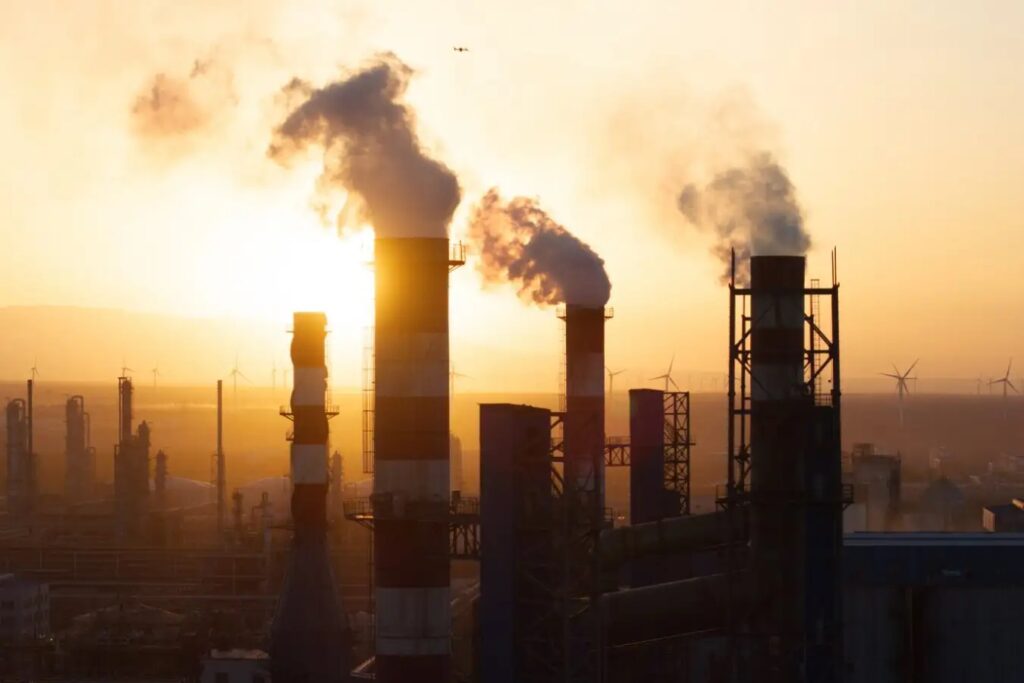
According to Greenpeace, emissions from a handful of investor-owned oil companies are driving the climate crisis, making wildfires, floods, typhoons, heatwaves and droughts more frequent and severe.
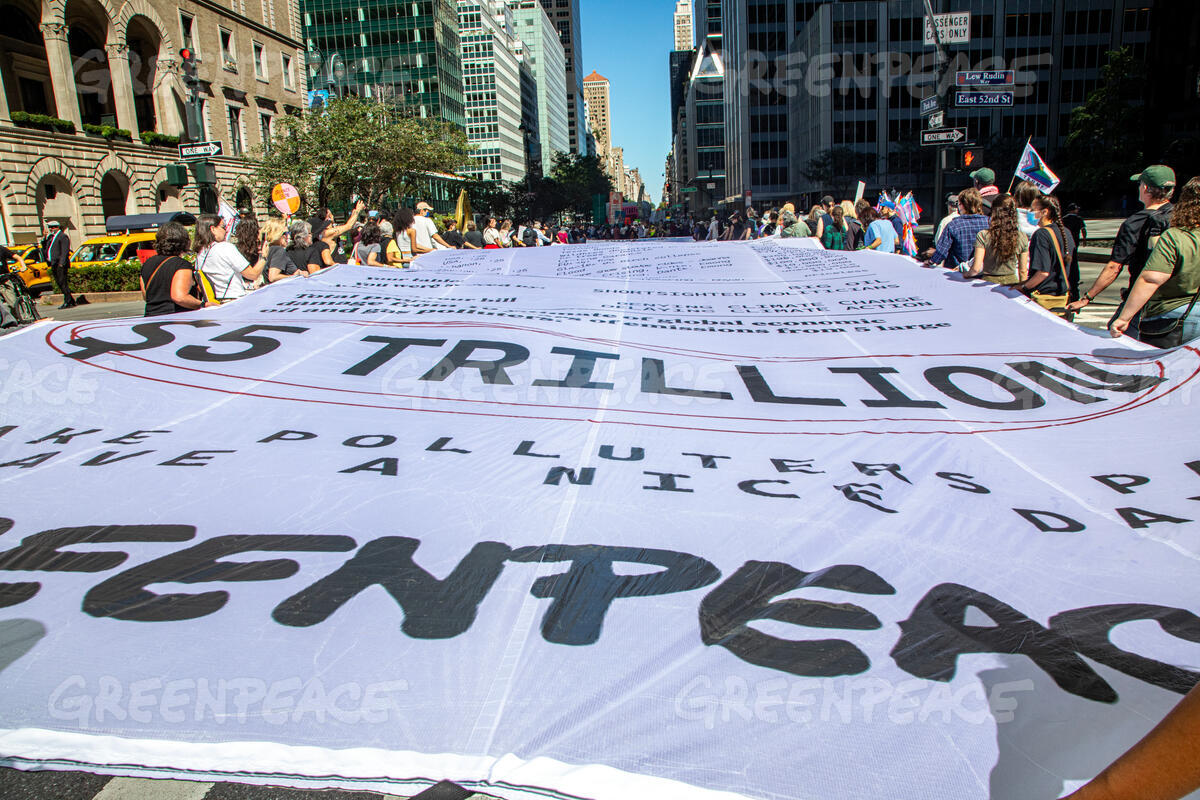
Greenpeace deploys a giant “Climate Polluters Bill” through midtown Manhattan while activists marching in the Make Billionaires Pay March, © Tim Aubry/ Greenpeace
The costs, projected to amount to US$ 5.36 trillion in damages, are impacting people today and expected to continue well into the future.
These result in huge costs to society in categories including human health, rising sea levels, disruption to energy supplies, agriculture, and labour productivity.
Five oil companies, among them two American and three European companies (Shell, BP, TotalEnergies), accounted for the $5 trillion in total damages by company in 2020:
- ExxonMobil: 1.38 trillion US$
- Chevron: 1.16 trillion US$
- Shell: 1.03 trillion US$.
- BP: 0.96 trillion US$
- TotalEnergies: 0.83 trillion
“A breakdown of the estimated damages by country or continent is possible but that requires further modelling”, a spokesperson of Greenpeace told The Brussels Time.
“No one is safe from deadly heatwaves, wildfires, toxic air, and rising seas,” commented Mads Christensen, Executive Director, Greenpeace International.
“Yet those most sheltered from the crisis – the super-rich and oil and gas giants – keep profiting while the rest of us pay the price. It’s time to flip the script: governments must make polluters pay and use that money to fund a secure, green future.”
“World leaders have a historic chance at COP30 and in negotiations for a UN Global Tax Convention to close the climate finance gap and to raise billions to protect people and the planet. We demand a new polluter tax on the global profits of oil and gas corporations, alongside taxing wealthy elites and addressing illicit financial flows.”
Commission President von der Leyen will participate in the Special High-Level Event on Climate Action, hosted by the UN Secretary General António Guterres, this week in New York. The Commission will hand over a “Statement of Intent”.
The statement, which is not the EU’s nationally determined contributions (NDC), indicates the EU’s intention to submit its post-2030 NDC ahead of COP30 in Brazil, in line with the Paris Agreement’s obligations.
EU is expected to submit an NDC with an indicative 2035 target in a range between 66.25% and 72.5% greenhouse gas (GHG) emissions reduction, compared to 1990 levels.
Asked by The Brussels Times on Monday about the statement, a Commission spokesperson told The Brussels Times that the statement still lies in the hands of the Danish EU Presidency.
The UN has asked countries to submit their 2035 climate goals by the end of the month but this is not to happen as regards the EU Member States.
Without an agreement on a 2035 climate target, the Danish EU Presidency has sought approval for a compromise of target range, with the actual target to be finalized later.
EU’s own climate scientists have recommended a target of at least 77 % cuts by 2035 to be consistent with a 90% target in 2040, according to Greenpeace.
