
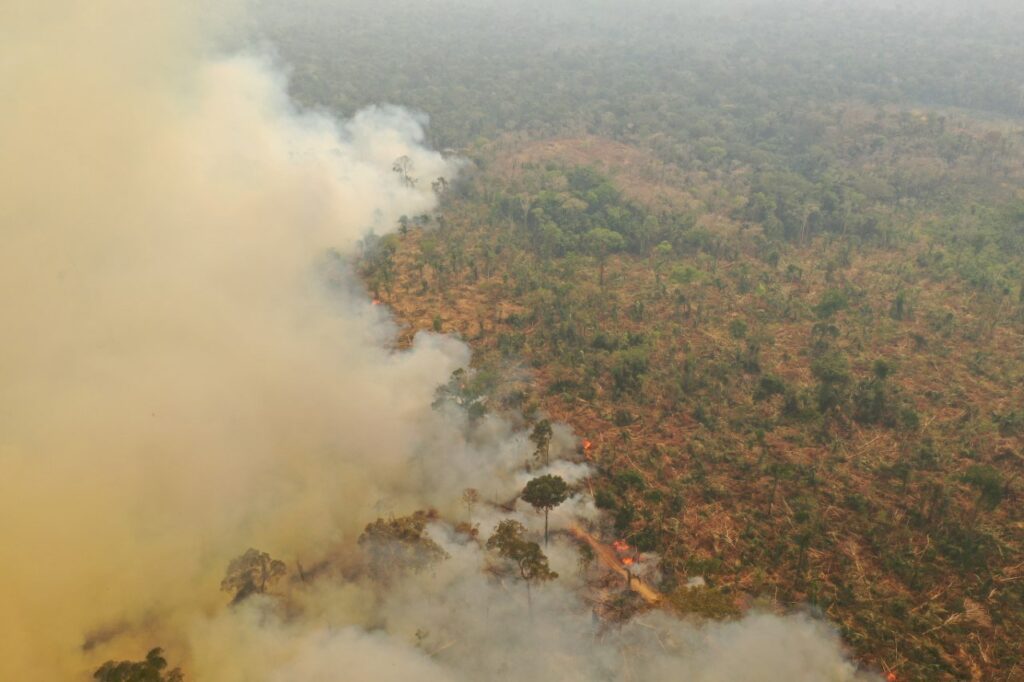
The office of the prosecutor at the International Criminal Court (ICC) in the Hague launched recently a policy paper on ‘Addressing Environmental Damage Through the Rome Statute’ which is expected to go some way in prosecuting ecocide as part of the international crimes that currently are recognized in the statute.
According to the new policy, destroying, degrading, or polluting the natural environment will often directly impact humans, such as by causing people to be displaced, inflicting great suffering or injury on victims, or even causing death. Those acts may constitute Rome Statute crimes (genocide, crimes against humanity, war crimes and the crime of aggression) both during armed conflict and in times of peace.
The prosecutor office will support national efforts to prosecute illegal conduct that has an environmental dimension. Although the office cannot bring environmental-crime charges against a corporation because the Rome Statute limits the Court’s jurisdiction to natural persons, it can prosecute individual corporate officers who satisfy the requirements of territoriality or nationality.
The policy paper states that the office commits to ensuring that environmental crimes – Rome Statute crimes that are committed by means of or that result in environmental damage – are a strategic priority at the heart of its investigations and prosecutions.
In the meantime, the campaign for the recognition of ecocide as a separate international crime continues. As previously reported, an expert panel brought together by the Stop Ecocide Foundation proposed in June 2021 to amend the statutes of ICC and include ecocide alongside the other international crimes.
A new article was proposed to be added to the Statute where ecocide is defined as follows: “For the purpose of this Statute, 'ecocide' means unlawful or wanton acts committed with knowledge that there is a substantial likelihood of severe and either widespread or long-term damage to the environment being caused by those acts.”
High threshold
The threshold for amending the Rome Statute is high and requires a two-thirds majority at the Assembly of States Parties or a Review Conference, followed by ratification by states for entry into force, often with a higher threshold.
The process started In September 2024, when Vanuatu, a low-lying archipelago of 80 islands in Oceania, with co-sponsorship from Fiji and Samoa, tabled a proposal to include ecocide in the Rome Statute. Other countries may also support the proposal but it is too soon to expect that it will achieve the required majority in the assembly.
Some EU Member States have legislated against ecocide in their constitutions (Belgium) or laws on climate protection (France). The European Parliament was supportive of including ecocide in the revised EU directive on environmental crimes after the European Commission fell short of including it in the legislative proposal.
A sort of compromise was found in the final law text which was adopted in April 2024 and must be transposed by the Member States into national law by May 21, 2026. The directive mentions ‘ecocide’ in one of the recitals (21) which exemplifies qualified criminal offences that should be punished with more severe penalties than other offenses in the directive.
“Those qualified criminal offences can encompass conduct comparable to ‘ecocide’, which is already covered by the law of certain Member States and which is being discussed in international fora,” the recital says.
A similar formulation is used by the Council of Europe (CoE) in the ‘Convention on the Protection of the Environment through Criminal Law’ which was opened for signature on 3 December 2025.
The convention is described as the first international legally binding instrument to address environmental crime, covering a broad range of criminal acts that aggravate the triple planetary crisis of climate change, pollution and biodiversity loss.
While the convention does not explicitly enshrine the term ecocide, it provides for the punishment of a particularly serious offence when an intentional act causes irreversible, extensive and substantial damage to an ecosystem, a protected habitat or the quality of the air, soil or water. According to the CoE, this is also in line with ongoing international discussions on the recognition of ecocide as a crime.
ICC’s new policy paper
The Brussels Times contacted Jojo Mehta, CEO and co-founder of Stop Ecocide International, to ask her about the latest development and ICC’s new policy paper. She disputes the perception that so far there has been little progress in the campaign for recognizing ecocide as an international crime by adding it to the Rome statute of the ICC.
“On the contrary, the initiative to criminalize ecocide in international law has progressed at rocket speed,” she told The Brussels Times. “A few short years ago the term was virtually unknown and undiscussed; now there is a proposal to amend the Rome Statute to add ecocide as a fifth core crime, put forward only just over a year ago.”
“Vanuatu’s approach with respect to the ICC has been a sensitive and collaborative one. The court’s Working Group on Amendments has been focusing particularly on the Crime of Aggression amendments this year. However, discussions on ecocide are recognized as significant and to be continued, supported by rapid progress at regional level.”
Has the campaign lost momentum?
“Far from losing momentum, the movement has accelerated notably in the last year. Domestic ecocide law proposals are advancing in Brazil, the Netherlands, Argentina, Italy, Scotland, Peru and French Polynesia. Ukraine has begun to use its own provisions to address harms resulting from the Russian invasion. Other examples are recent legislation on European level by the EU and the Council of Europe."
“Furthermore, last July, the African Ministers’ Conference on the Environment resolved to add consideration of ecocide law as a continent-wide priority for 2025-27. At the World Conservation Congress in October a resolution was passed in both state and non-state chambers endorsing recognition of the crime of ecocide, adding support from a further 18 governments.”
“All of these developments constitute substantive progress and form part of the broader agenda of recognizing ecocide - the worst harms to nature - as a serious crime all over the world. In turn this reinforces the foundations for recognition of an international crime in due course,” she summarized.
Are oil-rich countries opposing recognizing ecocide it (as they opposed phasing out fossil fuels at COP30)?
“A few have, yes. The vote in October (IUCN) was the first voting situation on the topic involving multiple states. It showed only a very few states opposing and some of these were oil-rich states, e.g. Oman, Saudi Arabia, United Arab Emirates, Norway. Of the 46 states which voted there, more states voted in favour than abstained, and only a handful objected.”
What are the consequences in practice of ICC’s new policy on environmental damage?
“The policy marks a decisive shift: it clearly signals that the international justice system now formally recognizes severe environmental destruction as central to atrocity crimes. It sets out how environmental damage can constitute or result from existing international crimes in the Rome Statute and instructs investigators to analyse that harm systematically.
The policy also clarifies the boundaries of the existing legal framework in a way that is helpful for the broader evolution of environmental accountability.
It shows with precision where the Rome Statute already captures environmental harm when it intersects with the four existing atrocity crimes, and under which legal conditions. By making those contours explicit, the policy strengthens the Court’s capacity to act now, creating a clear impetus while broadening the foundations for complementary legal developments such as an independent core crime of ecocide.”
Why did the office of the prosecutor announce this new policy? Does it replace ecocide or will it reinforce the legal trajectory toward recognizing ecocide as a standalone crime'?
“It is our understanding that the policy grew out of prosecutor’s recognition that environmental destruction would need to be addressed under international criminal law sooner rather than later. It cannot replace a crime of ecocide as it simply cannot cover the comprehensive ground that a core crime of ecocide would do. Reckless harm during peacetime is the most obvious area it cannot reach."
“However, it does empower the court both to act in its own right in the context of situations under consideration or investigation, and, more broadly, to support governments which are addressing environmental crimes which could include ecocide. This is a huge and deeply valuable step.”
“Stop Ecocide International took part in the initial consultation undertaken by the OTP in respect of the policy paper, and has always maintained that this is a welcome step in the right direction,” Jojo Mehta concluded.
