
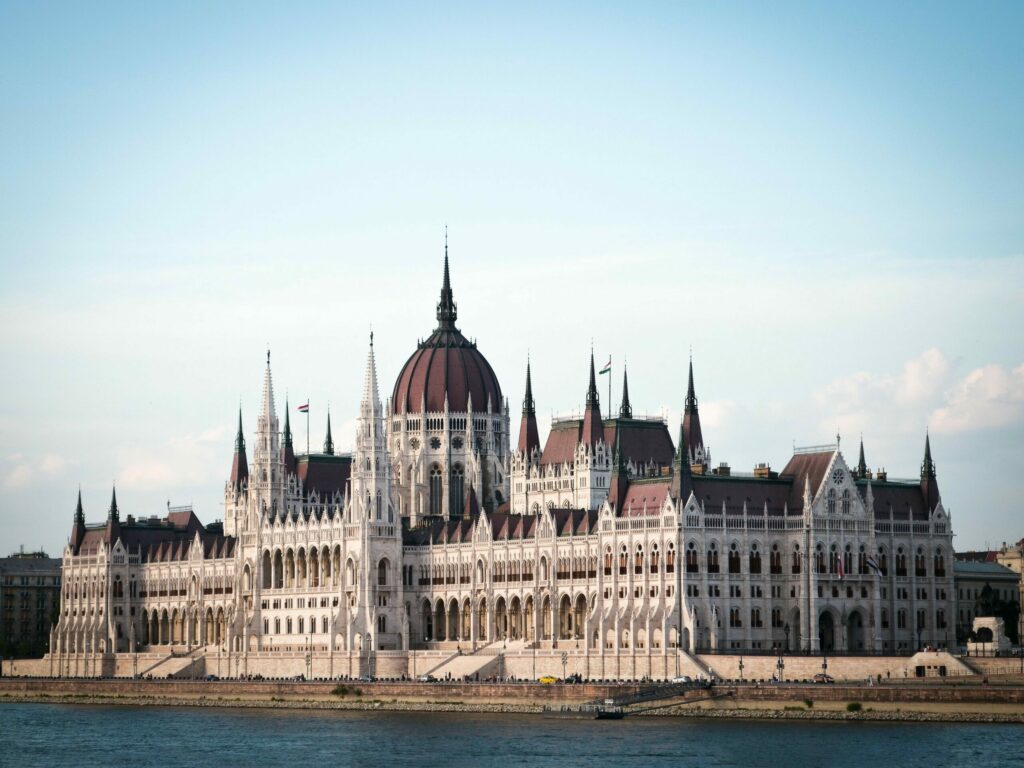
Ahead of the 12 April parliamentary elections in Hungary, an election observation mission will be opened by the Democratic Institutions and Human Rights (ODIHR), following an invitation from the national authorities.
The mission will be based on the findings of a pre-election needs assessment mission last December, which stated that there is a strong need for a large-scale presence of observers to promote confidence in the electoral process.
The report listed several areas that would benefit from the assessment, such as the legal framework and its implementation, the work of the election administration at all levels, accuracy of voter registration, the conduct and regulation of the campaign (including online), media coverage of the elections, transparency of campaign finances, and the effectiveness of electoral dispute resolution.
A similar election observation mission was deployed in 2022, during Hungary's previous parliamentary elections. The observers concluded that the process was marred by the absence of a level playing field, but declined to judge whether the elections were "free and fair" and focused on the overall election process.
The final report included a list of 30 recommendations on what Hungary needs to improve in order to bring the conduct of elections in line with commitments made by all countries belonging to the Organisation for Security and Co-operation in Europe (OSCE) and standards for democratic elections.
Asked last Friday if the European Commission has followed up on Hungary’s implementation of the recommendations, a Commission spokesperson declined to comment. "Conduct and organisation of national elections is a competency of the Member States," the spokesperson said.
In fact, the stability of institutions, democracy, the rule of law, human rights, and protection of minorities are essential political criteria for countries applying to join the EU. In its annual enlargement packages, the Commission assesses if the overall framework in the candidate countries allows for generally free and fair elections and whether OSCE/ODIHR’s recommendations have been implemented.
The mission is headed by Eoghan Murphy, a former Irish government minister, and consists of a core team of 15 international experts based in Budapest. From Saturday 7 March, 18 long-term observers will be deployed throughout the country, and 200 short-term observers will arrive several days before election day. The core team of experts and long-term observers come from 26 different OSCE states.
"Our observers will be present across the country, from big towns to small villages, looking carefully at the process before, during, and after the vote," Murphy said. "As well as meeting election officials, they will also speak to candidates, civil society representatives, and the media to get a thorough understanding of all the most important aspects of the elections."
Election scenarios
"The recommendations in the previous report have not been implemented," Marc Loustau, Affiliated Fellow at the Institute for Advanced Study, Central European University in Budapest, and author of the 'At the Edges' newsletter on Substack, told The Brussels Times. "If anything, Victor Orbán's government has tilted the electoral system even more to his own favour."
“The question to be asked is how unfair the elections will become this time," he added. "Government control of the media and the investment of major public resources to distribute pro-government messaging – to name just one factor – risks making the playing field more unlevel in favour of Orbán and his ruling Fidesz party."
Independent polls show a consistent and significant lead for the main opposition party, Tisza Party (The Respect and Freedom Party). "But as the electoral system remains tilted in Orbán's favour, even if Tisza wins the vote count, Orbán's party could end up with a parliamentary majority," Loustau said. "Orbán has stacked the deck in several ways."
According to Loustau, the number of rural single-member constituencies, which are dominated by pro-Fidesz voters, has been increased. At the same time, the number of urban constituencies which are dominated by progressives and liberals has been reduced.
Loustau also warned about a repeat of suspected electoral wrongdoing in mail voting by Hungarians in Romania if election observers are not present there.
"I think it's unlikely that Orbán will contest the election or cancel the results outright if he loses the vote count. That would be a public admission of failure. Rather, we should worry about an Orbán loss that results in an illusion of regime change," he said.
"Orbán has installed cronies in nearly every government body. His close allies control large swaths of the economy and media space. Even if the Tisza party would gain a parliamentary majority and its leader, Peter Magyar becomes Prime Minister, he will face an uphill battle to 'de-Orbánise' the country's institutions, including the institutions that ensure free and fair elections."
Magyar, a lawyer and former Fidesz insider, has been embroiled in public and personal scandals.
A Hungarian expat who follows the news from Budapest told The Brussels Times that Magyar is considered rather a burden on the party. The party has attracted supporters who want to get rid of Orbán after 16 years in power, but Magyar may not be the most suitable person to replace him.
