
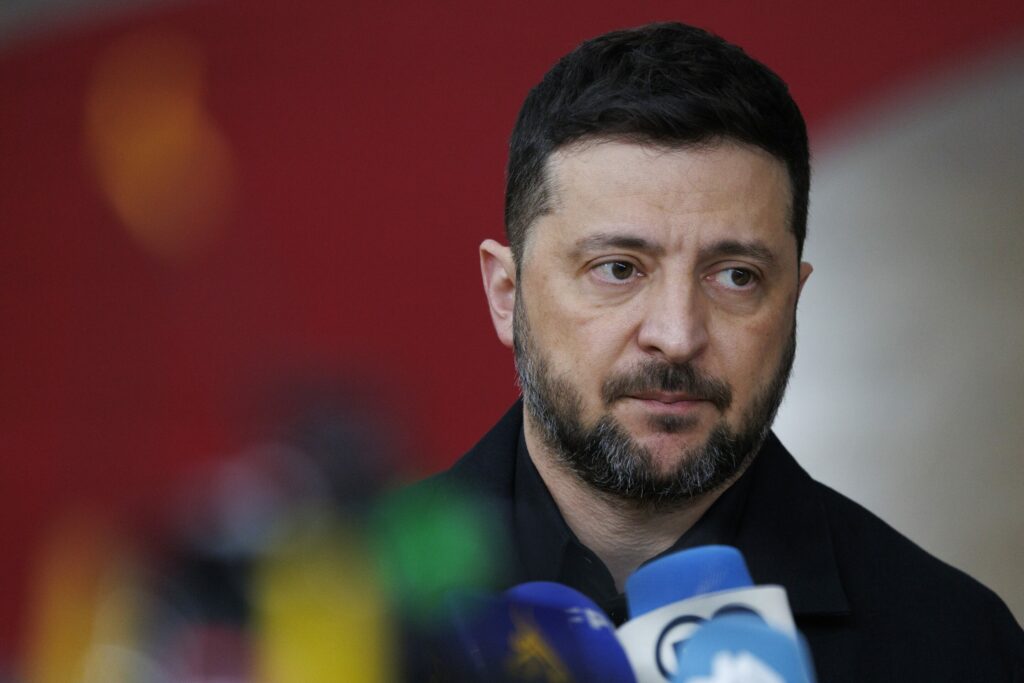
Ukraine's President Volodymyr Zelenskyy signed a law on Friday revoking the status of Russian as a protected minority language in his country.
Announcing the move, parliamentary speaker Ruslan Stefanchuk stated that the decision aims to safeguard the Ukrainian linguistic space and fulfil Ukraine’s commitments to the European Union.
Stefanchuk added that “the language of a State aggressor” cannot benefit from measures designed to protect the languages of indigenous peoples and national communities, citing justice and Ukraine’s linguistic security.
The law removes Russian from the protections offered under the European Charter for Regional or Minority Languages, a treaty ratified by Ukraine.
While Russian is not outlawed, the State is no longer obligated to provide public services in the language or to support its inclusion in educational curricula.
Before Russia’s invasion, nearly one-third of Ukraine’s population primarily spoke Russian, especially in the eastern and southern regions of the country.
Since the 2022 invasion, surveys suggest a decline in Russian language usage across Ukraine, though linguistic dynamics are complicated by the fact that Russia controls 19% of Ukrainian territory.
Language-related tensions have long been a flashpoint, and the status of Russian was a key justification cited by Moscow-backed separatists during the 2014 rebellion in eastern Ukraine.
The updated list of languages subject to protection includes Belarusian, Bulgarian, Gagauz, Hebrew, Yiddish, Karaim, Crimean Tatar, Krymchak, German, Modern Greek, Polish, Romani, Rumeika, Romanian, Slovak, Hungarian, Urum, and Czech.
