
After a rocky start where both sides threatened each other to resume the war, the United States and Iran agreed on Saturday on a roadmap towards reaching a final deal to end the war within 60 days.
Delegations from the US and Iran, led by US Vice-President JD Vance and Iran’s Parliamentary Speaker Mohammad Bagher Ghalibaf, met at a resort hotel in Switzerland to start the talks on the Memorandum of Understanding (MoU) that the two countries had signed separately last week.
According to a joint statement by mediators Pakistan and Qatar, the agreed roadmap laid the foundation for the immediate beginning of technical talks that would continue all week. A high-level committee composed of the mediator states was established to oversee the talks.
At the very start, when the American and Iranian delegations met in Switzerland, they hardly talked to each other and insisted that journalists should leave the room. Then followed nerve-rattling hours where they threatened to cancel the talks before they had even started.
The US-Iran ceasefire was first announced on 8 April and was followed by a meeting between the US and Iran in Islamabad (Pakistan). Those talks ended after only one day without any agreement, and both sides blamed each other for the collapse. At the time, Vance, who had no diplomatic experience, was leading the American delegation.
This time, the main sticking point is the ceasefire in Lebanon. Since the MoU was signed, the ceasefire has been violated by both Israel and Iran-backed Hezbollah. Trump posted on Truth Social that “Iran must immediately stop their highly paid PROXIES in Lebanon from causing trouble. If they don’t, we’ll hit Iran very hard again, just like we did last week, only harder!”
His threats prompted Iran’s chief negotiator, Ghalibaf, to warn the US that Iran’s armed forces are ready to respond. “Don’t they think that if their threats had any effect, they would not have reached today’s state of desperation? We do not take American threats into account. No matter what they say, we are the ones who act.”
The mediators’ statement said that Iran and the US have agreed to set up a "de-confliction cell" with Lebanon to stop military operations there. Lebanon and Israel are also conducting direct talks once a week in Washington on how to secure the ceasefire and normalise their relations towards a political solution. Until now, however, they have been conducted on a relatively low level.
The far-right Israeli government is trying to "decouple" Lebanon from the conflict with Iran and has been reluctant to enter serious talks with the Lebanese government as long as Hezbollah has not been effectively disarmed.
"We will remain in the security zone in southern Lebanon for as long as necessary in order to protect the precious residents of the north and all the citizens of Israel," Israeli Prime Minister Benjamin Netanyahu said yesterday. Without clear orders from the government, the Israeli army continued its strikes inside Lebanon in a war which military commentators consider both senseless and useless.
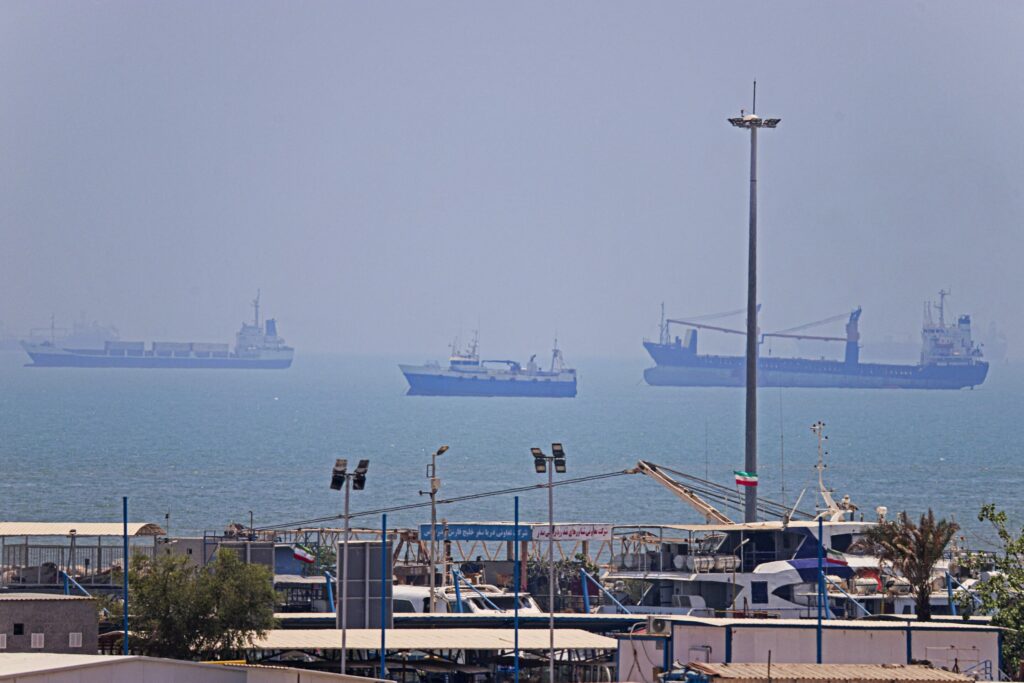
Ghalibaf’s response to Trump reflected Iran’s confidence that it emerged victorious from the war after closing the Strait of Hormuz and using it as a weapon against the global economy. Iran managed to manipulate the Trump administration to agree to an MoU on its conditions. The US committed to paying Iran up front for agreeing to a temporary MoU, which might lead to a permanent agreement on some of the issues.
The MoU consists of 14 points, but none of them addresses Iran’s ballistic missile programme and its support to terrorist ‘proxies’ in the region. The MoU makes the ceasefire with Iran dependent on the ceasefire in Lebanon and allows Iran to continue to interfere in Lebanon’s affairs and keep its links to Hezbollah. Israel was left out of the talks on the MoU. The EU was sidelined.
At the European Council last week, EU leaders adopted, among others, conclusions on the Middle East. While welcoming the MoU, “which provides an opportunity for regional stability and the full restoration of freedom of navigation and safe transit through the Strait of Hormuz”, they reiterated that Iran must never be allowed to acquire a nuclear weapon.
The Council urged Iran to comply with its legally binding nuclear safeguard obligations under the Non-Proliferation Treaty and to resume full cooperation with the International Atomic Energy Agency. It also called on Iran to put an end to its destabilising activities, including its ballistic missile programme, and on the Iranian regime to cease the violence and repression against its own people.
The Council was specific on Lebanon and urged “all actors to fully implement the ceasefire, to engage constructively in the ongoing talks, to prevent further civilian casualties and displacement and to reach a lasting political solution that ensures peace and security for both Lebanon and Israel. “The EU stands ready to support the implementation of an agreement between Lebanon and Israel.”
“The European Council strongly condemns Hezbollah’s attacks on Israel and the civilian population in northern Israel and calls for the full disarmament of Hezbollah. It calls on Israel to respect Lebanon’s sovereignty and territorial integrity and to withdraw its forces from Lebanon. It also calls on Israel to refrain from further escalation.”
However, it is difficult to see how the EU can play any active and constructive role in the US – Iran talks as long as it has been sidelined by the US. Nor is the EU trusted by the current far-right Israeli government which is unwilling to transform tactical military achievements into lasting strategic political solutions.
