
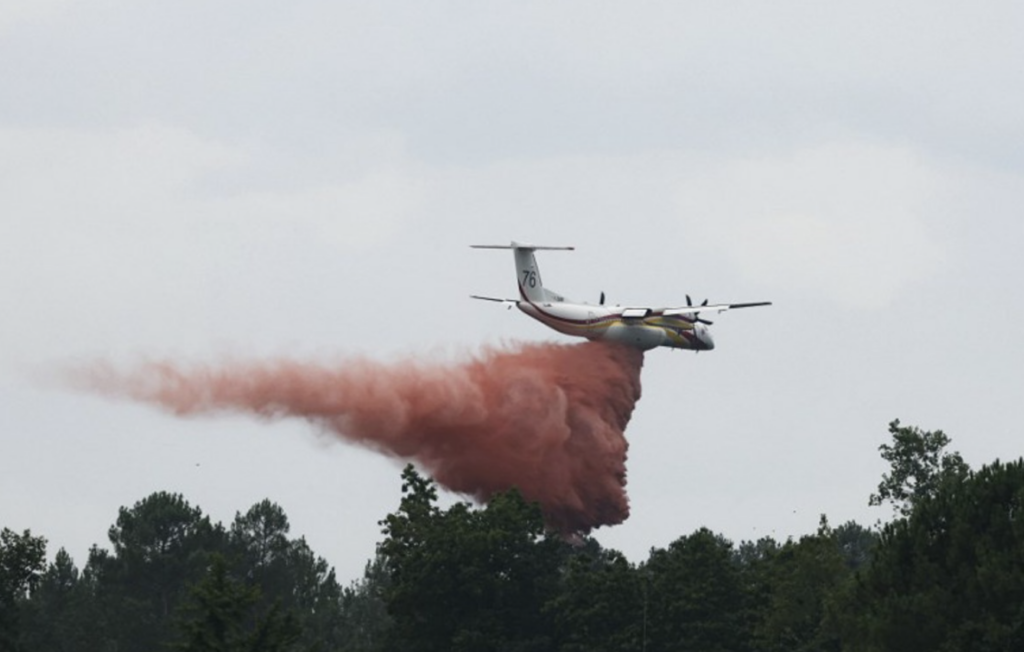
The massive wildfires across France and Spain have pushed the EU’s emergency response system to its limits but both countries have received requested support from the EU and Member States.
The 2026 wildfire season started already in April, escalated during an active surge in early July following a record-breaking June heatwave and might continue until early November. The most critical emergency conditions are expected to persist through August and September.
The unprecedented wildfires sweeping Europe in recent years show the undeniable effects of climate change with wildfires becoming more frequent and intense. The number of additional days per year with high-to extreme fire danger are increasing because of global warming.
Climate change is not only increasing the size of the areas affected by wildfires, but also making individual fires more intense, prolonging the fire season beyond the traditional summer period, and causing fires to happen in areas that were not usually affected by them. Aerial firefighting becomes more arduous and ground operations become more difficult or even impossible.
According to EU’s annual Forest Fires reports, almost all wildfires in the EU are caused by human actions. About half of them are intentional, including arson, and the other half accidental and due to negligence. Investigations of wildfires is a Member State competency but only few of the wildfires are investigated.
Since beginning of July, 162 people have been arrested on suspicion of starting forest fires in France, Prime Minister Sébastien Lecornu wrote on X. According to the minister, the crime can result in up to 15 years in prison and security forces should be mobilized to identify arsonists.
A Belgian study showed that most wildfires in Belgium are caused by human activity rather than natural events, leading researchers to recommend stronger public awareness campaigns. Discarded cigarette butts, cigarette ends thrown from moving vehicles, campfires, barbecues, machinery that creates sparks and deliberate acts all contribute to the problem.
The blazes this summer have caused one of the largest evacuation operations in European history. The EU has deployed assistance to both France and Spain under its Civil Protection Mechanism as the ongoing wildfires have displaced over 325,000 people in both countries.
When a country asks for help through the EU Civil Protection Mechanism, the request is shared with all EU Member states and ten additional participating states: Albania, Bosnia and Herzegovina, Iceland, Moldova, Montenegro, North Macedonia, Norway, Serbia, Türkiye, and Ukraine.
The solidarity mechanism is managed by EU’s Emergency Response Coordination Centre (ERCC) at Directorate-General ECHO in Brussels. The centre coordinates the requests, assesses the risks, monitors the evolving situation and predicts the outbreak of wildfires and their spread using satellite maps produced by Copernicus, the EU’s earth observation system.
The ERCC relies on two layers of assistance. The first layer is the assistance and expertise which can be provided from the participating countries. Each country offers available aircraft, helicopters, firefighting teams, equipment or experts. The European Commission coordinates and co-finances their deployment.
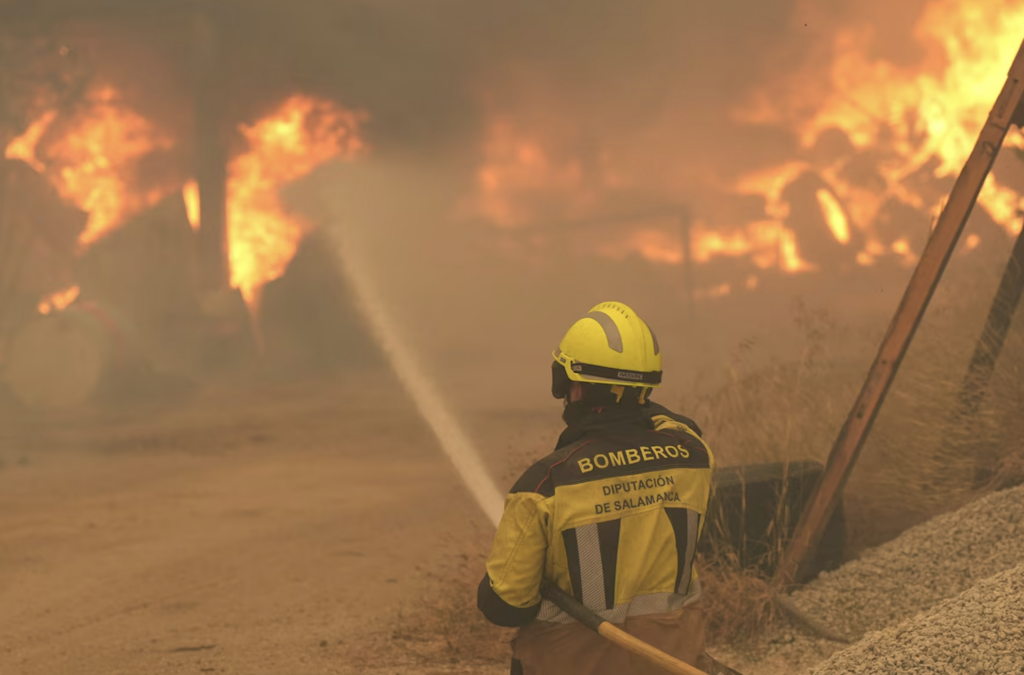
Firefighter tackles fire near Madrid in July 2026. Credit: Belga / AFP
In 2019, the EU upgraded the EU civil protection mechanism and created rescEU, an additional layer of protection, which includes a fleet of 22 planes and five helicopters. Fully financed by the EU, rescEU strengthens European preparedness to disasters and emerging risks, and boosts the EU’s capacity to respond to emergencies.
Not all planes in the two protection layers can be deployed to a single country even in a catastrophic emergency. A Commission official explained that Member States need also to plan for national responses. There must also be an adequate technical fit for integrating outside help in the national response to an emergency.
In preparation for this summer’s wildfires, a total of 777 firefighters from 14 different countries (Austria, Bulgaria, Czechia, Estonia, France, Germany, Greece, Italy, Latvia, Malta, Moldova, The Netherlands, Romania and Slovakia) were pre-positioned in 6 high-risk Mediterranean countries (Cyprus, France, Greece, Italy, Portugal, and Spain).
The existing pool of aircraft acquired by rescEU is a scarce resource and the Commission is still in the process of buying more planes. An agreement with Canada on the production of 22 new amphibious firefighting planes was signed in 2024. Half of the planes are aimed for rescEU and the other half for Member States. Delivery will start by the end of 2027 and continue until 2030.
Analyzing the satellite maps, the EU emergency centre predicts how the fires will move the next 48 hours. It can adjust the parameters but sudden developments on the ground can the quickly change the real picture. It admits that the emergency response is not always sufficient to extinguish the fires.
Asked what it would do if it had more resources, it replied that it would invest more in preventive measure and forest managing.
“We are nowhere near from exhausting the overall capacities of our civil protection mechanism and the capacities that we potentially have available through the mechanism,” a Commission spokesperson assured on Tuesday. “It’s important to clarify that no country can maintain alone all the resources that are needed to tackle every possible natural or other disaster and crisis,” she added.
“We reply to requests when they come and together with the other countries in the mechanism we try to answer in the best way possible with this European solidarity in mind.” The Commission is not aware of that any request for aid this summer has been denied so far.
“We are obviously constantly monitoring this very closely because France and Spain are not the only countries at high risk of forest fires more generally but we but do not have any updates to give for the moment.”
In France, media reported earlier this week that the situation had deteriorated with officials saying that firefighters had encountered an unprecedented phenomenon - a “fire cloud” (pyrocumulonimbus), which is difficult to extinguish and predict. Would the Commission’s emergency response centre be able to extend more aid if needed in such a case?
“When there are requests from Member States, we’ll match the requests and send help if needed,” the spokesperson replied. “The Member States and their experts are best placed to assess the gravity of the situation, the type of fires, and the type of equipment and help they need.”
On a positive note, people who have been evacuated have already started to return home. In the region surrounding the Spanish capital of Madrid, thousands of people returned home on Wednesday after being evacuated for several days due to the wildfires. Residents of three municipalities near Bordeaux will also be allowed to return home.
“Right now, hundreds of thousands of people have been forced to flee their homes, while firefighters battle walls of flame in dramatic conditions to save lives and communities,” said the Commissioner for Preparedness, Crisis Management and Equality, Hadja Lahbib.
“No country should ever have to face a disaster of this scale alone. That is exactly why Europe built a common response capacity: Europe will stand with you until the fires are out.”
Support sent to France
Support sent to Spain
|
