
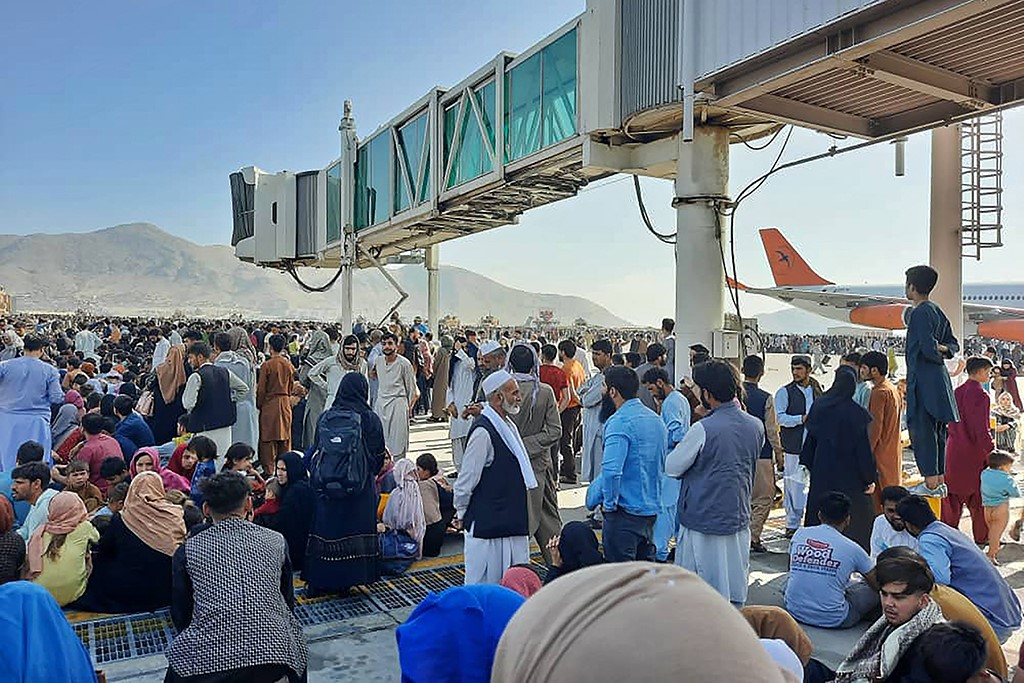
The fifth anniversary of the Taliban power takeover of Afghanistan on 15 August 2021 was celebrated with a military parade in Kabul. The EU, the UN and international aid organisations marked the day by highlighting their concerns about the humanitarian, human rights, economic and climate crises Afghanistan faces today.
The sudden fall of Kabul and the chaotic scenes that followed at its airport five years ago are still vivid in memory. The collapse of the US-supported Afghan government followed the failed Doha agreement in 2020 signed by the first Trump administration. The agreement stated that the Taliban and the government would conduct negotiations on a peaceful transfer of power after elections. This never happened.
"Five years after Western soldiers, diplomats, and development agencies left Afghanistan, they have turned their back on a civilian population caught in an increasingly dire humanitarian situation,” said Jan Egeland, Secretary General of the Norwegian Refugee Council. "NATO countries have forgotten their solemn promises to Afghan girls and boys.”
After the 11 September (2001) terrorist attack, the US invoked article 5 in the NATO treaty. The war against the Taliban was endorsed by NATO and involved all its members, including EU Member States that not yet had become NATO members.
“We find ourselves increasingly alone in facing growing needs and shrinking rights for girls and women across Afghanistan. A growing funding gap is forcing humanitarian organisations to scale down food, water, shelter and medical assistance to homeless and starving Afghan families,” Egeland added.
The return of more than six million Afghans from neighbouring countries (Iran and Pakistan) since late 2023 has created additional humanitarian needs in a country already plagued by overlapping crises. Recurring climate shocks, regional tensions, and the shrinking space for women and girls since the Taliban retook power have placed additional pressure on communities.
Millions of Afghan refugees have returned to an uncertain life and future where they must start again from scratch. Up to 73 per cent of those returning remain unemployed, and there are very few livelihood opportunities.
Funding for the humanitarian response has continued to decline considerably since 2021 according to NRC. The annual Humanitarian Needs and Response Plan was nearly 96 per cent funded in 2021. In 2025, this had dropped to 42 per cent. So far this year, only 26 per cent of the required funding has been provided.
EU conditions not met
In a statement, the EU described the situation as dire. “With a collapsed economy, half of the population in Afghanistan need humanitarian support, including millions of Afghans who have recently returned from neighbouring countries. The country also faces high levels of climate vulnerability and imminent water crises, in rural areas and some major cities.”
“Systemic human rights restrictions are in place, including some of the world’s most severe violations of the rights of women and girls. In a region facing major risks of destabilisation linked to terrorism, narcotics, climate and uncontrolled migration flows, Afghanistan also faces a persistent presence of militant and terrorist organisations.”
The EU has provided more than €2 billion in assistance over the past five years, combining humanitarian aid, basic needs and support for people’s livelihoods. The implementation of EU aid is implemented through non-governmental organisations (NGOs), UN agencies, the Red Cross/Red Crescent and the World Bank Group.
The EU underlined that it continues to stand by the people of Afghanistan and that a stable, peaceful and prosperous Afghanistan is in Europe’s strategic interest.
The EU does not recognise or legitimise the Taliban-run de facto authorities but maintains operational contact with them on European core values and interests, including women’s and girls’ rights. Shortly after the Taliban takeover, the EU adopted a policy of ‘operational engagement’. It has kept a diplomatic representation in Kabul, at Chargé d’Affaires level, and appointed a special envoy for Afghanistan.
After the Taliban takeover, former High Representative Josep Borrell listed five conditions for EU’s relations and engagement with Kabul but none of them has been accepted or complied with by the regime.
“Women’s rights in particular is a fundamental point,” said Gilles Bertrand, the EU Special Envoy for Afghanistan, in a recent interview for AMU TV, a television network founded by exiled Afghan journalists.
“It’s not only an issue of fundamental rights. It’s also an issue of the sustainability of the very social fabric of Afghanistan. They cannot have a society where women are banned from or girls are banned from studying beyond sixth grade.”
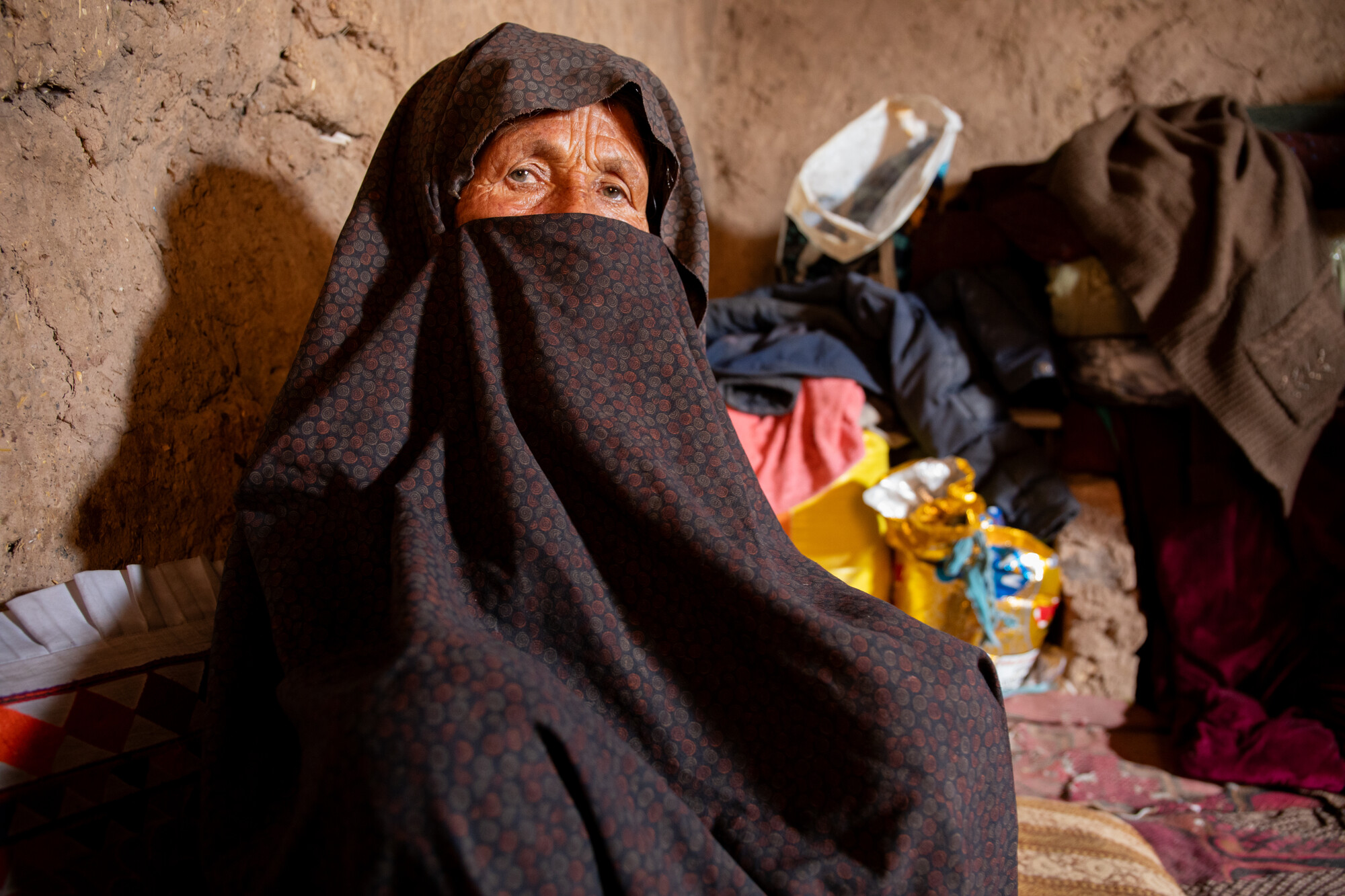
Bibi Gul, 76, in an informal settlement on the outskirts of Herat. As the head of a six-member family, she shoulders the burden of their survival, credit: Maisam Shafiey/NRC
Unsafe for forced returns
After the Taliban took power in 2021, EU Member States brought former local employees, interpreters, and contractors to safety but many more were left behind due to the chaotic military withdrawal and bureaucracy.
As regards Afghan women, the European Court of Justice has ruled that Afghanistan is entirely unsafe for women due to its institutionalized system of gender segregation. Deporting individuals belonging to targeted minorities - such as the Hazara ethnic minority – is also forbidden.
The UN High Commissioner for Human Rights, Volker Türk, warned recently that Afghanistan is completely unsafe for any forced returns. “Afghan women, children and men continue to be pushed out of countries where they had sought safety, forcing them to return to Afghanistan against their will and exposing them to grave risk.”
Notwithstanding his warning, the EU held a technical-level meeting on 23 June in Brussels with a five-member Taliban delegation on establishing cooperation regarding the return and readmission of Afghan nationals with no legal right to stay in Europe, especially individuals convicted of serious crimes or deemed security threats.
The meeting was reportedly co-chaired by Sweden and the European Commission and attended by representatives of 15 EU Member States that have been receiving the majority of Afghan asylum seekers and migrants. Belgium acted as the physical host and issued restricted, one-day visas.
The outcome of the controversial meeting has never been disclosed. Besides statements made by the Commission spokespersons, no official statement was issued. The meeting reportedly ended with an agreement to build on on-going technical coordination but no exact number of forced returns was set.
