
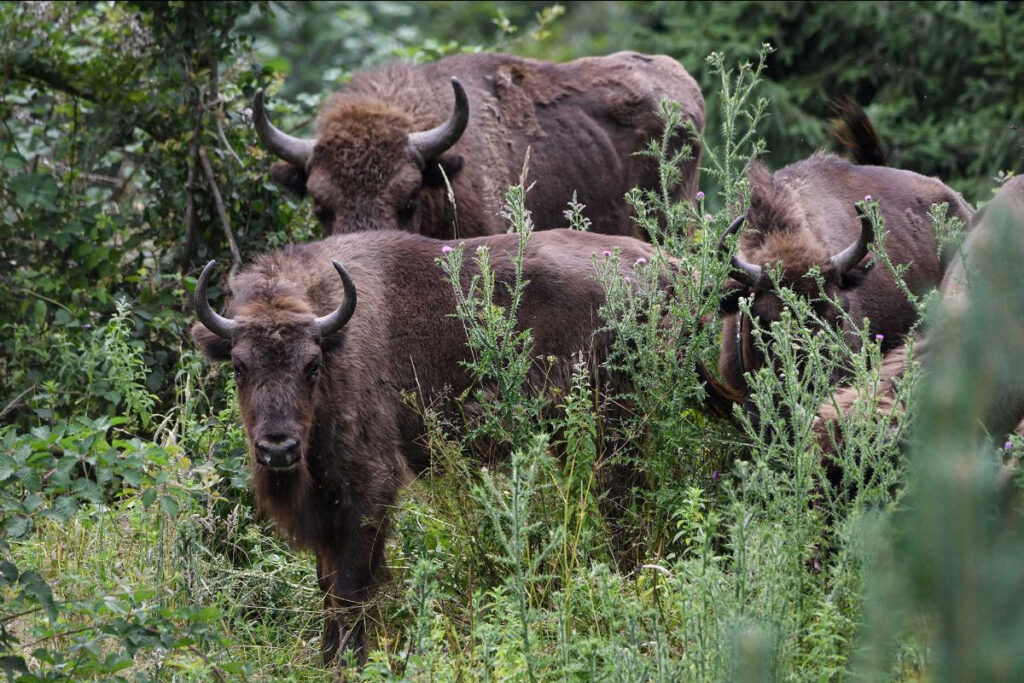
European bison will be reintroduced to Belgium from 2027 in the Bosland National Park in Limburg, WWF and project partners announced on Wednesday. Preparatory work to accommodate the first animals will begin in the coming months.
The project aims to boost wilderness and natural ecological processes by bringing back large herbivores whose presence is considered essential. Alongside European bison, wild horses will help regenerate the Pijnven forest in Hechtel-Eksel.
The animals will roam in semi-freedom inside the national park. By dispersing seeds and opening up dense scrub areas, they are expected to diversify the landscape and stimulate biodiversity.
WWF notes that the initiative will also contribute to the long-term survival of the European bison, a species that nearly vanished after the last wild specimen was killed in 1927.
Thanks to captive-breeding and reintroduction efforts since the 1950s, the global population now stands at around 6,800, according to the 2024 Living Planet Report. The species is currently listed as 'near threatened' on the IUCN Red List.
For the Bosland project, WWF Belgium will draw on expertise gained from similar rewilding programmes in the Netherlands, Denmark and Romania. GPS collars will be used to monitor the animals’ movements and ecological impact.
"We are not just releasing animals; we are restoring a missing piece of the ecosystem," said Pepijn T'Hooft, Programme Manager at WWF Belgium, adding that Bosland could become 'an inspiring model for the whole of Belgium.'
