
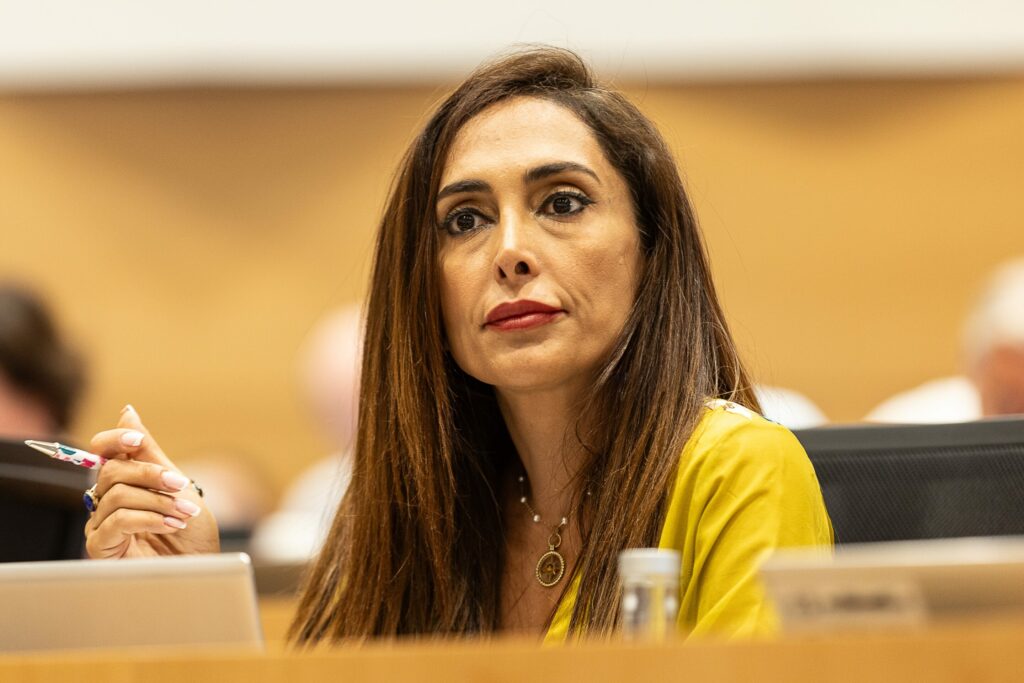
Iranian-born Belgian Darya Safai's love for her motherland has never been stronger – and she is more determined than ever to fight for its soul.
Safai, who has been an N-VA (Flemish nationalist) MP in the Belgian Parliament since 2019, has been blacklisted by the Iranian regime for nearly three decades after participating in student protests in the country. In 2025, we spoke to her after the public prosecutor of Halle-Vilvoorde launched an investigation into an alleged plan by the Iranian regime to kidnap her.
Amid a new wave of protests in Iran, Safai sat down with The Brussels Times to share her thoughts on recent developments in the country and to set out what Europe should be doing to support Iranian protesters.
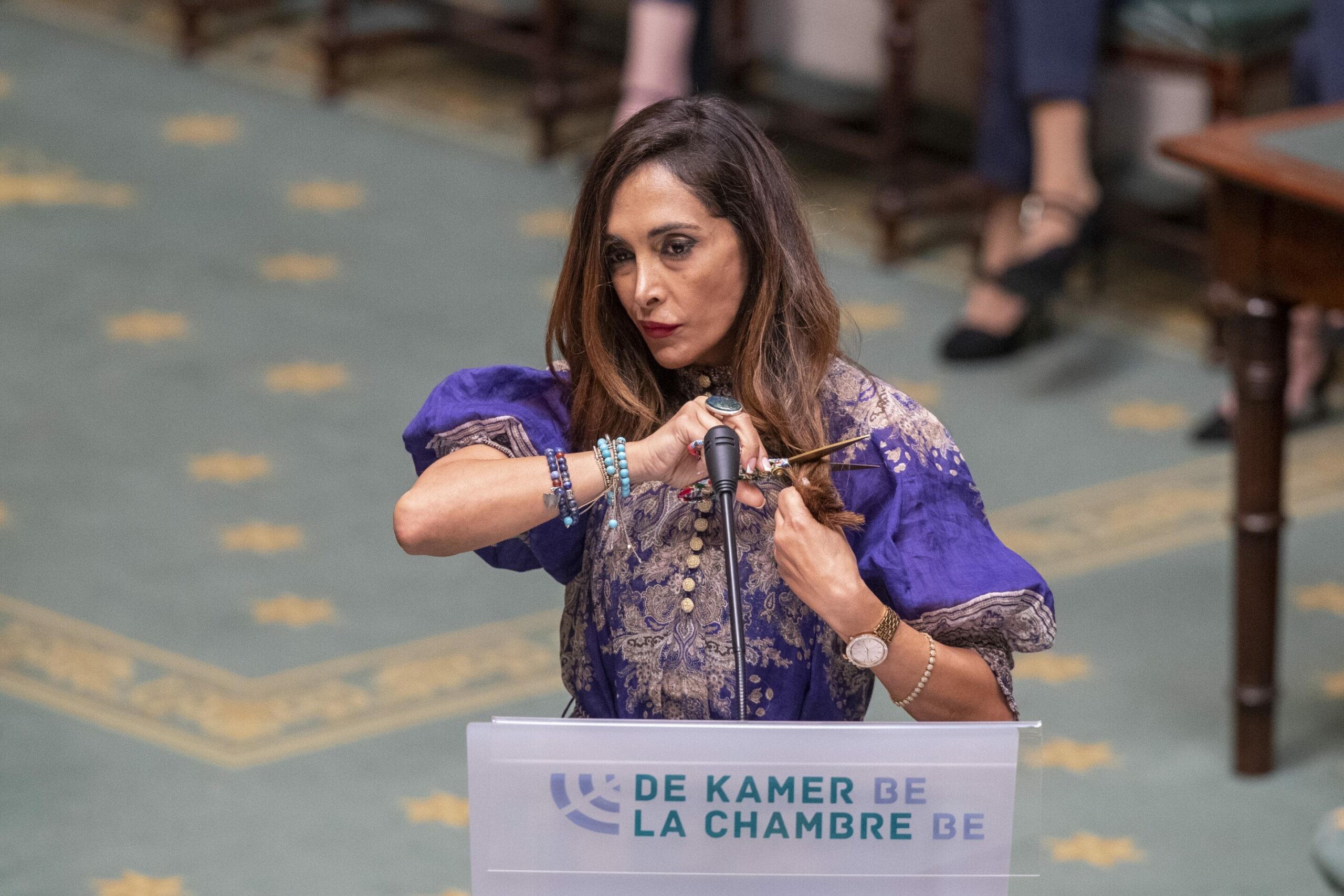
Darya Safai cutting some of her hair as protest against events in Iran and other parliament members applaud during a plenary session of the Chamber at the Federal Parliament in Brussels, Thursday, 06 October 2022. Credit: Belga/Nicolas Maeterlinck
In her view, some Western political parties and media outlets have proved reluctant to fully acknowledge the nature of the uprising because it doesn’t fit their own ideology. She reserves her sharpest criticism for parts of the West she believes still misunderstand, or wilfully misread, what is happening in Iran.
Safai doesn’t pull any punches when discussing her political enemies in Iran and here in Belgium. "Iran's protesters are inconvenient for certain political parties in Europe," she argues. "The problem is that they share the same enemy – Western civilisation."
By that logic, she argues, Islamist movements and sections of the Western far left can end up occupying the same moral territory, united less by shared values than by shared antagonisms.
She suggests a democratic, secular Iran would weaken the ideological backbone of Islamist extremism far beyond its borders and redraw the geopolitical map.
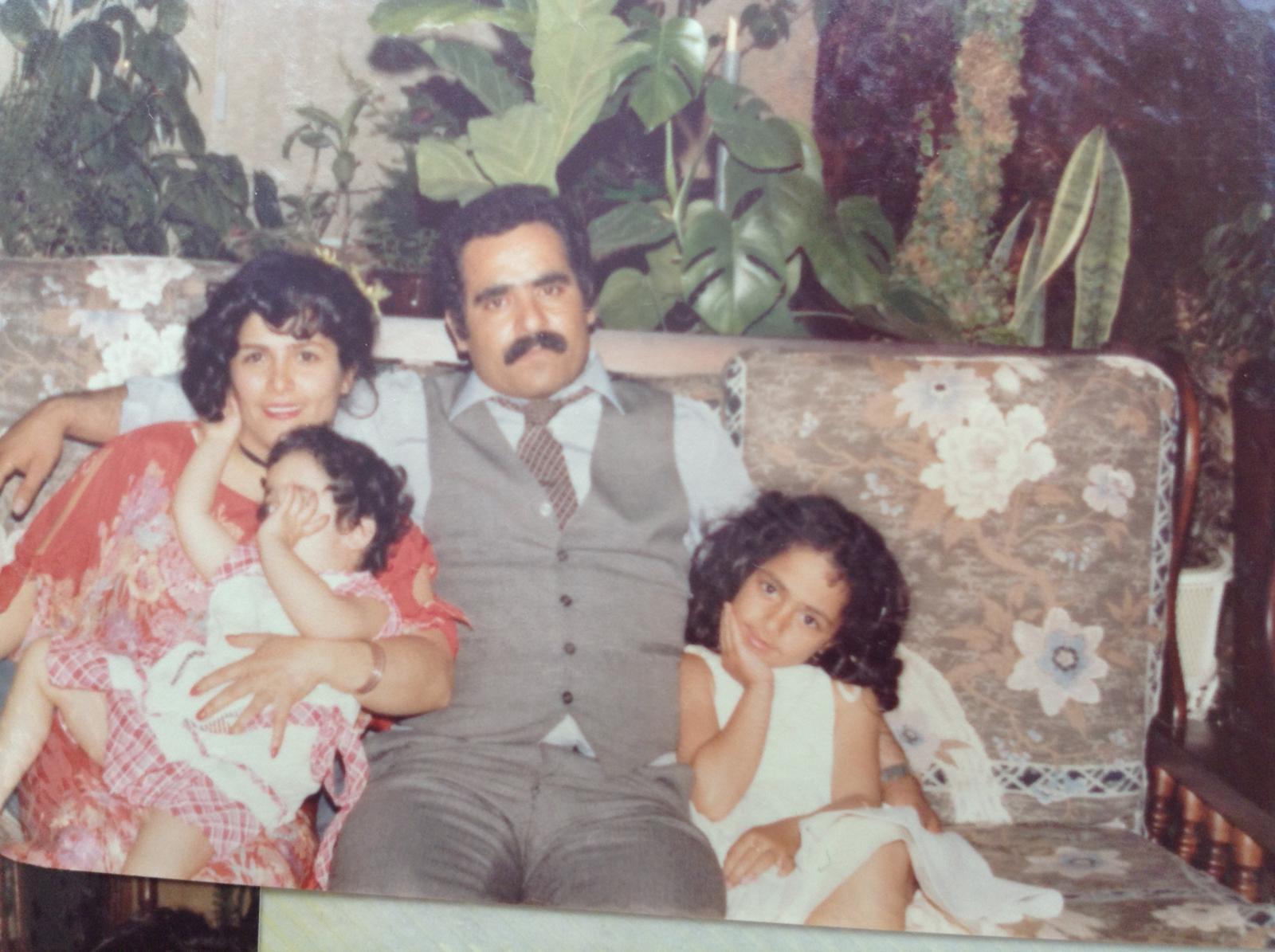
Young Darya with her parents in Tehran. Credit: Handout
For Safai, the stakes are high – and the issue is deeply personal. Her father's opposition to the regime served as inspiration for her own political awakening.
"My father was a man of values," she says. "Even after the Islamic Revolution of 1979, which overthrew the Pahlavi dynasty, he continued to wear his tie and talk about the Shah, a symbol of great rebellion at the time.
"The tie was a symbol of Taghut [an Islamic term that refers to anything worshipped besides God], but he never took it off after the revolution because he said the ayatollahs are not the representatives of Iranians."
She remembers her father offering his home as a place for secret gatherings. Safai and her student friends would meet there and organise their protests, which were motivated, she says, by deep patriotism.
"We would begin our conversations and end them with a hymn about fighting for Iran, and my father would always be encouraging."
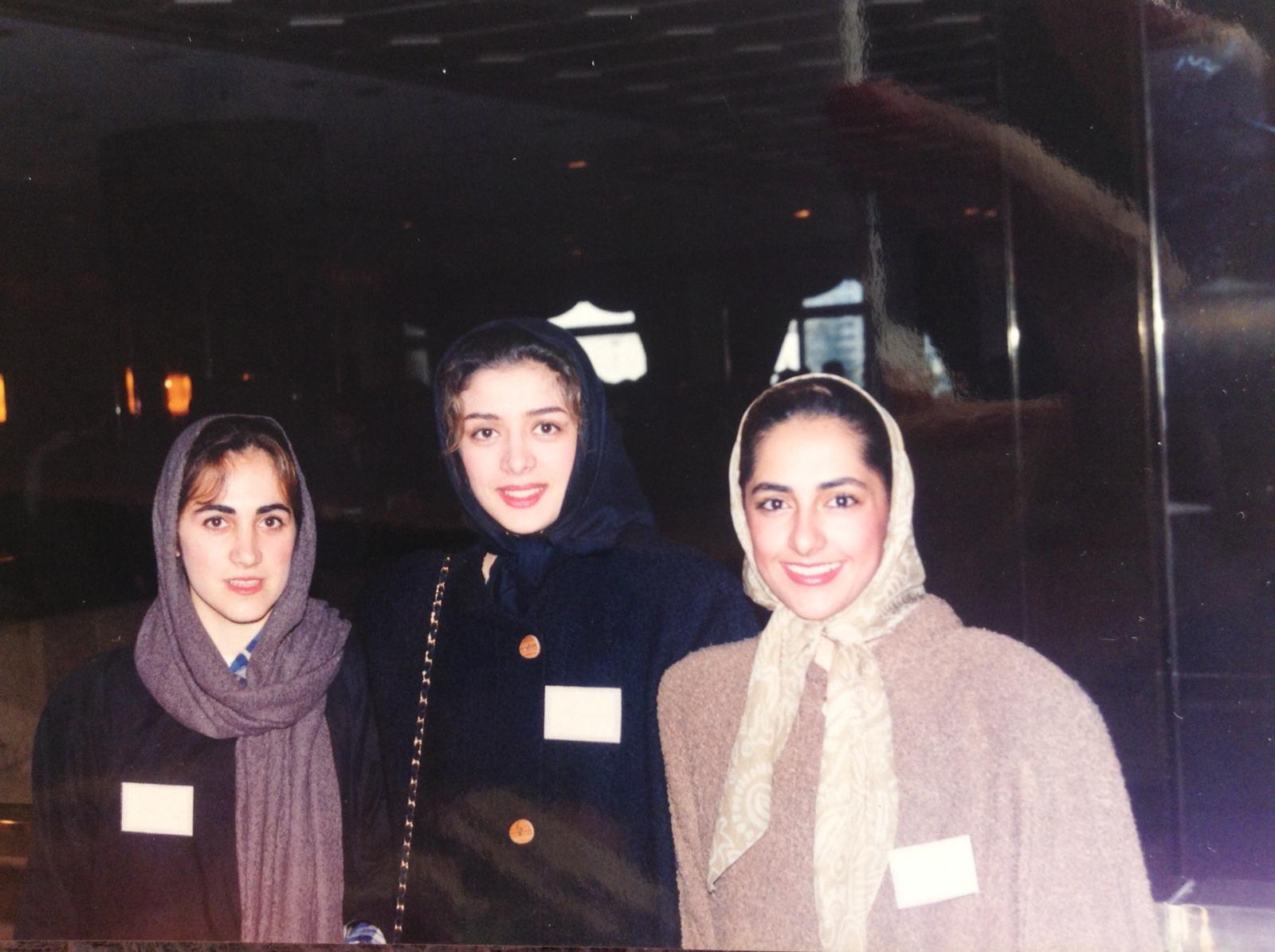
Darya with her friends in Iran. Credit: Handout
Escape to the West
In 1999, 23-year-old Safai was finishing her degree in dentistry at the University of Tehran. The reformist Iranian newspaper Salam was shut down by the regime that year, which ignited a widespread protest led by her and her husband.
The Iranian government ordered their arrest during the protest. Her husband Saeed managed to flee, but Safai was arrested.
Her jail time in Towhid prison, notorious for torturing political opponents, lasted no more than 24 days, but that was enough to cement what her father explained to her about the ayatollahs.
She claims that prison guards would inflict mental torture by alluding to her possible execution every day. She remembers the case of Saaed Zeinali, a young man her age who was arrested and transferred to Evin prison, where he was tortured and killed. To this day the family is still looking for his body in order to bury him.
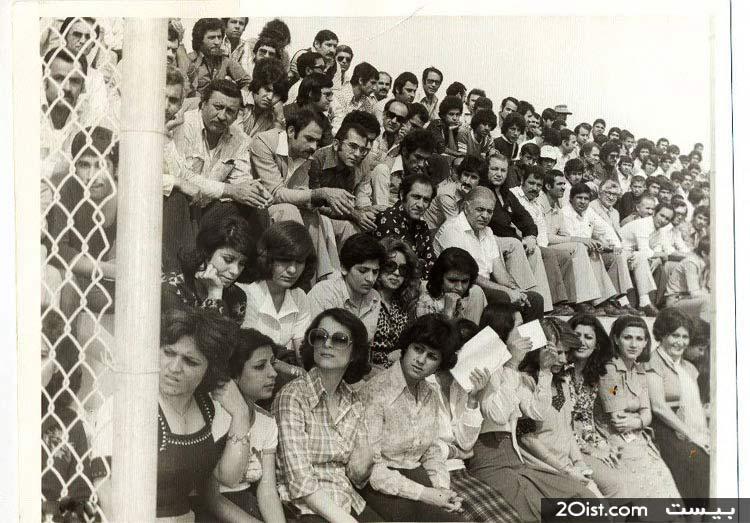
In 1999, reformist Iranian newspaper Salam was shut down by the regime, which ignited a widespread protest led by Safai and her husband. Credit: Handout
Safai was released on bail because the regime gambled that she would lead them to her husband in hiding. She secretly contacted him, and together they decided to flee Iran as soon as possible.
After arrest by the Turkish authorities, Safai and her husband managed to reach Belgium. Because he had studied dentistry at the Free University of Brussels, the Belgian government decided to give him a transit visa.
On 28 June 2000, the couple landed at Brussels-Zaventem airport. So began her new life of activism in Belgium.
Through her protests at major sporting events, including the Rio Olympics, she drew international attention to the issue of women's attendance in stadiums.
In the 2019 Belgian Federal election, Safai stood on the N-VA's list in the Flemish Brabant region and was elected to the Chamber of Representatives.
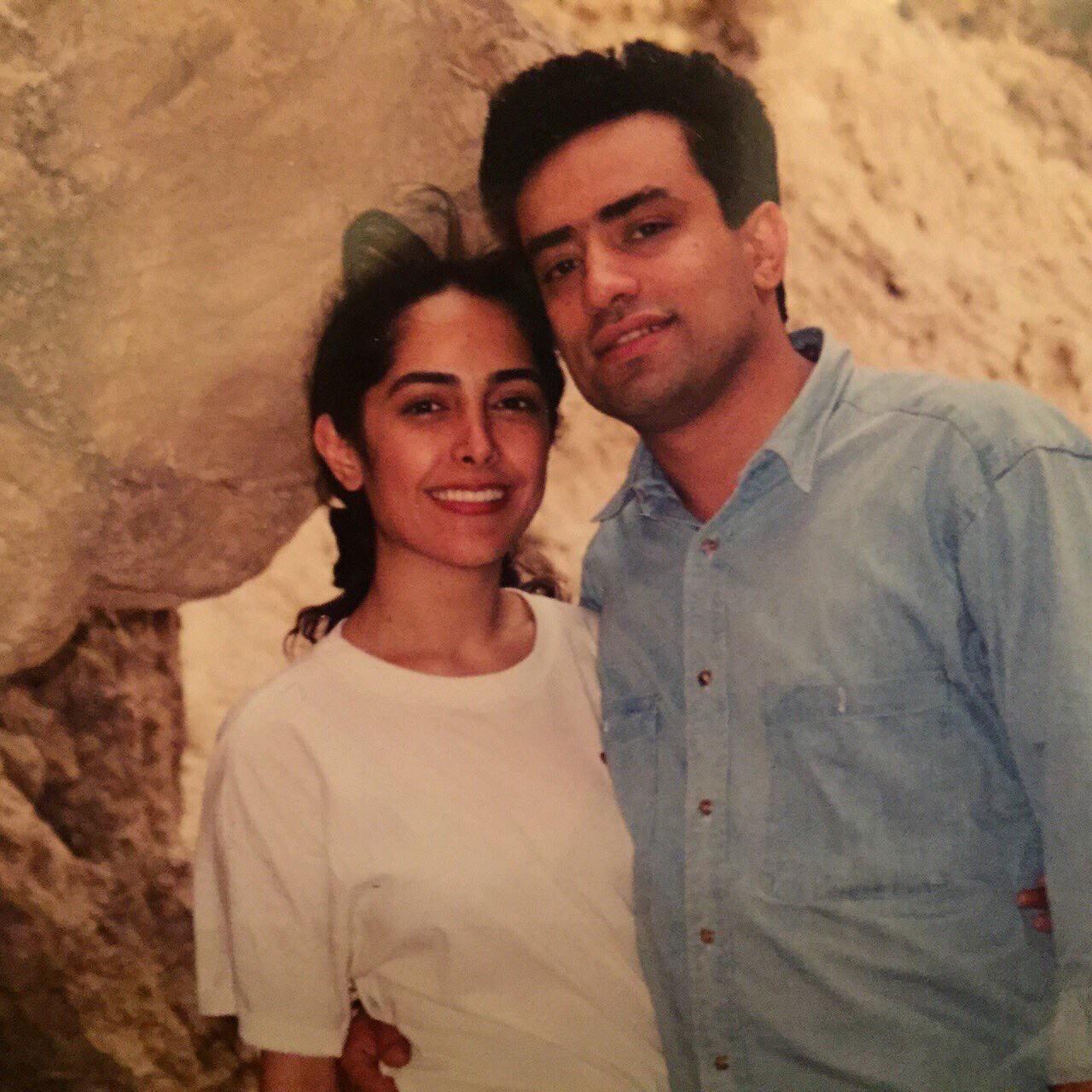
Darya and her husband Saeed. Credit: Handout
'Waking up from a 47-year bad dream'
Iran has gone through multiple periods of unrest since then, but today Safai says that Iranians are "finally waking up from a 47-year bad dream".For the first time in decades, she claims, Iranians are openly naming an alternative to the regime.
"We couldn't name Reza Pahlavi [the son of the last Iranian shah] even in our conversation with another friend, now people are calling his name on the streets – that's the difference" she says.
Demonstrators have chanted slogans such as "Death to the dictator" and "This year is the year of blood - Seyyed Ali (Khamenei) will be overthrown".
Safai claims that Pahlavi has become a figure that looms large in the Iranian popular imagination, not because Iranians are nostalgic for the monarchy, but because he is seen as a possible saviour from the ayatollahs.
This is, she believes, what makes the current moment harder to dismiss. Protest movements can be worn down when they are seen as raw anger without a destination.
Safai claims the destination is now being spoken aloud, and people are not whispering anymore.
