
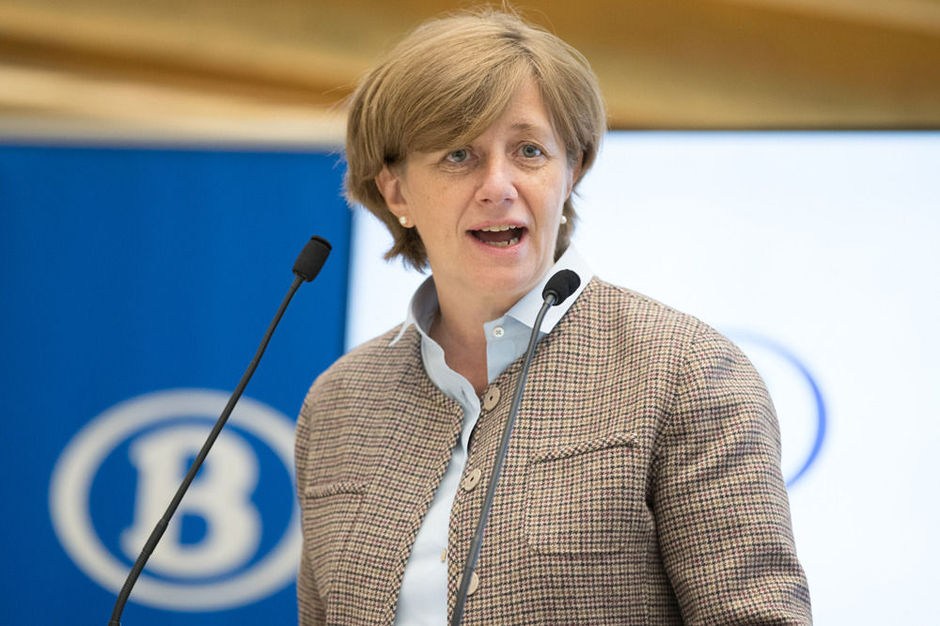
The head of Belgium's national rail operator SNCB has warned that continued strike action is no longer reasonable towards passengers, the government or the company itself.
Speaking to VRT NWS, chief executive Sophie Dutordoir said she is increasingly irritated by the scale of industrial action, after 31 strike days since January last year. She urged trade unions to return to the negotiating table and coalesce around a social pact for future employees.
"What is happening today is simply unacceptable," Dutordoir said, pointing to the disruption caused to passengers and the reputational damage suffered by the rail company. She also noted that the government invests around €2 billion a year in the railways, making prolonged conflict counterproductive.
Rail workers have been striking over pension reforms and the end of permanent appointments for new hires. Transport Minister Jean-Luc Cruck (Les Engagés) has since suspended talks with unions after preliminary agreements failed to secure broad backing, and his draft legislation has been approved by the Council of Ministers.
Dutordoir stressed that the government's decision has now been made and that SNCB must prepare for the liberalisation of domestic rail services in 2032.
"We are currently the only railway company in Europe that is not yet hiring contract staff," she said, calling the current situation a fault line that cannot be ignored.
Preparing for 2032
Under EU rules, the domestic rail market will be opened to competition in 2032. Dutordoir said SNCB would have to fight to maintain its position and warned that the company cannot afford laggardly reforms.
"This is no longer just a dispute between unions and the government," she said. "Now is the moment for employers and representative unions to step in and conclude a strong social pact."
She said future contracts must guarantee sustainable careers, fair conditions and staff wellbeing, while giving the company the flexibility it needs to compete.
Good figures under a pall
Despite the industrial unrest, SNCB has posted solid operational results. Last year, 91.7% of trains ran on time, the best punctuality figure in 20 years, and passenger numbers rose by 8%. However, 45,451 trains were cancelled fully or partially.
"3.7% cancellations are still too many," Dutordoir admitted. She cited infrastructure works, trespass incidents and capacity constraints as ongoing challenges, describing the network as overstretched.
Major investment is still needed, particularly on key routes such as Antwerp – Brussels and Antwerp – Ghent, as well as at Brussels-South station. "It's five to twelve," she warned, as preparatory work for liberalisation gathers pace.
Asked about her own future, Dutordoir said she remains self-possessed and committed. "The day I run out of energy, I'll quit," she said. "But my mandate runs until March 2029. After that, every organisation needs fresh impetus."
