
For the first time, Belgium's public health institute Sciensano carried out a large-scale monitoring of drugs in sewage throughout the country last year. Now, the results just came in, and they are revealing.
The idea came about in 2020 during the Covid-19 crisis. The institute initially focused on monitoring SARS-CoV-2, and later expanded to influenza, respiratory syncytial virus (RSV), poliomyelitis and now, drugs.
Analysing sewage waters provides rapid information with respect to individual privacy, expert on illicit drugs Maarten Degreef told The Brussels Times. It also includes hidden users and marginalised groups, he highlighted.
Taken during the week of 24 to 30 March 2025 from 17 sewage plants across the nation, the stations cover almost all of Brussels and about a quarter of the population of Flanders and Wallonia.
The proliferation of 'gak'
Cocaine – sometimes informally called 'gak' – is ubiquitous in Belgium's used waters. It is the most commonly used illicit substance after cannabis, and the most widely consumed stimulant among the general population, according to the scientists.
It was detected in all samples and in all Belgian cities' wastewaters. The highest levels were measured in Antwerp-south, Brussels and Liège. "In Antwerp, it is undoubtedly linked to the harbour nearby," Degreef explains.
A recent survey by the institute indicates that 1.6% of the population aged 15 to 64, representing around 120,000 people, used cocaine in 2024.
Cocaine was also involved in one-third of acute drug intoxication cases treated by Belgian emergency services, and it was detected in samples from two-thirds of drivers found to be driving under the influence of drugs.
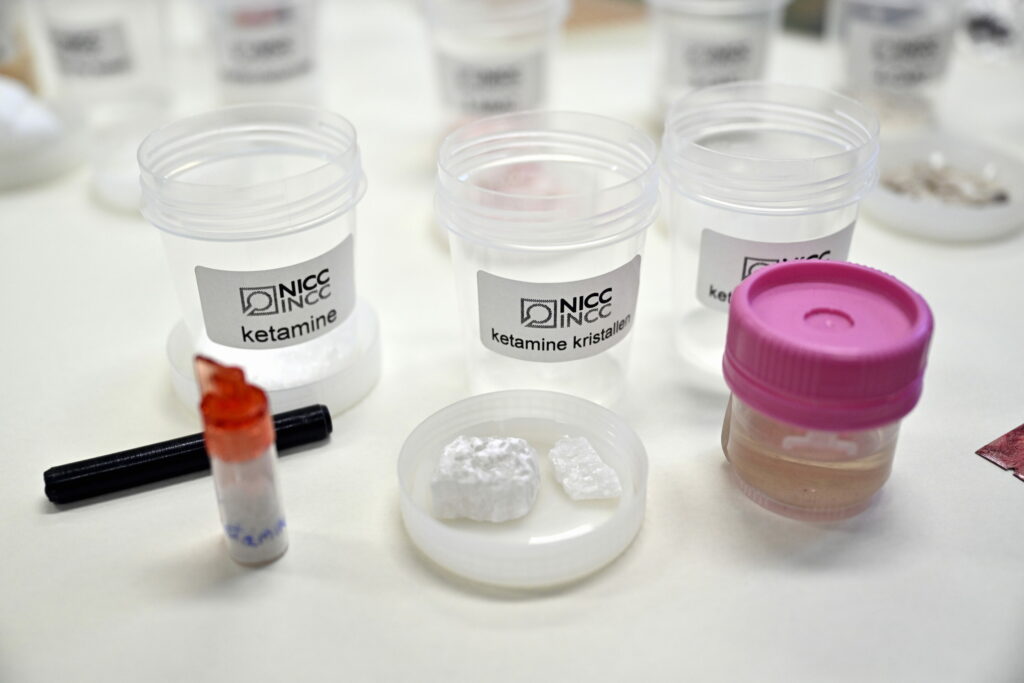
Other types of illicit powders consumed exponentially in Belgium are ketamine and synthetic cathinones (3-MMC and 4-MMC)
"We have seen an increase not only in traditional drugs but also in synthetic drugs," Natalie Meert, head of the drug unit at the National Institute of Criminalistics and Criminology (NICC), told The Brussels Times.
"Ketamine (K) and synthetic cathinones are also clearly appearing more often in the samples we analyse," she added.
The consumption of K is clearly established across the country and used in multiple contexts, mainly in nightlife and student environments, the study highlights. It also gained popularity very quickly on the drug market.
4-MMC was not detected, while 3-MMC was identified in two of the 17 wastewater treatment plants. This contradicts assumptions from other studies suggesting that their use is increasing. Thanks to this analytical method, there is now clear evidence regarding their actual presence.
The NICC already sounded the alarm in September of last year over the emergence of appealing-looking pink powders for festival-goers.
At the time, National Drug Commissioner Ine Van Wymersch explained to The Brussels Times how big festivals like Tomorrowland (that attracted at least 400,000 people in 2025) were "a real-time snapshot of the drug market".
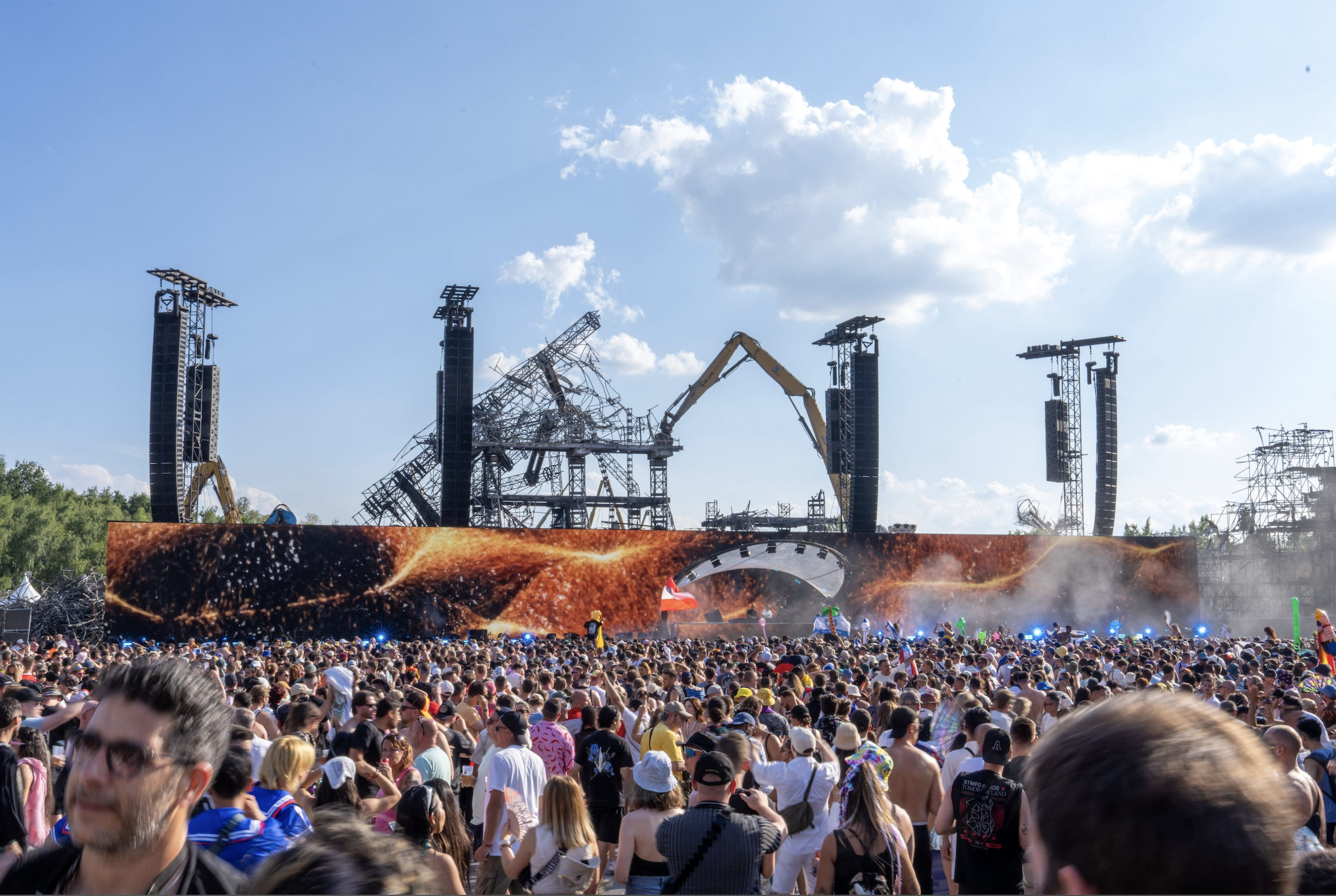
Tomorrowland 2025. Credit: Belga / AFP
"They are like a miniature society where supply meets demand, and dealers do not hesitate to test new substances there." Van Wymerch explained.
Pink powder was first seized in 2022 in Belgium and is mainly traded from Latin America, Asia or Spain. The unpredictable makeup of essentially different chemicals poses acute risks of overdose and unexpected side effects to this day.
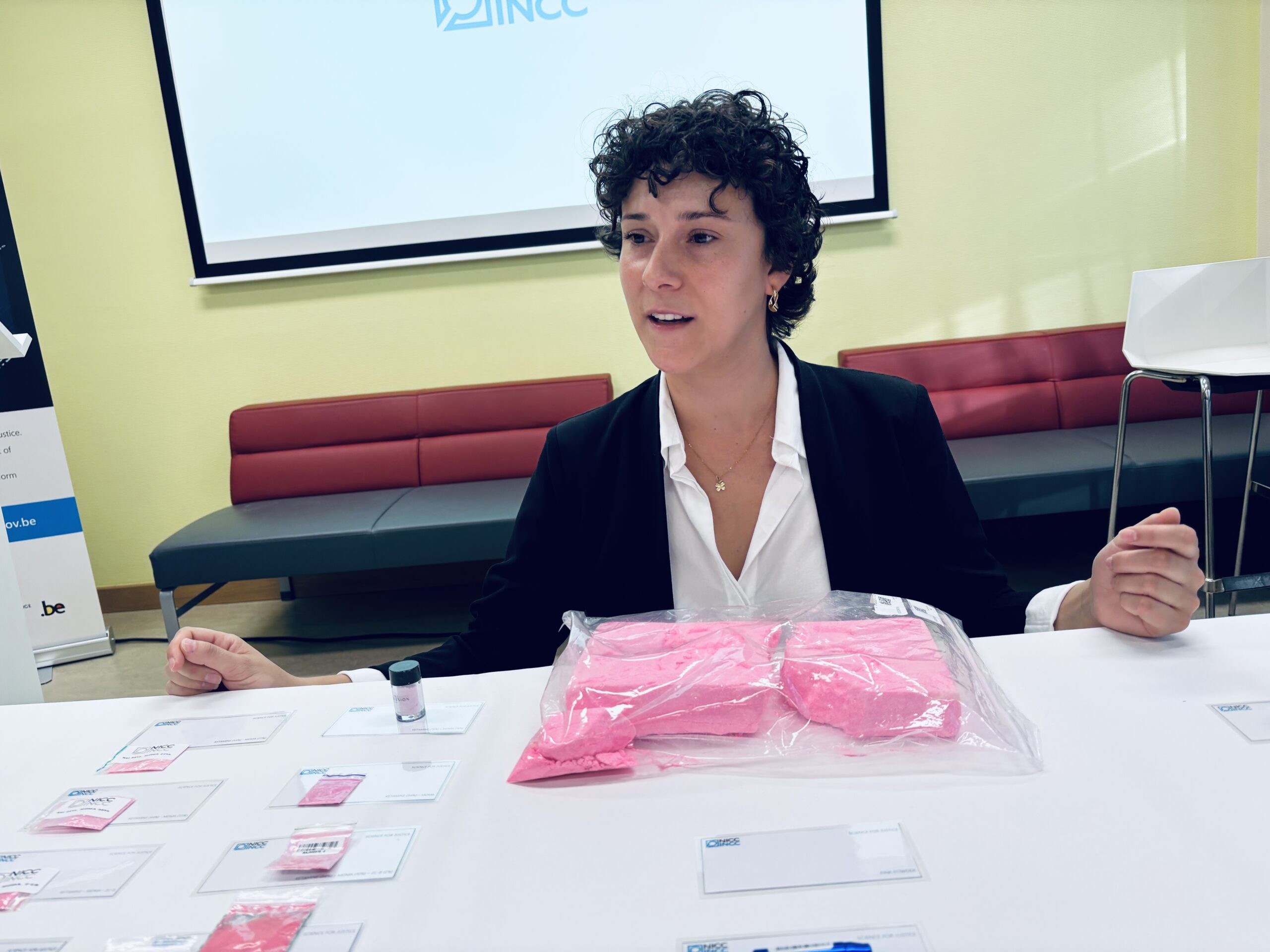
Pink powder seized at Belgian festivals. Credit: The Brussels Times/ Anas El Baye
Although its use remains limited, methamphetamine (or meth) was still detected in around half of the plants. Notably, it was found exclusively in Antwerp-South and Brussels-North. However, levels in some places have increased tenfold over the past decade.
Amphetamine (speed) use is clearly higher in Hasselt, Antwerp-south, and Harelbeke in Flanders than in the rest of the country.
Daily patterns vary significantly by region, suggesting different consumption habits, from recreational nightlife use to use throughout the week.
Scientists also suggested that the disappearance of certain substances from samples might indicate changes in the drug market or simply drugs being sold with misleading compositions.
Weekend partying
Consumption clearly spiked during the weekend; in ten out of 16 plants, cocaine levels on weekends were more than 10% higher than on weekdays, the study highlights.
MDMA and ecstasy levels also peaked on Sundays and Mondays, likely due to delayed excretion after weekend parties, scientists find.
"When we analyse samples linked to festivals or party scenes, we mostly see MDMA, cocaine and ketamine," Meert said. "Sometimes we even see cannabis in festival samples, which is a bit surprising because people usually want to stay awake."
Crack cocaine is not only a Brussels issue
Crack cocaine is a smokable form of cocaine made by chemically transforming the powdered drug into small solid crystals, known as cocaine base. Unlike powder cocaine, which is typically snorted, crack is heated and smoked, allowing the drug to reach the brain much faster.
"Because crack is smoked, it can produce stronger and more addictive effects," Meert explained.
Contrary to popular belief, the sewage analysis confirms crack use is not limited to the capital, but it has spread across the country.
Public perception of crack has long been shaped by scenes in parts of Brussels such as the North and Midi stations, where drug use takes place in public spaces.
However, researchers say this visibility does not necessarily reflect where the drug is consumed most. "It appears more visible to the public in Brussels, but that does not mean it is only used there," Degreef added.
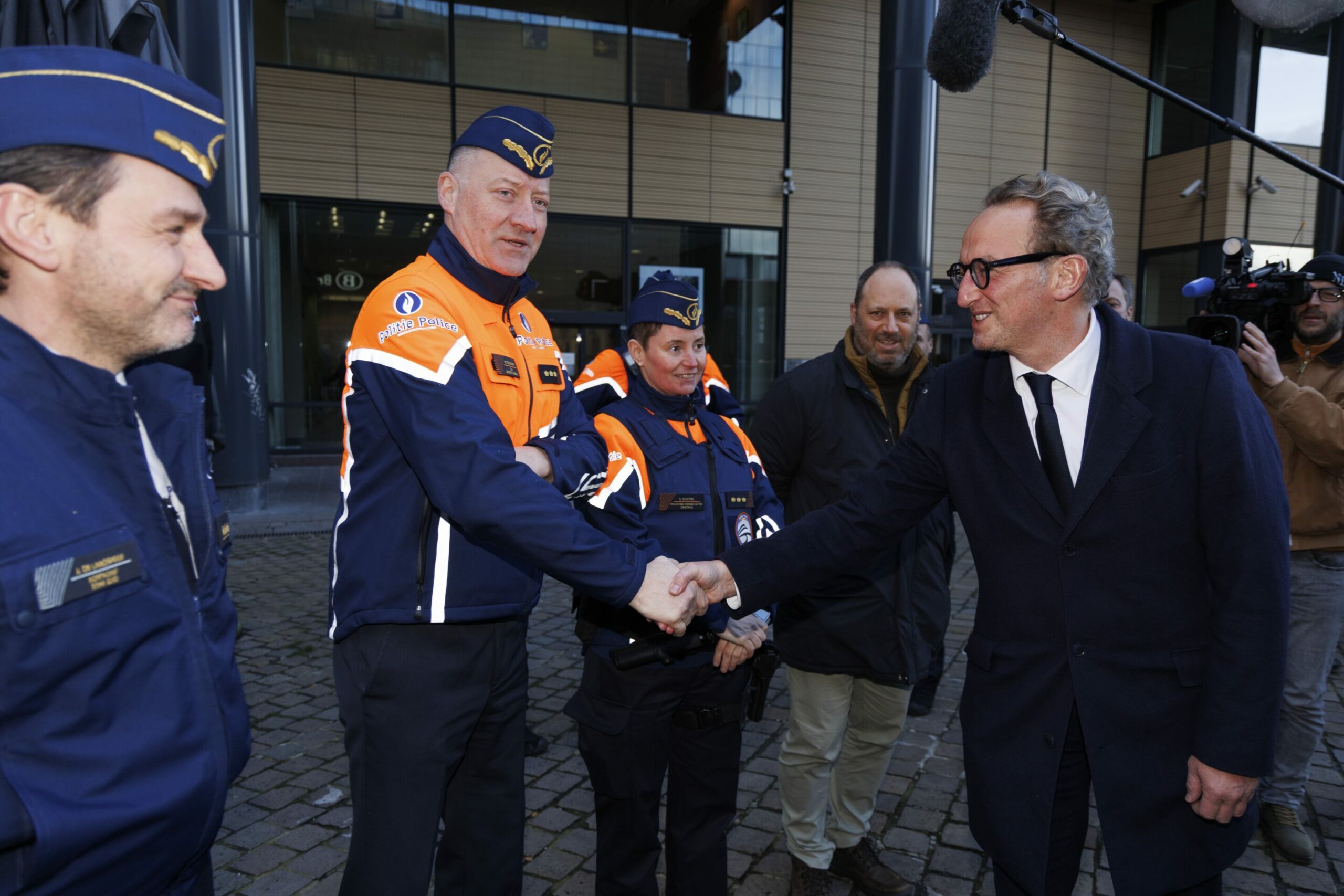
Brussels' new Minister-President, Boris Dilliès, chose Brussels-Midi station on Monday 16 February as his first field visit since taking office. Credit: Belga/Nicolas Maeterlinck
Wastewater samples detected crack-related biomarkers in 11 of the 17 treatment plants included in the monitoring campaign. The highest levels were not measured in Brussels, but in Antwerp-South.
"The more visible presence of crack users in Brussels may also be linked to social factors," Degreef added.
Research shows that crack use is often associated with people experiencing homelessness or severe social hardship. In a capital city where homelessness rates are higher than in other parts of the country, consumption is therefore more likely to occur in public spaces.
"In big cities, crack use tends to be more public, whereas in smaller cities it is often more hidden," he said.
In other regions, the drug may be consumed indoors or in so-called "cuckooing" situations, where vulnerable people's homes are taken over by dealers for drug consumption and dealing.
Prevention
Infor-Drogues, a long-standing Belgian association that supports people struggling with addiction and their relatives, says prevention strategies based on shock messages, fear or stigmatisation fail to reduce drug use.
"What we have realised over the years is that prevention through fear simply does not work," said Timour Ducarme, spokesperson for the organisation.
The group, which has been active for more than five decades, works mainly with individuals seeking support and with professionals confronted with substance use in their daily work, rather than producing epidemiological data.
"Our role is to listen and support people, without judgment and in complete confidentiality," Ducarme said.
Infor-Drogues runs a helpline open six days a week, allowing anyone affected by drug use or addiction, including family members, to speak with trained professionals.
"It is always case by case," Ducarme said. "We try to give people space to speak, to understand their life context, their motivations for consuming and the reasons behind it."
Rather than reducing individuals to their addiction, the aim is to consider the broader social and psychological factors that influence behaviour.
"People are complex human beings with their own problems, their own motivations and their own context," he added.
Social pressures
Focusing solely on the dangers of drugs often misses the reasons why people take them, Ducarme said. "If someone is very shy, for example, they may drink alcohol to feel less inhibited and to have the courage to dance or socialise."
Simply warning people about the risks rarely changes that behaviour.
"Telling them alcohol is dangerous does not help. What helps is asking how they might achieve the same goals – feeling comfortable, socialising – without relying on substances," he explained.
According to Infor-Drogues, prevention messages centred exclusively on the harmful effects of drugs can even produce unintended consequences. "When you only emphasise the negative consequences of substances, it can sometimes create curiosity," Ducarme said.
At the same time, such campaigns may reinforce mistrust toward healthcare systems among people who already feel marginalised.
"People who use drugs are already heavily stigmatised," he said. "If the message they hear is simply 'this is dangerous, you will die', it can create distrust towards health services and support structures."
He pointed to tobacco campaigns as an example of the limits of fear-based messaging. "We have had shocking images on cigarette packets for decades, yet smoking has mainly declined when prices increased."
If you are struggling with drug use or experiencing suicidal thoughts, you are not alone. Reaching out is not a sign of weakness; it is a step toward care, dignity, and support. Support is available, without judgement:
- In case of an emergency
- Ex Æquo offers confidential advice and harm reduction tools: www.exaequo.be
- Drugs Info Service (Belgium): 02 227 52 52
- Suicide Prevention Lifeline (Belgium): call 0476 53 00 84 or visit www.preventionsuicide.be
