
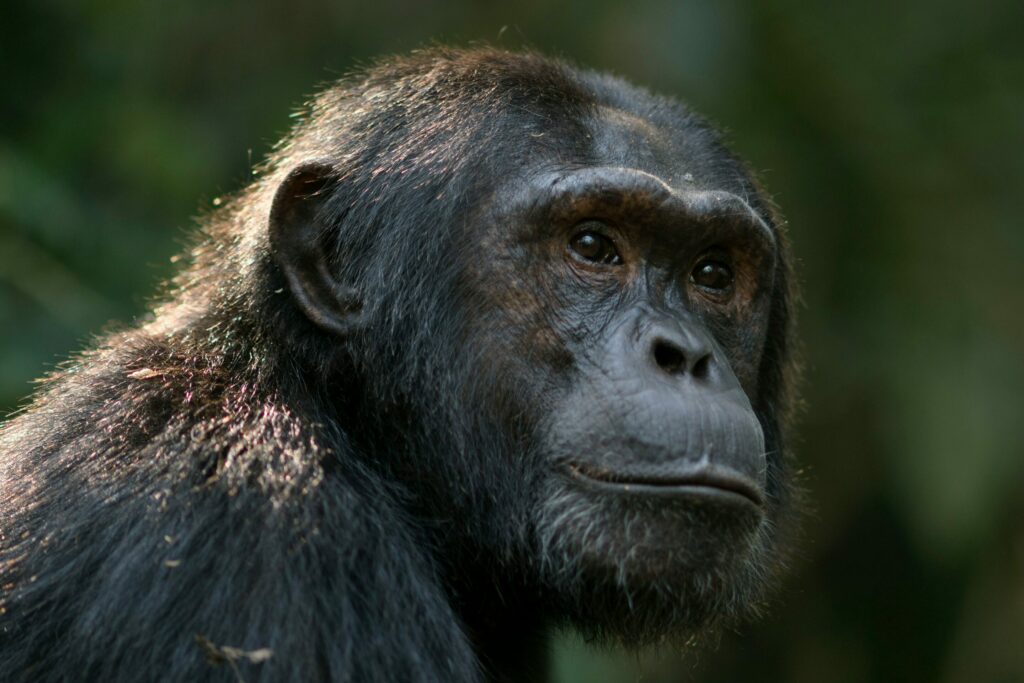
A groundbreaking study by Science Magazine has revealed what scientists believe to be the first recorded case of a chimpanzee community descending into a "civil war", with former companions launching coordinated attacks on each other.
According to the Guardian, researchers tracked the Ngogo chimpanzees in Uganda's Kibale National Park over more than three decades, documenting a dramatic breakdown in what was once the largest known group of wild chimps.
The community, which remained stable from at least 1995 to 2015, began to fracture, splitting into two rival factions by 2018: the western and central groups.
What followed was a sustained campaign of violence. Over seven years, the western chimpanzees carried out 24 coordinated attacks on their former group, killing at least seven adult males and 17 infants.
Primatologist Aaron Sandel, who witnessed early signs of the rupture back in 2015, told The Guardian the behaviour drew unsettling parallels with human conflict.
"Cases where neighbours are killing neighbours are more troubling and, in a way, bring us closer to the human condition," he said.
Scientists believe shifts in social hierarchy, including changes in leadership and the death of key individuals, may have destabilised the group. A disease outbreak in 2017 is also thought to have accelerated the split.
While similar violence may have occurred in the past, notably in observations by Jane Goodall in the 1970s, researchers say this is the first time such internal conflict has been thoroughly documented.
Experts warn the findings could have implications for conservation. Such "civil wars" are thought to occur only once every 500 years, but human-driven pressures such as deforestation, climate change and disease could make them more frequent.
The study offers a stark reminder that the roots of organised violence may run deeper in the animal kingdom than previously thought.
