
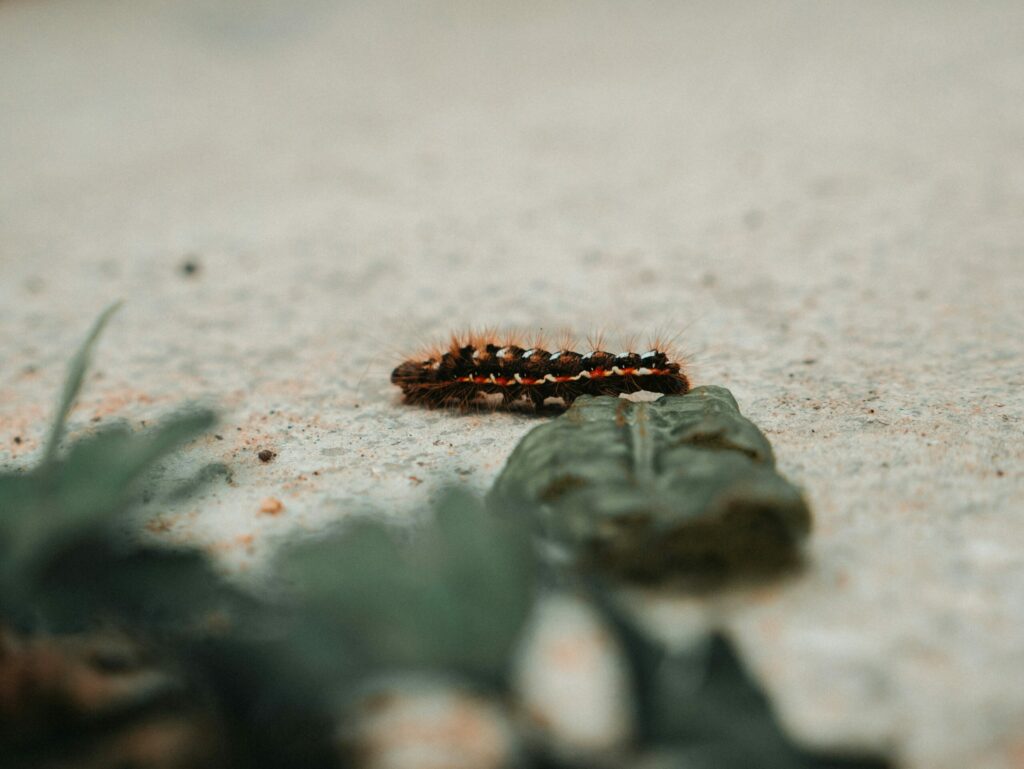
Holidaymakers along the Belgian coast are being warned not to touch brown-tail moth caterpillars after large numbers of the insects appeared across dune areas this spring, Nieuwsblad reported
The caterpillars, known for the irritating hairs covering their bodies, can cause severe itching, red skin rashes and eye irritation when they come into contact with human skin.
"It is a good year for the satin moth," said Natuurpunt spokesperson Johan Broidioi to the Flemish Daily. "The insect appears every year, but this time there are exceptionally many in some places."
The brown-tail moth caterpillar is a small reddish-brown insect with rows of white spots along its back. The caterpillars feed mainly on sea buckthorn leaves before transforming into white moths later in May and June.
According to Nieuwsblad, experts say the symptoms caused by their hairs are similar to those linked to the oak processionary caterpillar found inland.
"If you crawl through a sea buckthorn bush or let the caterpillars move across your skin, you can become extremely irritated," Broidioi explained to the media outlet. "Some people are naturally more sensitive than others."
The environmental expert stressed there was no reason for panic despite the growing numbers.
"They are not wild beasts waiting to ambush us. They are simply minding their own business," he said.
Authorities and environmental groups are reportedly advising beachgoers to avoid direct contact with the insects and their nests while still enjoying the coast as normal.
According to Natuurpunt, the unusually warm and dry spring created favourable conditions for the species this year, leading to population surges in some coastal regions.
The insects have reportedly been spotted in particularly high numbers around the Westhoek dunes, where they sometimes crawl onto beaches and even onto apartment walls in search of food.
Their lifecycle lasts around a year, beginning with eggs laid during the summer, then developing into caterpillars that emerge from winter nests in spring to feed in large groups.
