
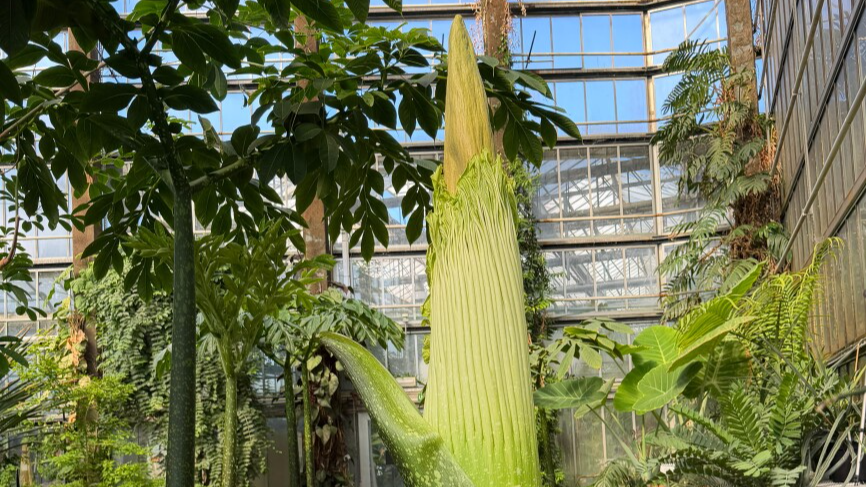
If you are visiting Ghent is the coming days, you have an exceptional chance to see one of the world's most unusual plants in bloom.
The rare and endangered Titan Arum plant – often referred to as the 'corpse flower' – has begun flowering at the Ghent University Museum (GUM) Botanical Garden. Native to rainforests of Sumatra in Indonesia, the Arum flowers only once every few years, and each bloom lasts no more than 48 to 72 hours.
It is also known as the 'penis flower' for its shape, and emits a putrid odour resembling rotting flesh. The natural reason for the stench is to attract carrion beetles and flesh flies. These insects pollinate the plant in its natural habitat. During peak blooming, the flower even generates heat to help spread its scent farther.
The Ghent botanical garden announced the bloom after months of anticipation, inviting visitors to witness what is considered one of the rarest spectacles in the plant world. This specimen has grown to 2.29 metres in length.
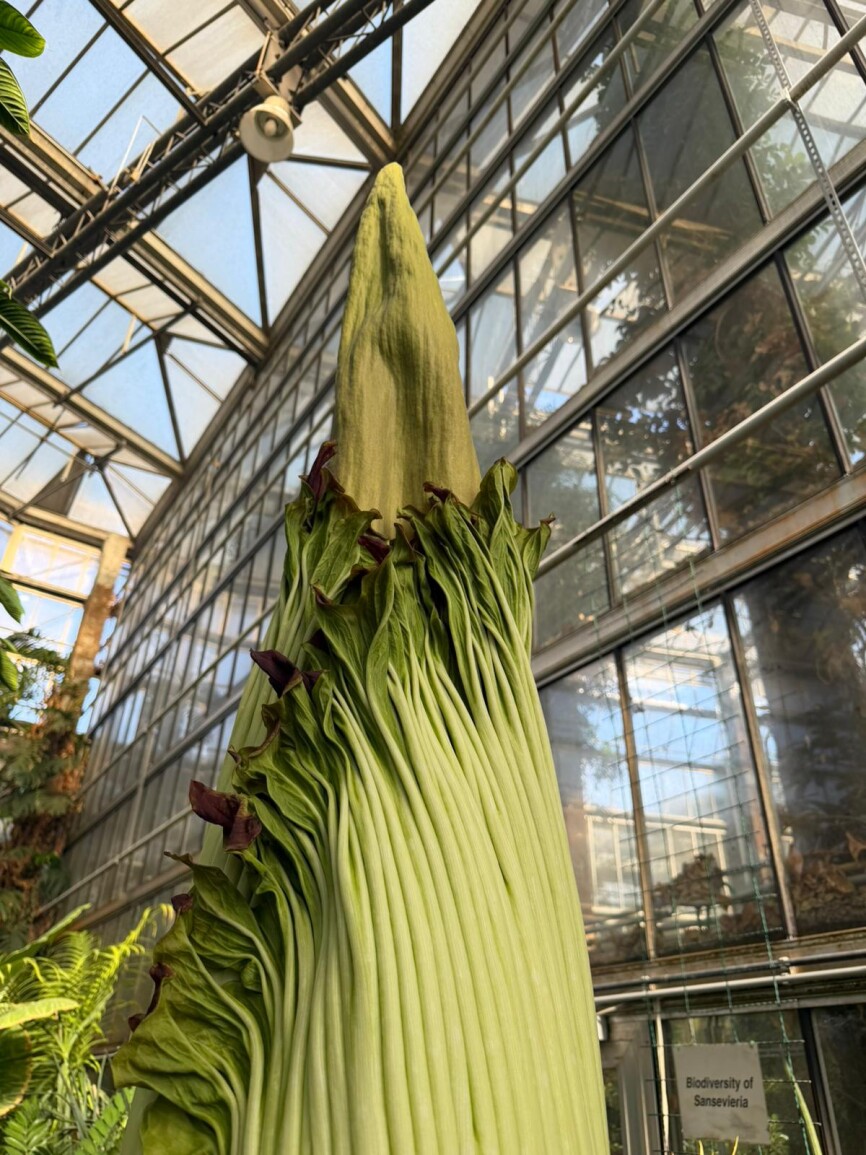
Credit: GUM and Plantentuin
Why is it endangered?
The plant is classified as endangered in the wild, largely because of deforestation and the expansion of palm oil plantations across its native forests in Indonesia.
Botanical gardens across the world play an important role in conserving endangered plants by cultivating them and studying how they reproduce.
Ghent's Botanical Garden has become one of Europe's leading centres for cultivating Titan Arums. Thanks to years of specialised care, several specimens now flower regularly, although each bloom remains an unpredictable event that attracts large crowds.
Visitors hoping to experience the bloom in person must hurry, as the flower will begin to collapse within a matter of days once fully open.
