
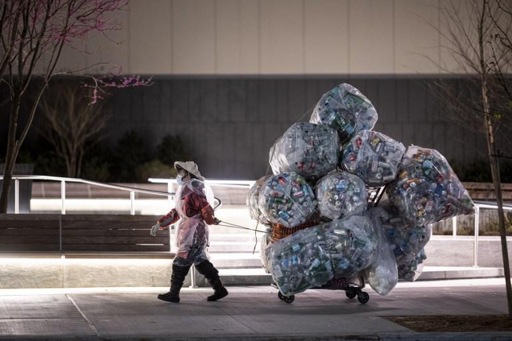
The percentage of plastic recycled each year in the United States is falling, whereas production is rising, according to a report published on Monday by the U.S. branch of Greenpeace.
According to the report, US households produced 51 million tonnes of plastic waste in 2021, but only 2.4 million tonnes were recycled.
The trend has been declining, especially since China stopped accepting plastic waste from the West in 2018 and also stopped recycling some of it. In addition to this, plastic production prices are falling as the industry makes rapid strides.
“Industry groups and big corporations have pushed for recycling as a solution,” said Lisa Ramsden of Greenpeace USA. “By doing that, they have shirked all responsibility” for ensuring that recycling really works.
She listed companies such as Coca-Cola, PepsiCo, Unilever and Nestlé among the main offenders.
According to Greenpeace USA, only two types of plastic are accepted at the country’s 375 materials recovery centres. The first is polyethylene terephthalate (PET), commonly used for water and soft-drink bottles, while the second is high-density polyethylene (HDPE), used for shampoo bottles and household products, for example.
These two types comprise categories 1 and 2 of seven types of plastic.
However, the fact that products are theoretically recyclable does not mean they are actually recycled, Greenpeace said. According to the report, PET and HDPE had recycling rates of 20.9% and 10.3 % respectively. Both these figures have dropped since the last Greenpeace report in 2020.
Moreover, less than 5% of grade 3-7 plastics, which include plastic bags, children’s toys, and yogurt containers, were recycled.
Ramsden stressed that the problem with plastic recycling was unique and did not apply to cardboard or metals.
