
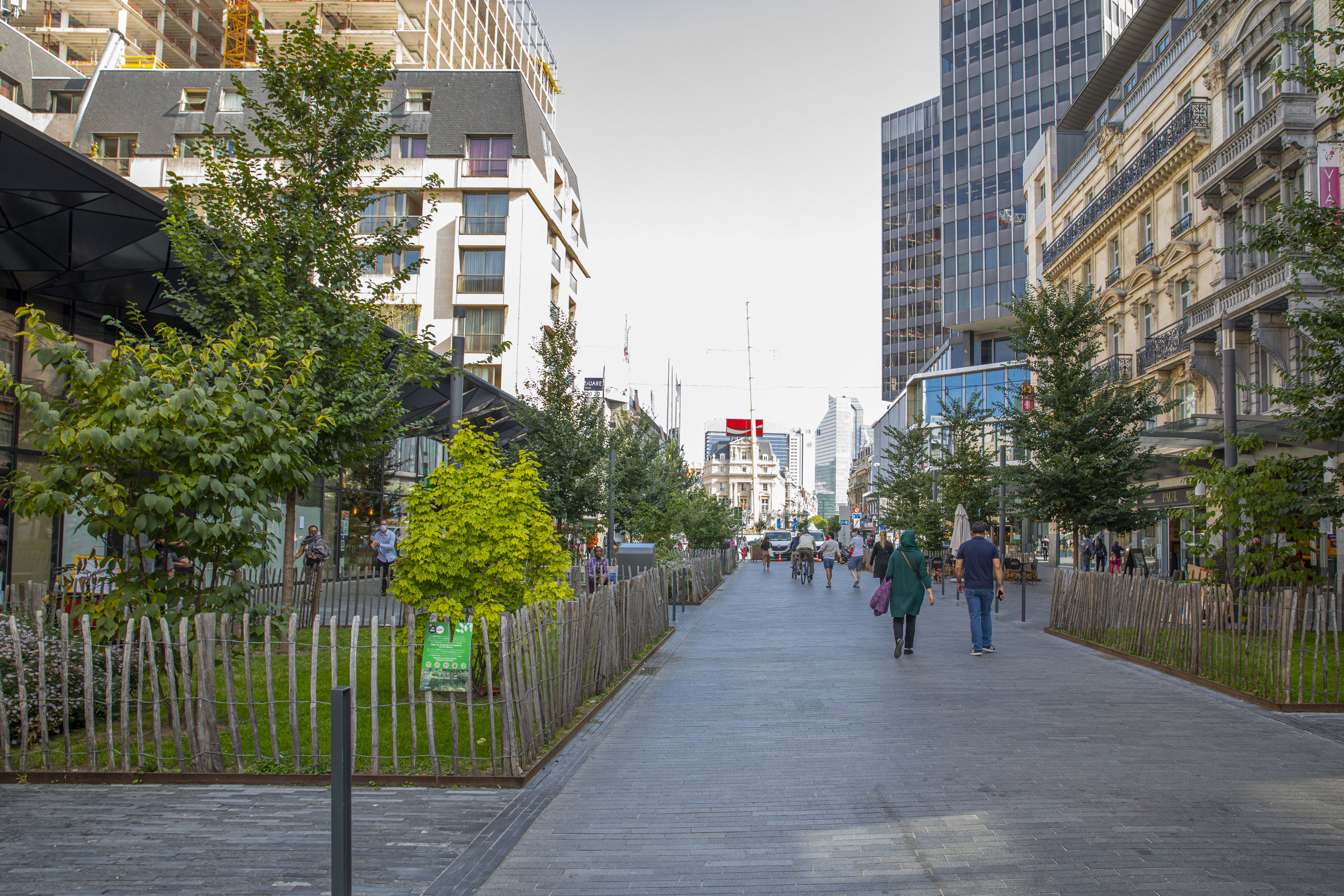
In his illuminating 2011 book, Triumph of the City, Harvard economist Edward Glaeser writes that there is no more reliable indicator of a city’s health than its demographic evolution. After reaching an initial peak in 1968, the population of the Brussels region fell by 10% over the next 20 years. Brussels, at that point, was not doing well at all. Its population then stabilised and subsequently soared. Since 2000, it has grown by 31%, as against 16% in Flanders and 11% in Wallonia.
Philosopher Philippe Van Parijs reflects on current debates in Brussels, Belgium and Europe
Triumph of the City has a bombastic subtitle: How Our Greatest Invention Makes Us Richer, Smarter, Greener, Healthier, and Happier. Is that extravagant claim one that the recent history of Brussels refutes? Not at all.
It is true that the average taxable income of Brussels residents, once well above the national average, is now significantly below it. But, firstly, in a city with a growing number of diplomats and international civil servants, actual income equates less and less with taxable income.
Secondly, and more importantly, the Brussels region population – now 1.25 million – is not static: since 2000, there have been over 1.5 million arrivals and more than 1.4 million departures. Those who leave Brussels do so with, on average, significantly higher incomes and human capital than when they arrived.
It is this fluidity that allows us to affirm, as Glaeser notes, that a city like Brussels "makes people rich" even when average income declines. Brussels residents can be proud of what their city brings to those who pass through it – and thereby to the rest of Belgium and the European Union.
However, this success brings with it colossal challenges. The Brussels population is now very diverse: nearly 40% are foreigners and nearly 40% are Belgians with at least one parent born without Belgian nationality. Hundreds of languages are spoken, and 15% of the adult population is proficient in neither French nor Dutch – in a city where a good command of both languages is a crucial asset.
The tragedy of Brussels’ schools
Many aspects of life in the city are directly impacted by this demographic metamorphosis, starting with education – a key factor, according to Glaeser, in sustaining a city’s dynamism.
Basisschool Balder, a recent documentary by the Flemish public broadcaster VRT, provides a poignant illustration. Over the course of a year, it follows a Dutch-speaking primary school near the South (Midi/Zuid) Station, where pupils speak a wide variety of languages at home, but rarely Dutch.
A few months before the end of the school year, the school had to close a class and send its pupils, most of whom still had a poor command of the Dutch language, to other schools. As the Brussels urban environment is predominantly French-speaking, the challenge for Dutch-speaking schools is even greater than for French-speaking schools.
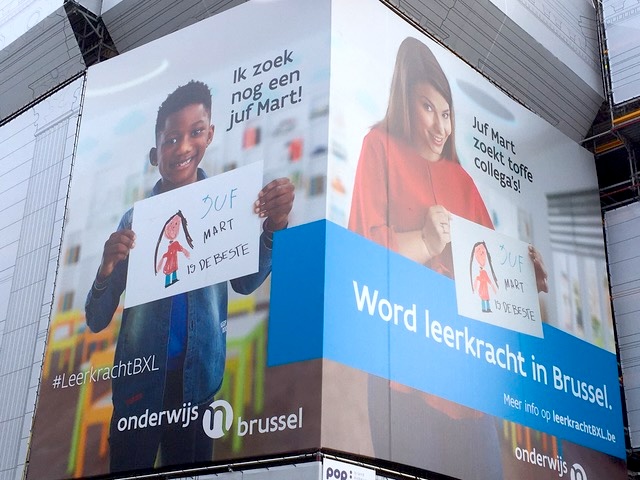
Promoting the Dutch language
But the chance of becoming bilingual French-Dutch is 83% in Dutch-speaking schools versus only 6.5% in French ones. Understandably, parents of all backgrounds who recognise the importance of proficiency in Dutch choose to send their children to Dutch-speaking schools.
Basisschool Balder’s predicament is mainly due to its inability to recruit and retain enough teachers – which is itself largely due to the impact of Brussels’ “success” on the cost of living. Housing in Brussels is expensive. And given the fluidity of the population, any effort to remedy this by increasing the supply of housing is largely neutralised: with more abundant and cheaper housing, fewer households are forced to leave Brussels, but the number wanting to move in does not decrease.
It will therefore continue to be significantly cheaper to live in a more or less distant hinterland. Most Dutch-speaking teachers will continue to settle there – certainly once they have a family – and will often look for and find a job closer to where they live.
This will result in a shortage of teachers that severely affects Dutch-language education in Brussels. It also threatens the survival of so-called Dutch immersion (or Content and Language Integrated Learning) in French-medium schools, the latter’s only serious hope of producing more than a small minority of students proficient in both languages.
It may be an extreme example, but Basisschool Balder illustrates the magnitude of the challenge facing all schools in the Brussels region: classes where few students, if any, speak the school language at home, the widespread concern to make children competent in both French and Dutch, and recruitment difficulties caused by the cost of housing.
The French and Flemish Communities, which are responsible for education in Brussels, must take measures to prevent this from getting even worse. Brussels residents have the right to demand this. But they also have a duty to do their bit, notably by encouraging language learning with every means at their disposal.
The region’s schools, universities, businesses and its cultural sector are planning a first Brussels Multilingualism Week for February 2026. This is the way forward. Widespread multilingualism is indispensable if linguistic diversity is to be a fantastic asset for Brussels rather than a calamity.
Mobility, safety, elections
The challenges induced by Brussels' "success" are not just about education and housing. Mobility is also massively impacted. When a small region sees its population grow by 31%, it needs to take measures to avoid traffic paralysis and suffocation.
That means making life easier for pedestrians and cyclists, improving the flow of public transport, and discouraging individual car use. But these measures are rarely easy to implement - and it is even harder to convince everyone of their necessity.
Safety is also impacted. Brussels is no longer the city of Quick and Flupke, Hergé’s naughty boys who kept getting into trouble with the local policeman. Taboos must be broken. To tackle cyber threats, put an end to drug wars and ensure safety around the North and South stations, the region’s six police zones must be merged. And to ensure that the police are no longer seen, in some neighbourhoods, as a garrison of the Foreign Legion, the time has come to allow veiled women to serve in the police force.
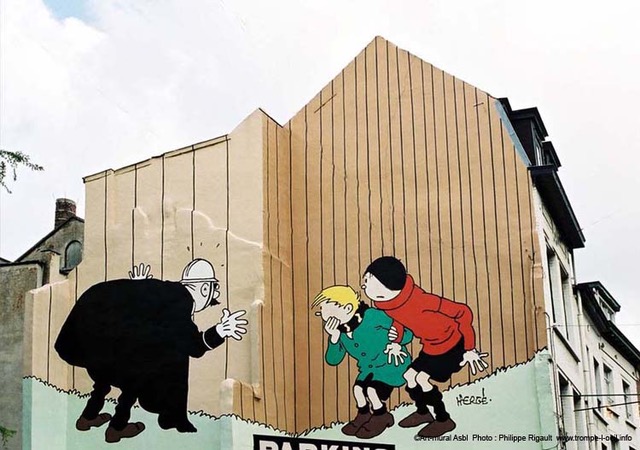
Quick and Flupke mural
Political institutions are not spared either. The current regional election system was designed for a binary Brussels consisting of two stable and mutually exclusive Belgian tribes, one French-speaking and one Dutch-speaking. This Brussels no longer exists.
To prevent repeated suicidal deadlocks, the dual electoral college system – one for French-speakers, one for Dutch-speakers – must be abolished, without eliminating the guaranteed representation of both language groups in the Brussels parliament and government. And if we want to avoid straying further and further from universal suffrage, we must extend regional voting rights to the nearly 40% of non-Belgian adult residents.
What Brusselers can do
Institutional reforms are therefore needed, and pressure must be applied to make them happen. But Brussels residents have better things to do than just whine and protest. They can act, each at their own level, in their own sector, in their own way, to make Brussels function better.
Every day, they can create or strengthen ties with the very different Brussels residents they meet in their schools, workplaces, streets or parks. Whether they organise street parties, neighbourhood cleaning operations or conversation tables, whether they mobilise to improve road safety and air quality, or plant more trees, there is so much that they can accomplish together.
All of this would undoubtedly be easier if all those who share this city also shared the same language, the same culture, the same religion. But overcoming the many obstacles that Brussels has created for its cohesion also brings its share of satisfaction.
The multicoloured mobilisation that supported Molenbeek’s impressive but unsuccessful bid to become European Capital of Culture is a fine example of this. But even the fleeting smiles we elicit when offering our seat on the metro to someone more fragile than ourselves, when tossing an abandoned can into a bin, or when stopping our bike to let a bus or pedestrian pass are small contributions to the pleasure of living in this city, and encouragements to never give up.
Related News
- Europe’s language revolution, now more visible than ever
- Could Belgium soon be reunited with the Netherlands?
- Is a Flemish separatist fit to be Belgium’s prime minister?
- Vive la Belgique? Leve België? Why there is plenty to celebrate after all
- Why did Brussels become the capital of Europe? Because Belgium starts with letter B!
