
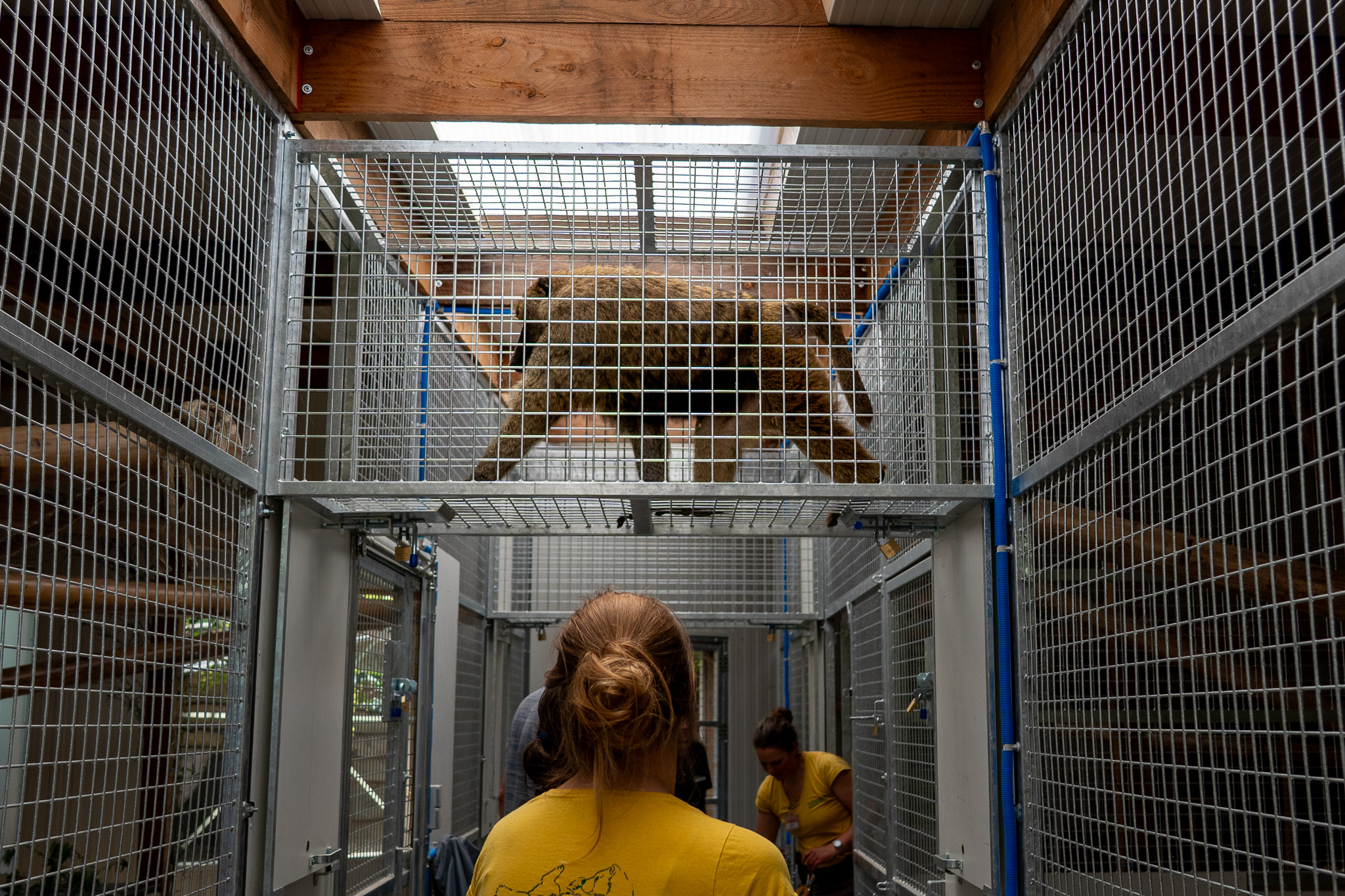
At Zonnegloed, abused monkeys, overweight pumas and traumatised bears are given a second chance after lives shaped by neglect, trafficking and captivity. In the rolling fields of West Flanders, Lisa Bradshaw visits one of Europe’s only sanctuaries for rescued wild animals
Robert the baboon spent years in a crate behind a café in Ghent, hauled out to entertain customers and fed whatever amused them. That included chips and sweets. And beer. By the time he was rescued, he was addicted to alcohol.
Robert was then taken to Zonnegloed, a wild animal sanctuary tucked into the West Flanders countryside, where rescued bears, monkeys, foxes and big cats are given a permanent home. He eventually died last year aged 27.
His was a traumatic story. Yet it’s not out of the ordinary at Zonnegloed, which offers a permanent home to rescued wild animals – native and exotic – often from abominable situations.
“Robert was just one of our baboons, and no one talked about the other seven!” exclaims Karel Ackaert, owner of Zonnegloed together with his wife, Lieve Ackaert. “His story was of course awful. But the rest are just as awful – and some of them are worse.”
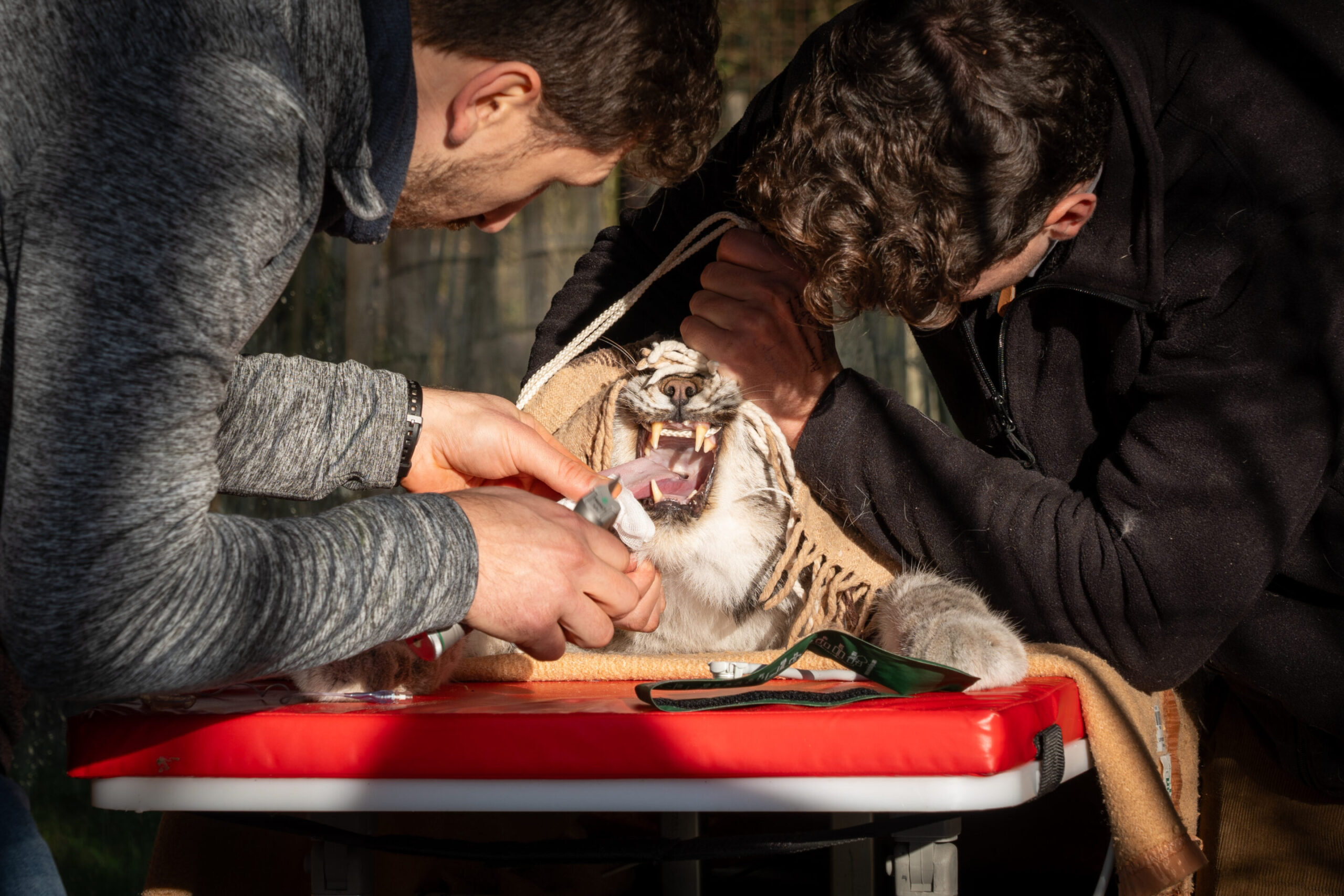
The Ackaerts fell into the animal sanctuary business some 15 years ago after running a children’s farm on their rural property. Driven by a fierce belief in animal welfare, they began visiting rescue centres, including Natuurhelpcentrum in Limburg, the only one in Belgium that takes in exotic beasts such as bears, lions and monkeys.
Credit: Zonnegloed
“We were incredibly moved by how many wild animals were living in captivity,” says Ackaert. “Just seeing and experiencing that wild animals have to be rescued from a life lived in cages.”
Then came the first request, from a sanctuary in the Netherlands: would Zonnegloed house four raccoons? The Ackaerts didn’t hesitate, knowing that as an invasive exotic species, raccoons that wind up at rescue centres may be euthanised.
The floodgates opened. “After the raccoons came the coatis,” says Ackaert, referring to the raccoon’s South American cousin. “And then someone called about lynx that were in a zoo that was shutting down. So, we went to get them.”
Zonnegloed, which is open to the public, soon became the first – and remains the only – wild animal sanctuary in the Benelux: a permanent home where rescued animals can live out their lives.
This sets it apart from Belgium’s regionally funded rescue centres, temporary facilities dealing mainly with injured native birds and small mammals. Once healed, the animals are returned to the wild; those that can no longer survive there are euthanised, as are invasive species such as raccoons.
Ackaert’s ark
For non-invasive exotics such as lynx and coatis, often from dodgy zoos or illegal private ownership, Natuurhelpcentrum is Belgium’s only temporary facility. It must then find them a permanent home, so Zonnegloed’s arrival was a great relief.
“We work very closely with Natuurhelpcentrum,” says Ackaert. “We have a lot of animals living here that came from there.” All the rescue facilities are doing a great job, he continues, “but the need is overwhelming."
"These animals that we expect to see running around in the wild – little animals, but also lions, tigers, bears. They are living in captivity in relatively small enclosures. People who work in shelters, they do what they can – even more than they can – but we were just awestruck.”
Zonnegloed has squirrels, skunks and porcupines, but has made its name integrating animals that would never call Belgium home, including zebras, monkeys, bears and kangaroos. After so much of their lives in captivity, they can no longer survive in the wild, and many carry deep trauma.
Credit: Zonnegloed
Poaching is responsible for much of this. “Often this happens together with shooting the mother,” says Ackaert. “That’s of course a major trauma. And then they get transported into captivity and sold to someone. Then they live a completely unnatural existence.”
Illegal trafficking brings many of these wild animals into Europe. Sometimes they are brought in by individuals, as happened with Fibi, one of the sanctuary’s Barbary macaques.
“Our Fibi was bought at a market in Marrakesh by a Dutch tourist. She smuggled it into the Netherlands and raised it as a child – clothes, eating at the table with a knife and fork, living in a little chalet. But when they hit puberty, instincts kick in, and the animal gets confused. Am I a person or a monkey? And then they become schizophrenic – aggressive, out of control. It always goes wrong, always. These are not household pets.”
Ackaert is friendly and personable as he leads me around the park, talking about the animals as if they are family and patiently waiting for them to emerge from layers of trauma.
No monkey business
The first step from the reception area into the park puts visitors face-to-face with Téte, a capuchin monkey native to South America. He was owned by a man in Spain, who kept him in a cage in his apartment but put him on his shoulder for walks. Like Fibi, he eventually became aggressive and bit a child.
Fibi and Téte continue to heal from damage inflicted by people who think they mean well. “When it comes to an animal lover, you have two kinds: the love of animals for what you get out of it, and the love of animals for what’s best for the animals,” says Ackaert.
But many people don’t mean well. Zonnegloed’s puma, Yukon, came from a Lithuanian amusement park, where he was fed hamburgers, fries and other leftovers. “He weighed twice what he should have,” notes Ackaert. It’s a miracle Yukon survived.
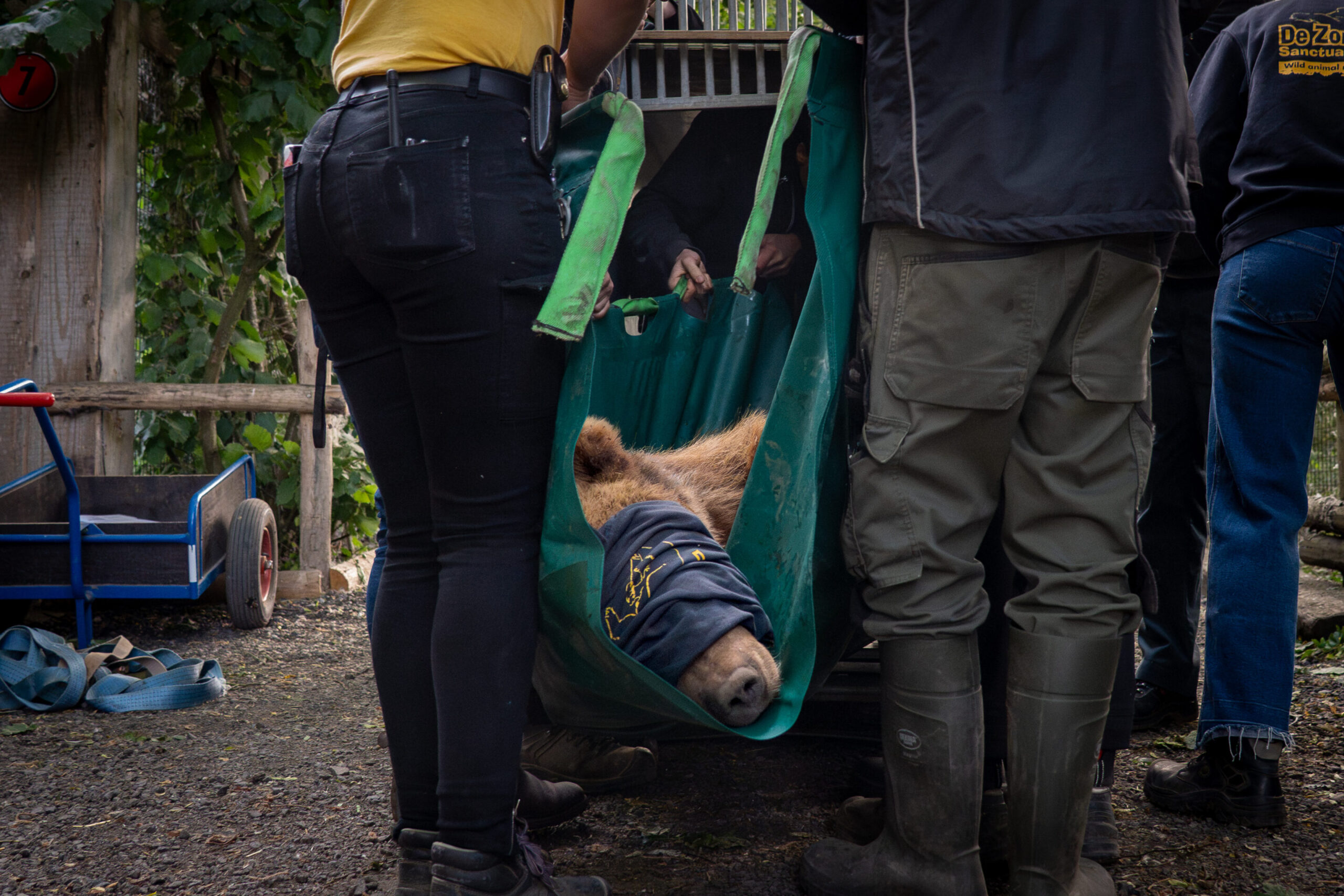
Several arctic foxes were rescued from cramped, dirty cages in Poland’s fur industry. Ami, a gibbon, was kept alone in a zoo, became depressed, tried to escape and lost half a leg climbing an electrical pole. Two of Zonnegloed’s four brown bears came from appalling conditions in Bulgaria (see sidebar); the others from a Ukrainian zoo evacuated after the bombing began in 2022.
“We have so many stories that really hit you to the core,” Ackaert says. “I’m glad I have two computer screens here because sometimes I hunker down behind them and let the tears roll. The stories about animals in Ukraine really got to me. All the animals under this enormous stress. And the keepers, the volunteers, who are trying to keep them alive and who have to kill them. It’s so horrible.”
No ordinary zoo
As we talk, Ackaert and I walk among visitors. The park opens for a few hours each morning and afternoon, with a maximum of 500 visitors at a time. Last year, 55,000 came through.
It takes me a while to pinpoint why Zonnegloed doesn’t feel like a zoo. It’s lush with native trees and plants, largely free of cement and asphalt, with generally open habitats, viewer-friendly fencing and little glass. There are just over 300 animals from 95 species.
Some of Zonnegloed’s residents come from Belgium’s own zoos and animal parks, which breed animals to keep their populations up. But when there are too many, the “surplus animals” are simply euthanised. For them, getting a place at Zonnegloed is the difference between life and death.
There are surplus animals from both Plankendaele and Pairi Daiza at Zonnegloed, which is working with the zoos to stop them being born in the first place. “Plankendaele doesn’t let animals breed at will anymore. They have a carefully controlled program, arranging for any potential surplus to be transferred to another zoo. That’s how every zoo should work.”
Credit: Zonnegloed
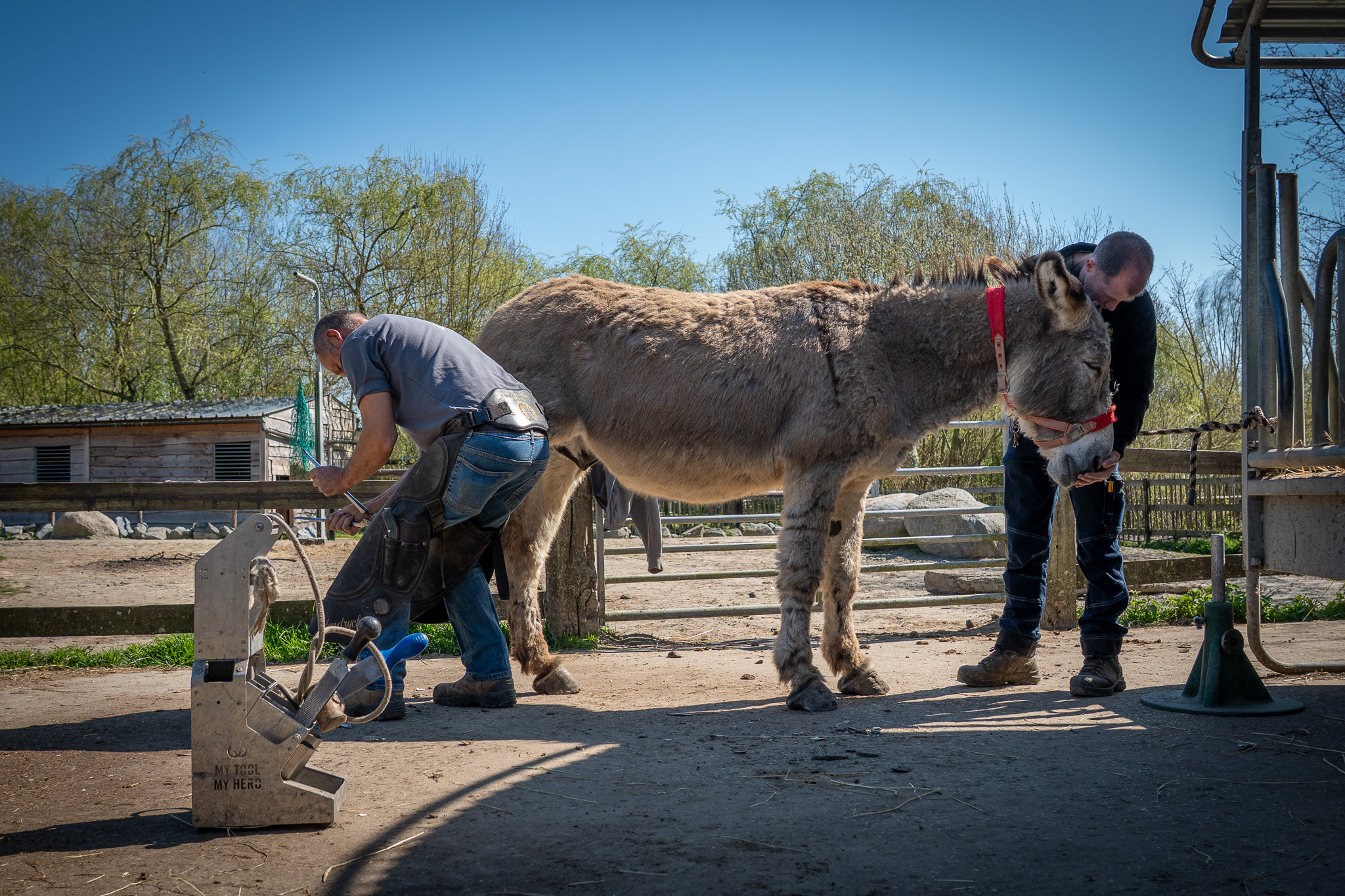
The Ackaerts had no background in zoology when they started working with wild animals. They figured it out with their six children, four of whom now work at Zonnegloed. It sounds like We Bought a Zoo, I suggest. “We know!” Ackaert laughs. “That film came out right about the time we started up here. We went to see it, of course.”
This can-do attitude was probably Zonnegloed’s saving grace when it came to legislation. When the coatis and lynx started arriving, it was still legally a children’s farm. “We just had big hearts and a love of animals. And we educated ourselves and built up a great network so we could run things professionally. But at one point, we thought, ‘OK, this is getting pretty serious.’ So we decided to look for some information about it.”
We both laugh, knowing this was a somewhat backwards approach. “But we knew if we didn’t take an animal in – permit or no permit – it was a death sentence. So we thought, ‘We’ll deal with that later.’ The animals come first.”
A legal wild west
They contacted Flanders’ Animal Welfare cabinet. “They said no problem if you adhere to the minimum legislation around zoos. We said, but we aren’t a zoo, we are a sanctuary. And they said there is no legislation for what you are doing.”
Some 15 years later, there still isn’t. Although Flanders Vice Minister-President Ben Weyts (N-VA), who oversees animal welfare issues, secured parliamentary backing for a law governing sanctuaries, the guidelines have yet to be developed. As Zonnegloed cannot conform to all zoo regulations, it remains legally vulnerable. “We are begging them to take care of that dossier,” says Ackaert.
The lack of legislation means Zonnegloed is not officially recognised and cannot apply for subsidies. Ben Weyts’ office said that developing a regulatory framework for sanctuaries “is not a simple exercise”, not least because they still meet the definition of a zoo.
Flanders is not alone. According to the European Alliance of Rescue Centres and Sanctuaries (EARS), many sanctuaries must register as zoos. “The main issue this causes is being asked to meet zoo requirements that are not appropriate,” says EARS director Dave Eastham. He knows of just 17 establishments in Europe that could be considered sanctuaries, and believes none has tailored legislation.
It costs €4,800 a day to run Zonnegloed. “I’ll be honest, we are hanging by a thread,” says Ackaert. “We make it work, but only just.” Donations and animal “adoptions” help, but visitor fees keep it alive. “Our biggest goal is to make people understand the extent and the seriousness of the problem.”
Should bears dance?
A bear dances for tourists to the sound of an accordion. If it is well-treated, what’s the harm? The answer lies in how it learned to dance.
Training usually means piercing the bear through the nose and hoisting it to its feet with a rope, while administering electric shocks to the hind feet as music plays (sometimes a hot plate is used). The bear moves to escape the pain and continues to do so whenever the music starts. Pavlov’s bears, if you will.
Uli was a dancing bear from Albania. She arrived at Zonnegloed with Mimi. “They lived together in a cement enclosure in a hotel-restaurant,” says Karel Ackaert. “It was two by seven metres. No pool of water, no shelter.”
When the bears were released into their enclosure at Zonnegloed, “Uli immediately leapt outside and rolled around in the grass. What a moment that was,” says Ackaert. Mimi was more wary. It took six weeks before she took her first tentative step outside.
As European countries have banned private ownership of bears – Albania did so just 11 years ago – dancing bears have largely disappeared. But their legacy remains in sanctuaries across Europe.
