

As Brussels institution Comme Chez Soi celebrates its centenary, the family behind it is looking beyond Michelin stars to secure its future. Laurence and Loïc Rigolet tell Leo Cendrowicz about the pleasures, pressures and occasional indignities of keeping one of Belgium's most celebrated restaurants alive.
There are few restaurants where losing a Michelin star counts as a family trauma. At Comme Chez Soi, the Brussels dining institution marking its 100th anniversary this year, it has happened twice. And although the experience was painful, Laurence Rigolet has reached a surprising conclusion: she would rather not have the third star back.
"We don't want three stars," she says. "We would like to regain the second, yes, but three have become something else."
For a restaurant that once held three Michelin stars for 27 consecutive years, this might sound like heresy. Yet Rigolet, whose father Pierre Wynants presided over that extraordinary run, is unapologetic. Three stars bring relentless scrutiny and expectations. "My husband and I no longer want a life under that constant pressure. It's a lifestyle choice."
It is an intriguing philosophy for a restaurant whose reputation has been built on the pursuit of culinary perfection. But then Comme Chez Soi has survived a century by knowing when to change – and, perhaps more importantly, when not to.
Credit: Comme Chez Soi.
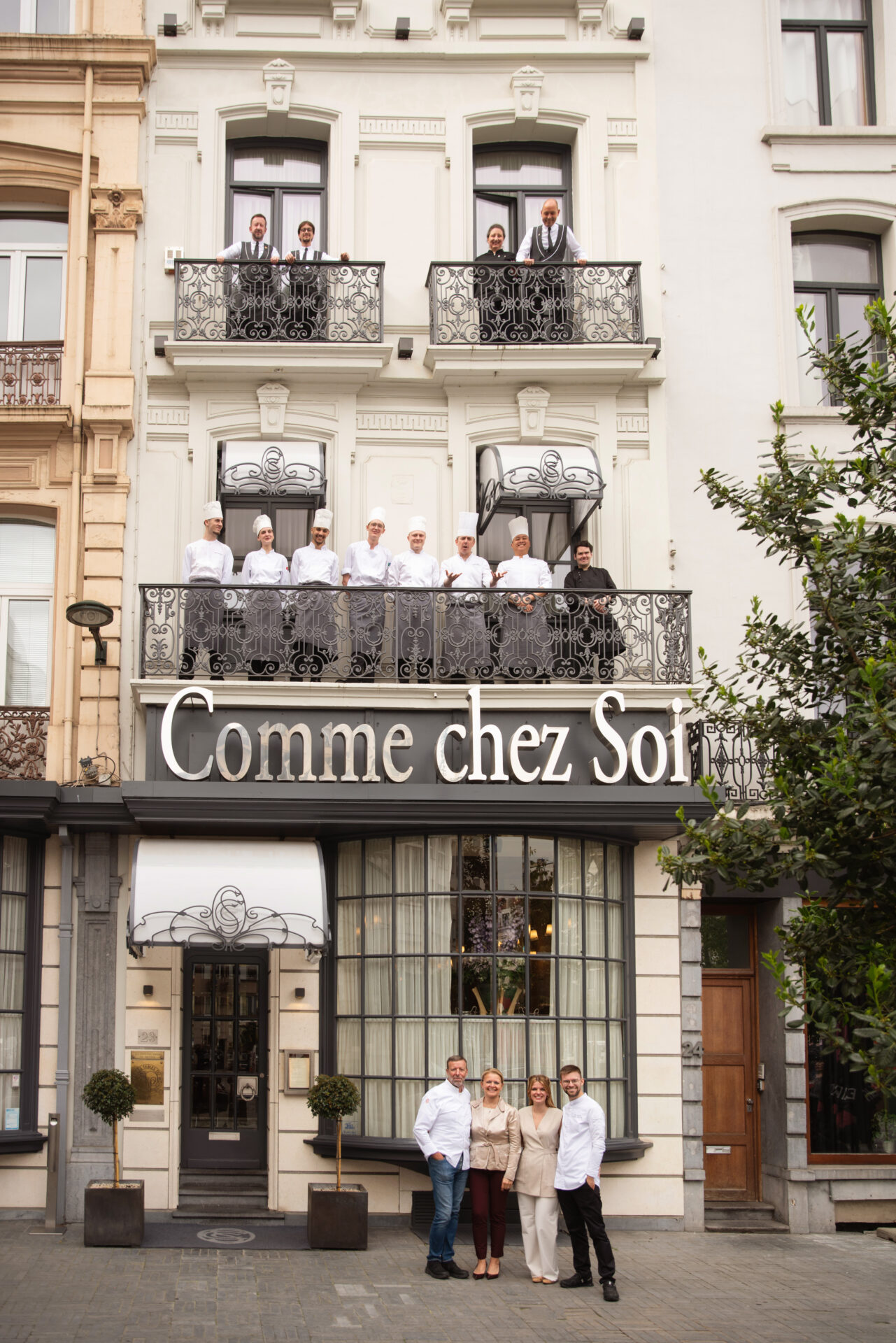
The restaurant occupies an elegant building on Place Rouppe, close to the South/Midi/Zuid station. Its Art Nouveau-stained glass, intimate dining rooms and beautifully preserved interiors evoke a Brussels that has largely disappeared. It is part of the city's architectural heritage as well as its gastronomic history, a place where dinner comes with a sense of occasion.
The surroundings have not always been distinguished. Years of construction work along Boulevard Stalingrad have left the approach looking distinctly unappetising.
Rigolet acknowledges that the disruption has affected business, even if the restaurant has remained accessible. Fine dining, it seems, is not entirely immune to the indignities of Brussels roadworks.
A family affair
Founded in 1926 by Georges Cuvelier on Boulevard Lemonnier, Comme Chez Soi changed hands in 1950, when Louis Wynants took over – earning its first Michelin star. It has now passed through four generations of the same family, each leaving its mark on the restaurant.
For Rigolet, the centenary is less a triumphal celebration than a family milestone, bringing the generations together.
"Above all, I feel emotional and relieved that we are still here," she says. "We have been through difficult times too. It has not been an easy, rosy story."
She believes the secret is passion, although that word hardly captures the demands of running a restaurant at this level. The family has traditionally worked in couples, with the chef and partner sharing responsibilities. Today Laurence and her husband, chef Lionel Rigolet, are preparing the way for their son Loïc and his wife.
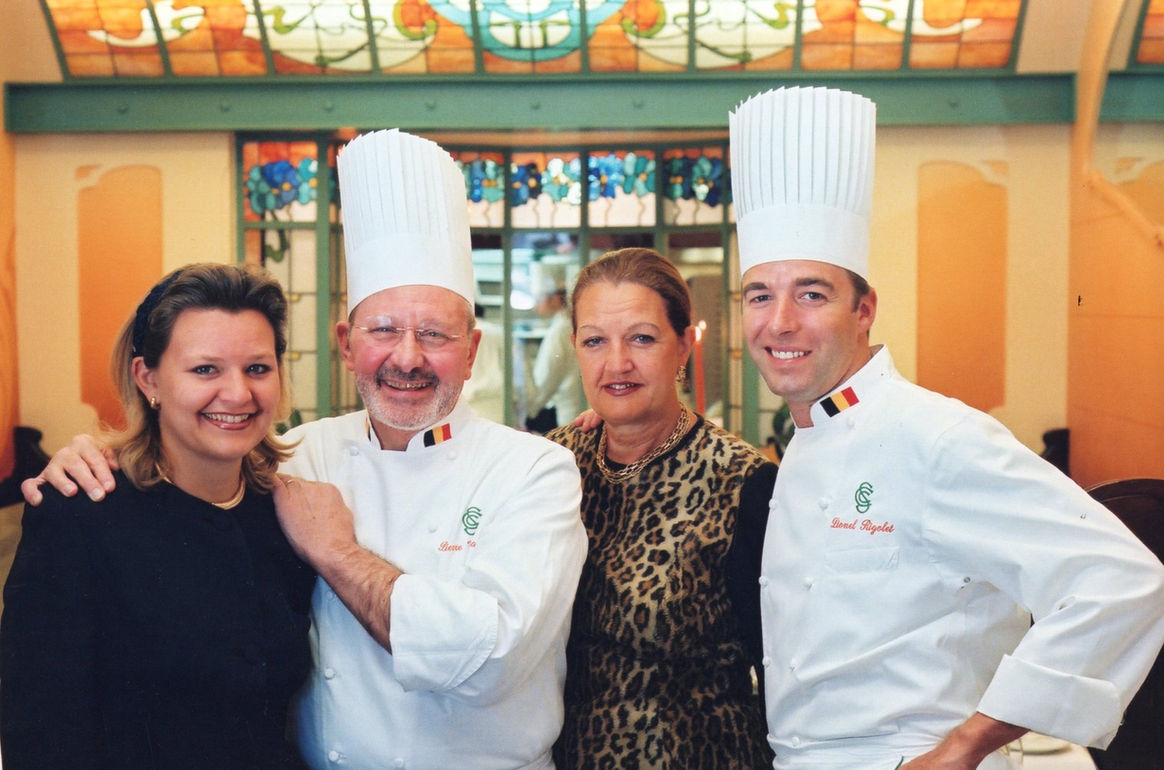
Laurence & Lionel Rigolet, Marie-Thérèse & Pierre Wynants. Credit: Comme Chez Soi.
The inheritance is formidable. Rigolet recalls how difficult it was to follow a father sometimes described as Belgium's answer to Paul Bocuse. "It's difficult to follow someone who has become a monument," she says.
Her own introduction to the profession was hardly auspicious. At hotel school, aged 15, she was humiliated when a teacher assumed that Wynants' daughter should already know how to cook. She returned home in tears.
Her father's advice was characteristically practical: tell the teacher that if she already knew everything her father knew, she would have no reason to attend hotel school. She did, and the problem disappeared.
The stars lose their shine
The Michelin years remain central to the restaurant's identity, even if the family has learned to take the guide's verdicts with greater equanimity.
Losing the third star was painful but understandable, Rigolet says. Her father had retired, a new generation had taken over and gastronomy was changing rapidly. Restaurants such as Spain's El Bulli and Britain’s The Fat Duck were transforming expectations with experimental techniques, elaborate presentations and unfamiliar textures.
Comme Chez Soi, rooted in classical cooking, faced a choice between following fashion and remaining faithful to its traditions. Looking back, Rigolet suspects they sometimes strayed too far from their identity.
Yet amid the crisis something unexpected happened: customers rallied around the restaurant.
"We were extremely busy," she recalls. "Customers came to support us. They didn't understand the decision and didn't agree with the Michelin Guide."
She now suspects that stars matter more to chefs than to the people eating their food. The guide still matters, of course. Regaining a second star would be welcome. But the family's priorities have shifted from accumulating accolades to maintaining a restaurant that people genuinely enjoy visiting.
Tradition, with a twist
Fortunately, the food gives little impression of a kitchen resting on its laurels.
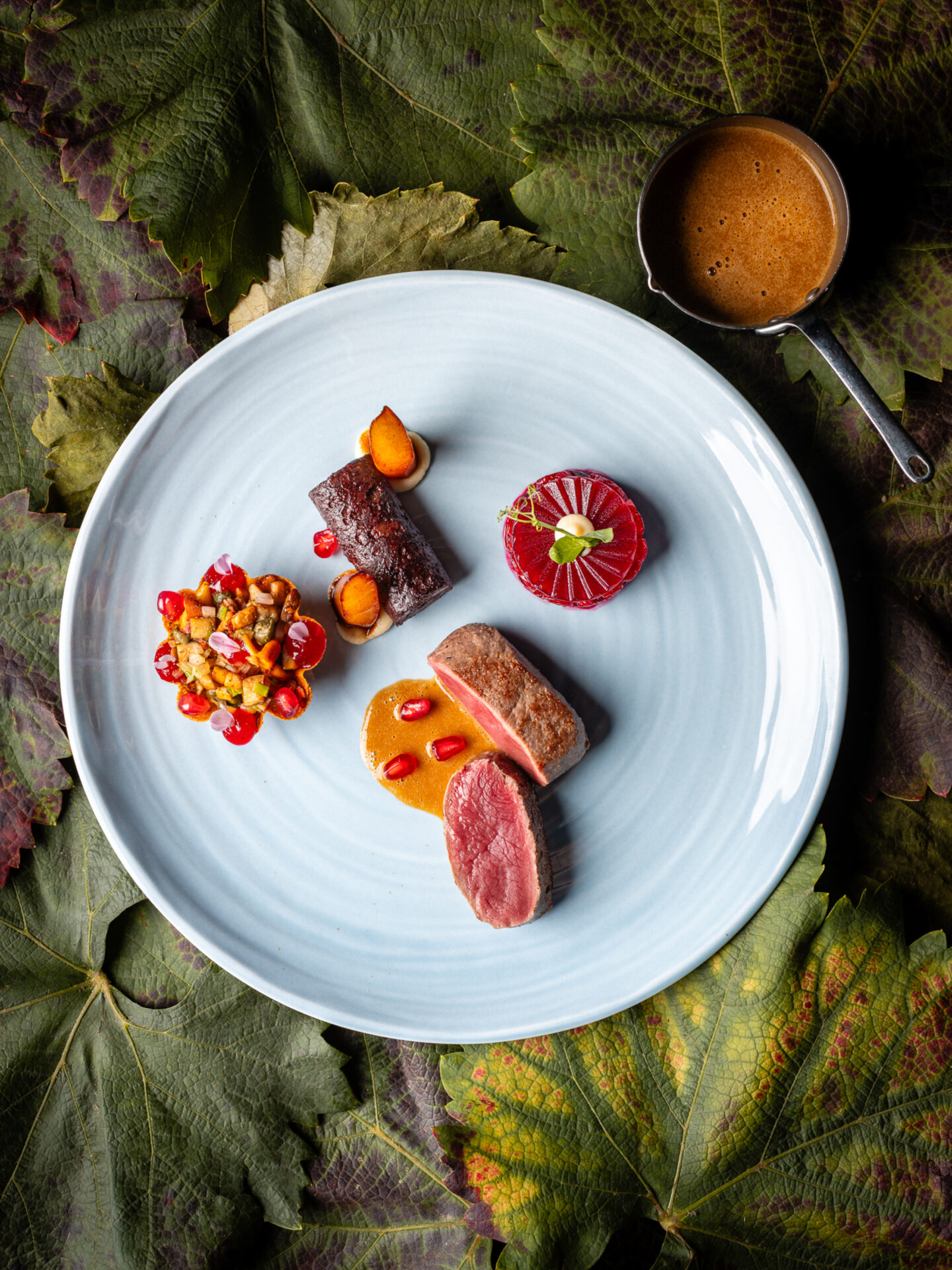
At my lunch, a succession of inventive amuse-bouches included shrimp tartare with strawberries and a delicate mousse of Ardennes ham. A cod starter came with a rich meat sauce, followed by chicken supreme prepared à la brabançonne. Dessert was a finely balanced lemon tart with buckwheat and yuzu.
The combinations were imaginative without being theatrical. The cooking retained the precision, generosity and depth of flavour associated with the restaurant's classical heritage, while showing a willingness to explore unfamiliar ingredients.
Credit: Comme Chez Soi.
The service was impeccable, too: attentive, knowledgeable and assured, without the hushed solemnity that can make expensive restaurants feel like places of worship.
That balance is deliberate. "Our aim has always been for customers to feel at home here," Rigolet says. "It has never been stiff or pompous."
The restaurant retains classics such as its Ardennes ham mousse and sole fillets, dishes that have evolved over generations without losing their essential character. But lighter preparations and contemporary flavours have increasingly replaced the heavier cooking of the past.
For Rigolet, this is not a betrayal of tradition but the only way to preserve it. A restaurant serving precisely the same food as 35 years ago would, she suggests, have misunderstood its purpose.
Behind the scenes
After lunch, Loïc Rigolet takes me through the kitchens, where the calm of the dining room gives way to an intricate operation of preparation stations, fish and meat sections and carefully coordinated service.
The atmosphere is less combustible than television shows like The Bear or Hell’s Kitchen might suggest. Loïc admits that tempers occasionally flare, but dislikes the impression that professional kitchens are permanently at war.
"You never see people enjoying themselves or taking pleasure in their work," he says of such programmes. "For me, that's part of why we do this job."
Downstairs, the wine cellar stretches through four corridors and contains around 17,000 bottles. Among its treasures are rare Burgundies, including wines by Henri Jayer. It is an impressive collection, although the absence of price tags on some of the grandest bottles may be a kindness to visitors.
Loïc Rigolet, who trained in Koksijde, represents the next generation. He is curious about other culinary traditions, particularly the innovative restaurants of Copenhagen, while remaining firmly rooted in the family business.
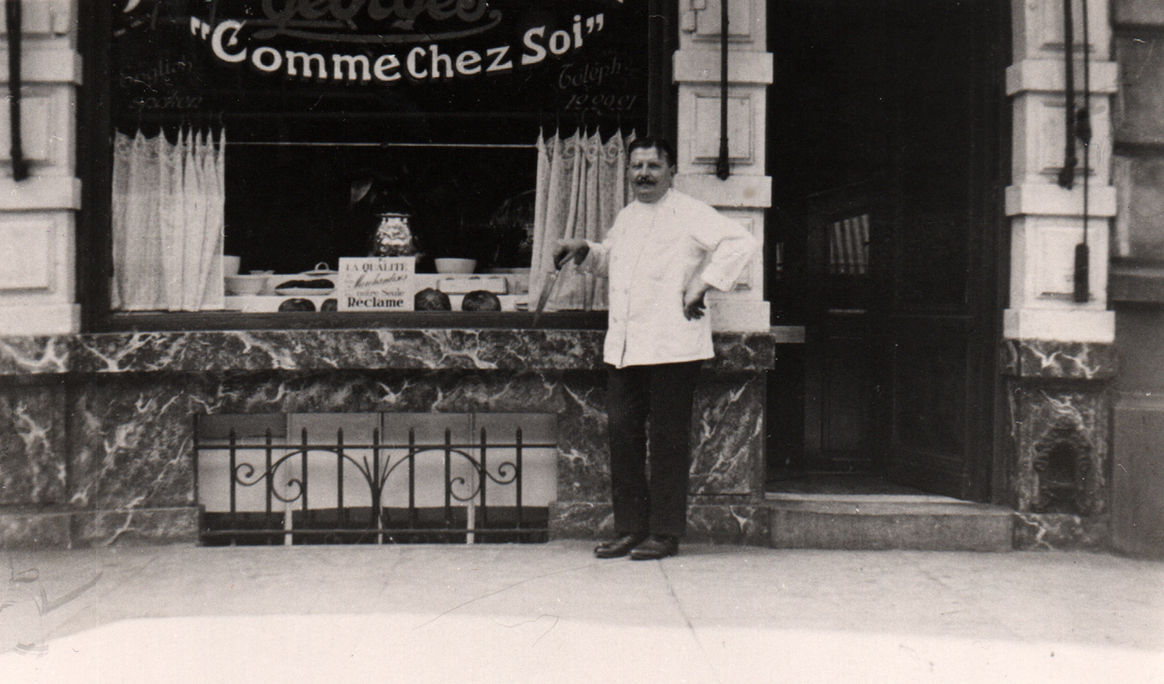
Georges Cuvelier. Credit: Comme Chez Soi.
The challenges facing the establishment are considerable. Labour costs have soared, and the restaurant's extensive kitchens and dining spaces are expensive to maintain. Where Wynants once employed 15 or 16 cooks, there are now nine.
Laurence Rigolet envisages a smaller operation in the future, reducing overheads without sacrificing the restaurant's character. The building and main dining room will remain, but the business behind them may need to become leaner.
It is a reminder that even the grandest gastronomic institutions must contend with spreadsheets as well as soufflés. The challenge is ensuring that the next generation can afford to keep Comme Chez Soi’s history alive.
Rigolet's definition of success is refreshingly straightforward. What still gives her pleasure, after a lifetime in the restaurant?
"Happy customers," she says. "If that ends, I stop."
