

Nato chiefs will gather next week at the Hague with European security on top of the agenda. Nato will announce new targets for defence spending and President Trump will reiterate the need for Europe to pay for its own defence and may announce a further reduction in the number of US service personnel in Europe.
Some defence analysts are talking about a war between Russia and Nato in or around 2029, if there isn’t a satisfactory solution to the war in Ukraine. A satisfactory solution includes fully respecting the sovereignty of Ukraine.
President Trump’s attempt to coerce Ukraine to accept loss of territory, his antipathy towards the EU and his undermining of Nato’s Article 5 (mutual defence) by threatening to withdraw US support, means that the US has become an unreliable partner in underwriting European Security. President Trump is entirely predictable in his own unpredictability and has also frequently rattled the cages of even his closest Nato allies. Towards the end of his first term, he set up a study group to examine the consequences of a US withdrawal from Nato.
The US Secretary for Defence, Pete Hegseth, is pushing for Nato to raise its defence spending target to 5% of GDP, over a seven year period. He has the support of Nato Secretary General Mark Rutte and reportedly a majority of Nato member countries. This 5% is broken down into 3.5% on military requirements and 1.5% on supporting infrastructure, roads, bridges airports etc. If approved, it introduces a new system for calculating defence spending.
In my opinion, having studied President Trump’s defence statements, from his earliest election campaign rallies in 2016, it is also quite possible that President Trump could withdraw the US from Nato entirely, or formally modify its commitment to Article 5. In either situation, the implications for both Nato and European Security would be enormous. Trump does not want a confrontation with Russia, a possible future partner in exploiting the Arctic’s resources.
Moreover, the noted UK Security and Defence analyst, Professor Michael Clarke, predicted last year that President Trump’s return to the White House, would cause Nato to unravel into two factions, a Northern Group of nations that would stand up to Russia and a Southern Group that would allow President Putin to continue to pursue his war aims.
Nato in uncertain waters
In my opinion, a US withdrawal would collapse Nato, as we know it. This would force the EU to finally establish its own Common Defence, absorbing (European) Nato ‘s military capabilities under EU control. Nato could still be retained as a political transatlantic bridge between Europe and North America.
Up to now, the US nuclear umbrella also served, effectively, as a nuclear deterrent for Europe. If the US nuclear umbrella is withdrawn from Europe. Europe will have to replace it with an effective deterrent.
US nuclear policy has been to use nuclear weapons as a second strike capability, in other words, only after the US, or any Nato member, has come under a nuclear attack. During the Cold War the USSR had a similar policy. Russia has changed this policy in recent years, and Russia may now use nuclear weapons as a first strike option, when threatened with overwhelming conventional attack.
Russia has an estimated 5,580 nuclear warheads, the largest in the World. Without guaranteed US nuclear support, Europe would need to have its own deterrent. Without a European deterrent and without US backup, Russia could exert huge influence on European foreign and economic policies. In other words, Europe could become ‘Finlandised’.
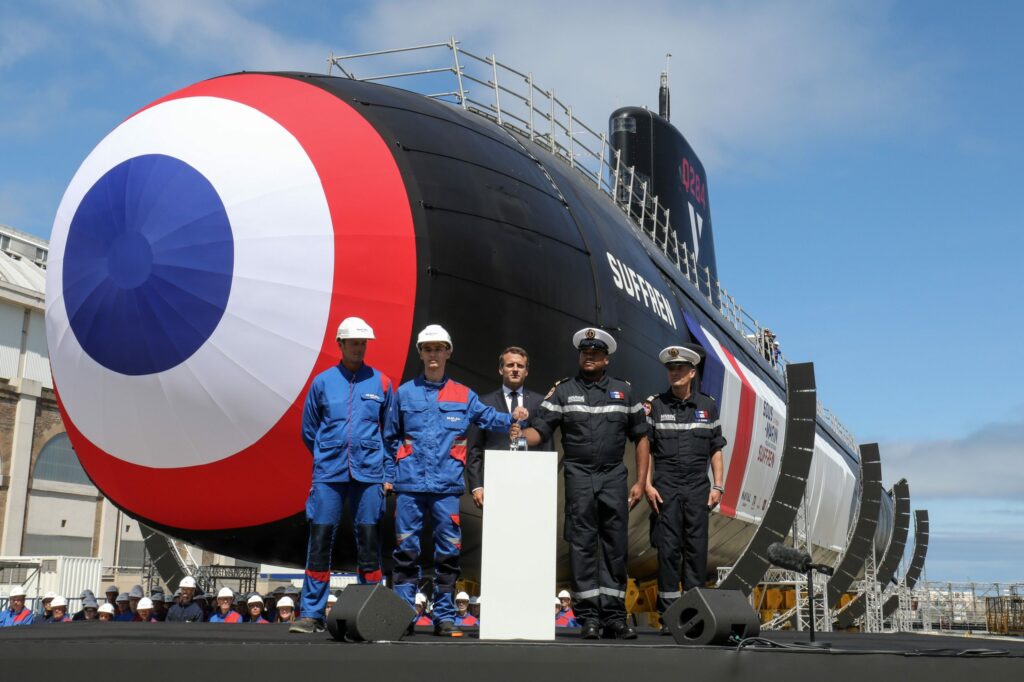
A European deterrent based on non-nuclear conventional forces, that can take on Russia with its nuclear capability, is simply not feasible, militarily or politically. Nor will the combined UK and French nuclear forces, of 515 nuclear warheads, be enough to provide a credible deterrent. The main problem is that their combined forces are too small and Russia, with its first strike policy could manage to take them out, if the US was not involved.
Even a European massive cyber offensive capability would not be a secure deterrent to counter Russia’s nuclear deterrent. Nor would a European Star Wars programme be enough. The US Star Wars proposal, of protection from nuclear attack, was feasible because the US had their own nuclear deterrent already in place.
Environmental warfare, where climate over nations can be controlled, may provide an effective deterrent, but that is a long way in the future, and we are not there yet.
The only viable alternative is for Europe to have its own nuclear deterrent, at least until Worldwide nuclear disarmament is achieved. There are suggestions that the Anglo-French nuclear deterrents should be beefed up. That may be part of the solution, but it has many disadvantages. Risk sharing suggests diversification but new countries developing nuclear weapons would be in violation of the UN Treaty on the Non-Proliferation of Nuclear Weapons.
Of course, if the US could be persuaded to maintain its nuclear umbrella, say in return for a lucrative trade deal, there would be no need for Europe to have a nuclear deterrent, in the first place. Mr Trump, by all accounts, likes transactional arrangements.
