

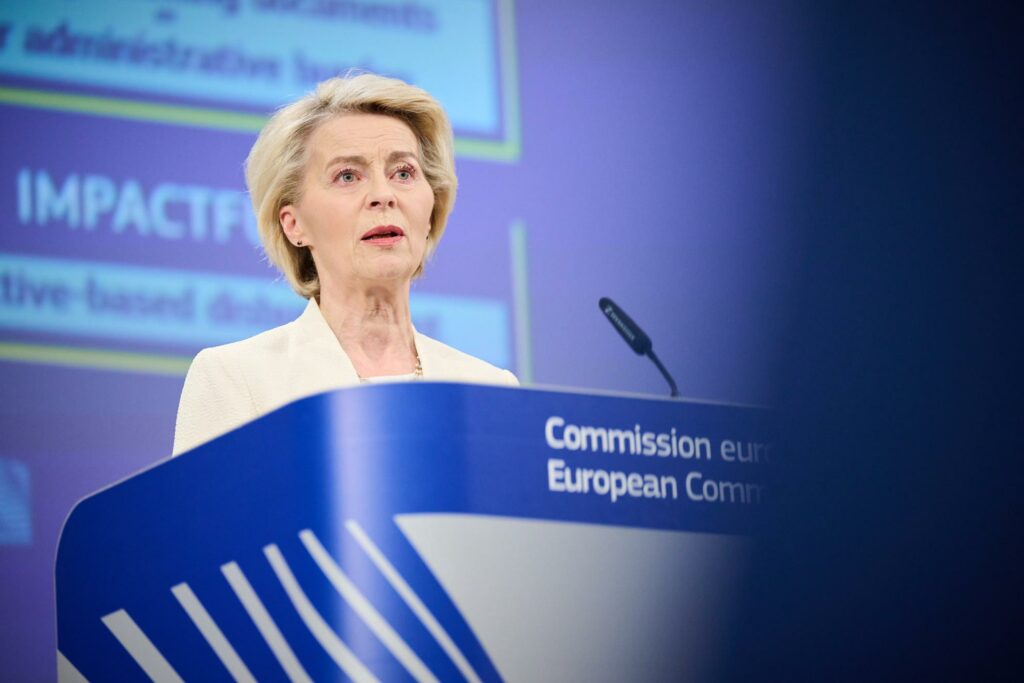
Last month, the European Commission announced a €2 trillion budget for the 2028-2034 period.
Among its provisions includes the planned establishment of an industrial decarbonisation bank as part of the wider European Competitiveness Fund, which will work to increase the competitiveness of EU-manufactured clean energy and decarbonisation technologies through joint public-private investments. These climate financing efforts will be increasingly essential as European fiscal power comes under pressure from the United States’ imposition of 15% tariffs on EU exports.
In that vein, the European countries should establish the European Climate Mechanism (ECM) that would either work with the bank or take its place. Taking inspiration from the Bruegel think tank’s “European Defence Mechanism” (EDM) proposal, the ECM would be an EU-adjacent regional and supranational structure that would facilitate the planning, procurement, and collective ownership of clean energy technologies and critical minerals. The ECM would achieve this through jointly pooling members’ capital, implementing public-private investment strategies, and overseeing a common clean energy technologies market, which would all dramatically enhance energy cooperation and efficiency, lower unit costs, and increase opportunities for European companies to compete against Chinese imports.
Most importantly, the ECM would also take on the initial costs of clean energy funding by borrowing on capital markets and pooling its members’ capital contributions. This would both mobilize the growing ESG investor base in Europe and keep the lid on ECM members’ public debt by having these initial costs placed on the ECM’s balance sheet.
By shouldering these upfront costs, the ECM would address the perennial issue of climate financing that EU members and other European states have consistently faced. In fact, despite relatively strong EU climate action through its ambitious Green Deal programme and strategic decarbonisation efforts following Russia’s invasion of Ukraine, the continent is still not on track to reducing its carbon emissions by 55 percent by 2030, partly due to continued climate funding gaps.
Building a cleaner energy market
As a unified institution, the ECM offers other benefits with collective ownership of these strategic assets, collective bargaining power for securing critical minerals, and a common market for renewable energy technologies as well. Collective ownership of strategic renewable energy assets, with members liable for equipment usage fees and maintenance costs, is necessary to decrease fragmentation across European energy infrastructure, including between EU and non-EU members. Additionally, European countries should pool their bargaining power in the ECM to secure critical minerals for clean energy technologies (like cobalt, nickel, lithium, among others) and avoid competition over these same resources. With a common market in place for smaller-scale products as well, the ECM could prevent harmful internal competition, stimulate economies of scale for renewable energy technologies across the continent, and give European companies a better chance to compete against China’s leading presence in Europe’s clean energy technologies market.
Still, even with the clear need for an entity like the ECM, establishing such a mechanism will not be a straightforward task. Negotiations over its establishment must address questions of governance, budgetary commitments, asset ownership structures, and distribution of funds. These concerns should not prevent discussions from beginning though, especially as the urgency of the climate crisis, the risk of European backsliding, Britain’s need for an economic catalyst, and the global pressure of US tariffs will make the ECM more than worthwhile in the long term.
Luckily, the new European budget proposals, combined with EU efforts to promote energy cooperation across the entire European continent, present a timely window to make such a proposal. The UK and EU are especially well-placed to pursue such cooperation following their recent agreement has especially clear jumping off points, including commitments to link the UK and EU carbon markets and discussions to couple the UK and EU electricity markets.
With climate change fast becoming the defining issue of our era, ambition will be essential for any success. By championing the ECM, Europe has a real chance to take a decisive role in creating a greener and more sustainable future for itself.
