

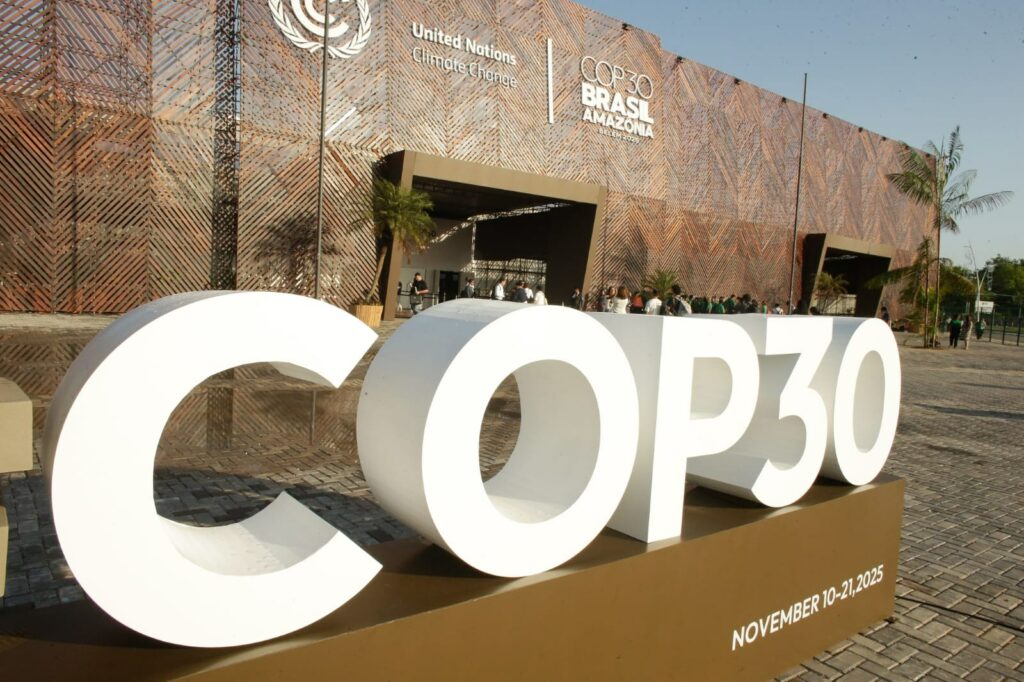
Two weeks ago, Brazilian President Lula opened the climate summit COP30 in Belém in the Amazon with an opinion piece featured in the media of 54 countries. He called COP30 “the moment of truth”.
Two weeks of long nights later, COP 30 concluded with a set of decisions: the Belém Political Package. Time to measure the outcome by this yardstick:
The truth is… the world will cross the line for 1.5°C degrees
COP30 marks the 10th anniversary of the Paris Agreement and the conclusion of its first cycle. This milestone involved a collective stock take of the progress made, after which countries put forward their individual pledges for the next cycle.
Leading up to and during COP 30, the vast majority of nations submitted their climate plans (called Nationally Determined Contributions - NDCs) for the 2030–2035 period.
The scientific consensus remains clear: limiting global warming to 1.5°C with no or limited overshoot requires deep, rapid, and sustained global greenhouse gas emission reductions.
Specifically, this means approximately a 40% reduction by 2030 and a 60% reduction by 2035, relative to 2019 levels, and achieving net-zero carbon dioxide emissions by 2050.
Individual climate pledges do demonstrate progress: the projected warming by 2100 has been reduced from roughly 3.6°C (projection at the time of the Paris Agreement) to around 2.6°C projected today.
However, for the next cycle, little additional climate ambition was demonstrated in the new plans presented before and at COP 30. Now that we know the NDCs for the decisive period, barring a major course correction, we can conclude the world is headed for an overshoot of the 1.5°C limit. The climate crisis will continue and accelerate.
The truth is… COP is about collective progress
COP30 in Belém was never intended to be a venue to renegotiate individual Nationally Determined Contributions (NDCs); the Paris Agreement simply does not structure emission reduction negotiations that way.
Rather, the summit’s mandate was to formulate a collective response to the climate crisis, charting a way forward that operationalizes the recommendations of the 2023 Global Stocktake. The resulting decisions are best described as necessary, but insufficient.
However, COP30 also brought victories that should not be overlooked. On the finance front, the summit signaled an expectation to triple adaptation finance by 2035, expanding on the 2025 doubling pledge.
Structurally, the parties reached a foundational decision to establish a "Just Transition" mechanism, which will support nations as they navigate the shift to green economies.
Furthermore, despite a tense rift in the final Plenary, the COP30 agreed on a set of indicators for the Global Goal on Adaptation. This will allow countries to better assess their progress as they adapt to climate change.
COP 30 also managed to agree on several items that had remained unfinished at previous COPs, including taking forward recommendations of the Global Stocktake or a work programme for short-term mitigation action.
Finally, the summit similarly made progress on Loss and Damage, meaning the preparation for those negative effects of climate change that can no longer be mitigated or adapted to. Here, it was able to move beyond the stalemates of previous years, issuing guidance to respective institutions in the UNFCCC to ensure vulnerable countries can better access support.
The truth is… we must go beyond the text
The truth is that fossil fuel extraction and combustion are the primary drivers of climate change. In recent years—most notably at the 2023 COP in the UAE—the international community successfully anchored the concept of a fossil fuel phase-out (or “transition away”).
This position has been further bolstered by the Advisory Opinion on climate change issued in July by the International Court of Justice (ICJ), the UN's highest court.
The ICJ defined the failure to take appropriate climate action (including investing in production, granting exploration licenses, or providing subsidies) as a legally wrongful act.
The logical step to make insufficient NDCs more ambitious is to agree on phasing out fossil fuels. A coalition of countries issued a strong call at COP to develop a comprehensive phase-out roadmap for fossil fuels. To advance this, Colombia and the Netherlands have pledged to organise an international summit in the spring of 2026.
While including a formal decision for the phase-out in the final COP outcome proved impossible, the Brazilian Presidency launched a roadmap under its own mandate to feed into COP31. This is not unprecedented.
Last year, the New Collective's Quantified Goal on Climate Finance faced significant criticism; as a path forward, a $ 1.3 trillion roadmap was devised under the leadership of the COP presidencies.
That report gathered clear recommendations and, crucially, included detailed calls to action for specific country groups, international organisations and other actors—specificity that would not have been possible in a negotiated environment.
Rather than viewing these roadmap processes as mere off-ramps to reach last-minute agreements, we should see them as opportunities to go above and beyond to create momentum. COP30 took place during a difficult time for multilateralism.
As the UNFCCC regime shifts from treaty negotiation to implementation, new methods of generating momentum are required. The climate crisis will only intensify in the coming years; exceeding, even temporarily, the 1.5° goal comes with unprecedented risks for countries and communities. We must leverage every avenue of international cooperation and country leadership available.
The Truth is… we must stand for science
The final truth is... about truth. Multilateral progress is also being slowed by a new surge of anti-science sentiment that extends beyond rhetoric, even to the active defunding of essential earth observation systems necessary to judge the state of the climate system.
While the most vocal anti-science delegations may not all have been physically present in Belém, their ghost was in the corridors.
At one stage, some countries even objected to agreeing that the Intergovernmental Panel on Climate Change represents the best available source for science on climate.
The final message from the Amazon echoes President Lula’s warning delivered during his opening: we must guard against new forms of climate denialism, a war on science, and complacency in the face of the climate crisis - at all levels using all levers.
