
“I ended up in a prison in Libya, an underground camp that no one knew existed. They force you to give a relative’s phone number to pay for your release. But none of my family knew I had left for Europe.”
“I was tortured: they tie your hands above your head, then they whip your soles. Afterwards, you can’t walk. You’re forced to move on your knees. Every day we were beaten. I thought I would die in there, with no one to call for help.”
Mamadou’s experience is not accidental. It is not only the effect of inhuman behaviours, but also a direct consequence of the externalisation of Europe’s border management, which outsources responsibilities.
The recent renewal of the Italy-Libya Memorandum of Understanding (MoU) brings this practice back into spotlight, making the EU and its Member States complicit in human rights abuses. Yet this approach is not inevitable, the EU should shift to a rights-based model prioritising protection and safe mobility options instead of delegating cruelty.
Libya: Europe’s offshore containment zone
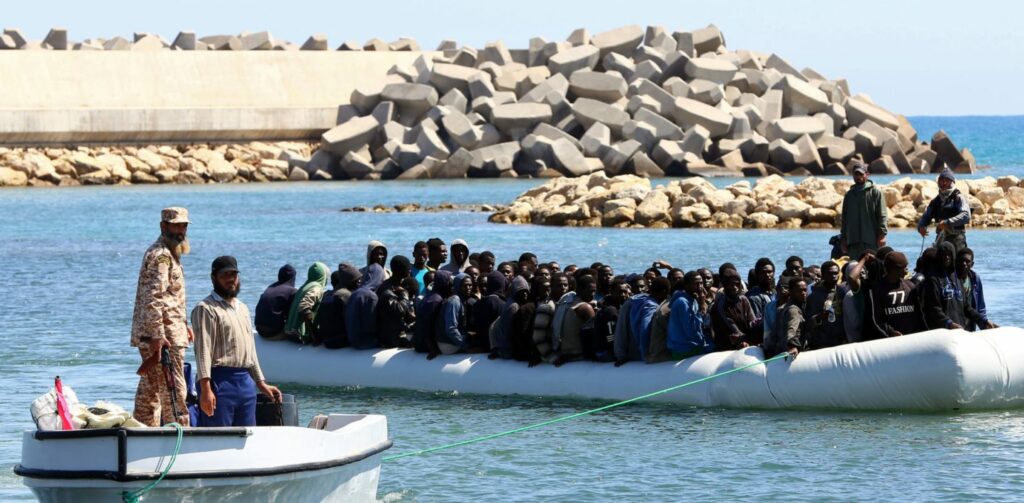
Inside Libya’s detention centres overcrowding, arbitrary detention, starvation, lack of basic hygiene, torture, sexual violence and forced labour happen daily. This has long been documented by a wide range of sources.
At sea, the situation is no less bleak. Pushbacks repeatedly violate the principle of non-refoulement: “Those intercepted by the Libyan Coast Guard at sea, we call them ‘revenants’, half-dead people.
You are already half dead in the sea and then they pull you back, but it’s no saving: they just return you to Libya.” In short, human rights are systematically disrespected.
EU’s cooperation with Libya finds its most tangible expression in the EU Border Assistance Mission, launched in 2013. More than a decade later, the project is still alive. In June 2025, Member States extended its mandate until June 2027, allocating nearly EUR 52 million.
Italy has long been the main driver of EU-Libya cooperation. Agreements on irregular migration date back to 2000, building a relationship that culminated in the 2017 MoU, which formalised cooperation on border control, returns and training of Libyan authorities.
The deal was automatically renewed in November 2025 for another three years, ensuring continuity in a relationship that has become a model for the EU’s externalisation strategy.
Fighting or funding smugglers?
Brussels is quick to brand these partnerships a “success”, pointing to a sharp drop in arrivals via the central Mediterranean route. But fewer arrivals do not necessarily mean fewer people on the move. And the focus on “fighting smugglers” ignores why people migrate and how quickly smuggling networks adapt.
Worse, EU support often fuels the very smuggling it claims to combat, with some of its partners accused of running the business themselves. Take Abdel-Rahman al-Milad, (Bija), sanctioned by the UN for human trafficking and former head of the coast guard unit in Zawiya, Libya.
In 2017, he even travelled to Italy to meet officials and discuss cooperation on border control. Europe claims to fight smugglers; at the same time, it is shaking their hands.
Those who have endured Libya’s system know best what must change. “Refugees in Libya”, a self-organised movement born after a mass raid on migrants by Libyan authorities, has been central in opposing the MoU. As part of their campaign, which is documented in the book C’è di mezzo il mare by Eva Castelletti, they address Europe directly with a clear and urgent appeal.
“Stop supporting our torturers”
Their demands are clear: cancel the agreement, halt EU-funded projects that back Libyan militias, stop Frontex from relaying refugee boat locations to Libyan authorities and redirect support to local organisations that are genuinely protecting migrants.
Human rights and dignity must guide all EU cooperation with non-EU countries. Agreements should be monitored and suspended when violations occur.
Ending impunity also requires investigating the responsibility of national coast guards, including attacks on NGO crews by Libyan forces equipped with EU and Italian support. And resources should go toward expanding safe and legal pathways – such as resettlement programmes, labour mobility schemes, family reunification, human corridors as well as scholarships, so that people are not forced to embark on dangerous journeys.
Italy’s deals with Libya reveal the human cost of Europe’s obsession with “protecting” its borders. Since 2014, 33,179 people have been recorded missing in the Mediterranean. Safe and legal pathways would prevent people like Mamadou from suffering and risking their lives.
And yet, Mamadou survived. After years of hardship at the hands of Libyan authorities since leaving Ivory Coast, he eventually found safety in Italy, where he has built a family and a new life.
His story even inspired Matteo Garrone's Oscar-nominated film Io Capitano. The local Caritas played a crucial role: they sheltered him, helped him learn Italian, access the job market and stand up for his rights when he faced exploitation.
Migrants are part of Europe's fabric. Far from being a burden, they make a vital contribution to our societies not only economically but also culturally and socially. Organisations like Caritas can enable their full contribution.
Mamadou’s story is a powerful reminder that behind every number there is a life that policy could have protected and that solidarity works.
