

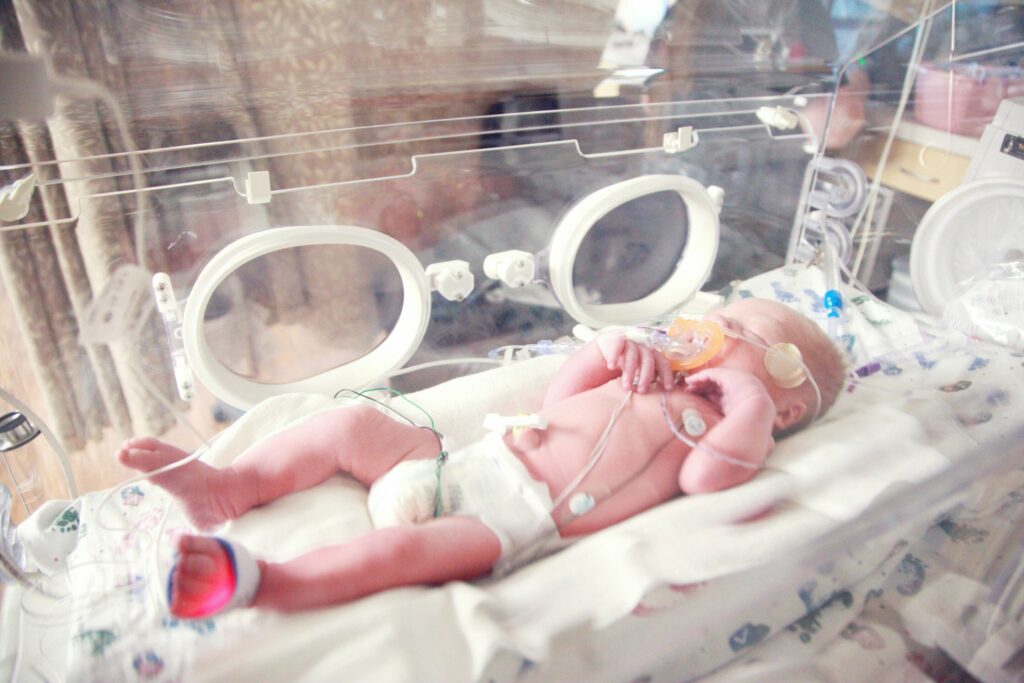
In a neonatal ward at a Kyiv maternity hospital, a premature baby sleeps inside a mobile incubator. His lungs are still developing. A fragile network of tubes and monitors keeps him alive, delivering heat and medication to ease each breath.
In peacetime, this care would be routine. In war, it teeters on a knife’s edge; One power outage or supply delay could end a life.
Eighty years after the UN was created, we are reflecting on our role in a world that is fundamentally changing. We must operate within today’s realities, including reduced humanitarian resources. But the harder question is what will the world refuse to bargain away – what values will we choose to hold onto, and what, as a result, cannot be left unfunded?
Investing in women’s health is both a moral imperative, and a foundation of a healthy society. Ukraine shows what happens when war dismantles that foundation: childbirth is disrupted, medical risks increase, and trauma is compounded, with multi-generational impacts.
Ukraine is a stark example, but these threats to women’s health are felt across the globe as countries militarising, with humanitarian funding often paying the price. It reflects a deeper rupture in how the world is choosing to allocate power, protection, and responsibility.
Global women’s health at risk
At the same time, women’s rights and health are under renewed threat, as access to reproductive healthcare is restricted, legal protections are weakened, and bodily autonomy is increasingly contested in law and policy across multiple contexts.
Doctors in Ukraine describe this winter as one of the harshest, with temperatures dropping to –20°C and the Russian Federation stepping up attacks on energy infrastructure, leaving millions without water, light or heat. In early January, a series of strikes cut power and heating for up to 2.7 million people across Ukraine.
When electricity drops in a maternity hospital, the consequences are immediate. Operating theatre lights, suction machines, oxygen systems, monitors, incubators, ventilators, blood storage – all these depend on stable power. A short blackout during a Caesarean section or in the minutes after a birth can mean the difference between life and death.
In recent weeks, an attack in Zaporizhia damaged another maternity hospital that United Nations Population Fund was in the process of fortifying against shelling. This year alone, 23 major attacks on healthcare facilities have been recorded, bringing the total to over 2,700 since the start of the full-scale invasion.
Let’s be clear: Attacks on hospitals and energy systems are violations of international humanitarian law, and they hit women and newborns particularly hard. These are obligations the international community has already agreed to uphold.
The toll on maternal and newborn health is mounting. Premature birth rates have risen sharply, reaching nearly 12 per cent in frontline areas — twice the national average. Doctors also report rising rates of severe, life-threatening complications among pregnant women, including hypertension and uterine rupture a clear signs of a system under extreme strain.
Women near the frontline or in displacement settings face the highest risks, forced to undertake long, dangerous journeys in the cold to clinics while navigating pregnancy amid trauma, loss, and the profound impact on mental health that this ongoing war has created.
The global commitment to ensure that every pregnancy is wanted and every childbirth is safe is under extraordinary strain in Ukraine.
Across the country, international agencies are working alongside national authorities and frontline health workers to keep maternity wards operational, support exhausted medical staff, and deliver care to women in hard-to-reach areas.
Ukrainian professionals have shown remarkable ingenuity, safeguarding electricity supplies and reinforcing backup systems to maintain continuity of care. Yet under sustained, systematic attacks on energy infrastructure, even these efforts are being pushed to their limits. In many hospitals, specialised reproductive health equipment remains heavily dependent on international support.
A mother and her newborn baby in a hospital running on generators in winter should never be treated as expendable. Protecting that life is the very purpose of multilateral cooperation.
The question now is: What are we prepared to treat as non-negotiable?
How women and newborns fare during this war will be shaped not only by the brutality of attacks, but by the priorities the international community sets in response. Protecting women and newborns must be funded, defended and upheld — without exception.
