

On International Women’s Day, the world will celebrate the power and potential of women and girls with speeches, panels, hashtags, and pledges.
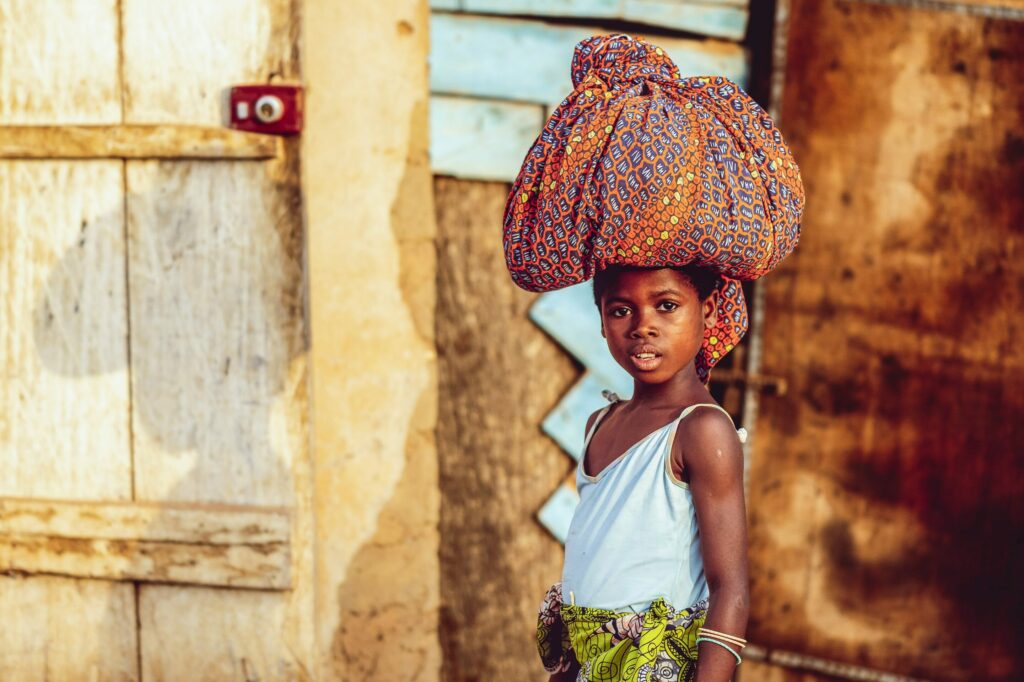
But for millions of girls like Dinah Jepkemei, women’s empowerment is not a slogan. It is a daily fight for survival.
In West Pokot, Kenya’s most marginalised county, Dinha grew up spending long days alongside her parents digging for gold in harsh terrain, all too often watching children go hungry. For generations, this was the rhythm of life – labour without security, effort without escape.
As a girl, her ambition was modest but urgent: to stay in school, build a career, and support her family. Finishing secondary school was a rare triumph. Still, with few opportunities for young rural women, the future remained fragile.
Her story is extraordinary. It should not be.
Globally, 272 million children and youth are out of school, including 133 million girls. In Sub-Saharan Africa, nearly 100 million ages 6-18 face this crisis, with girls disproportionately affected by poverty, child marriage, discriminatory norms, unsafe school journeys, and gender-based violence. When resources dwindle, girls' education is often the first cut.
And now, at the very moment the world claims to champion gender equality, funding is shrinking.
In 2025, global aid declined by up to 17%, on top of a 9% reduction in 2024. For the first time in nearly three decades, major donors, including France and Germany, reduced their aid. The United Kingdom, once a global leader on girls’ education, cut bilateral aid to Africa by 12%, while the United States cut overseas aid contracts by more than 90% in 2025, forcing programmes across Africa to close or scale back — including those supporting girls’ education and health.
International Women’s Day cannot be a celebration on one hand and a retreat on the other.
Because when girls are given a real chance, they do not merely survive — they transform economies.
That chance came for Dinah when she was accepted into Global Give Back Circle’s HER Lab, an initiative supported by the Mastercard Foundation. At HER Lab, she developed skills in plumbing, beadwork, and digital literacy and, just as importantly, learned what it meant to stand tall.
Today, Dinah runs a beadwork business, takes plumbing jobs, and volunteers on her church farm to boost local food security. Her earnings support her family, and her six-year-old daughter now envisions a brighter future. “I used to feel stuck,” Dinah says. “Now I earn, create, lead—and my daughter knows her dreams matter too.”
The difference was not charity. It was an investment – sustained, practical, and rooted in belief.
Global Give Back Circle has been a partner to over 5,000 girls and young women in Africa and Asia as they gain economic agency and transition to dignified work through education, digital/workforce skills, and personalised mentorship.
Participants enter at critical points—usually post-secondary school into early adulthood—and are guided toward employment, entrepreneurship, or further training, with backing from a global network of mentors, including more than 700 from Microsoft.
The ripple effects extend far beyond individual success stories.
With support from Church World Service, women in West Pokot transformed survival into progress. A sand dam brought water closer, girls returned to school, and women built a savings group that now runs a poultry cooperative supplying local schools and businesses—strong enough to buy land and secure their future.
This is what equality looks like in practice: girls finishing school, gaining digital/workforce skills, running businesses and families choosing opportunity over survival.
The economic case is overwhelming. Educating girls boosts earnings, stops early marriage, and sees women reinvest up to 90% of their income in families and communities. By 2050, more than a quarter of the world’s population will be African, and this generation’s empowerment will shape global labour markets, innovation, and stability.
Investing in girls’ education and economic empowerment is not a “soft” issue. It is economic strategy, climate resilience, and democratic stability rolled into one.
So this International Women’s Day, the question is simple: do we mean what we say?
If the West is serious about girls and women, it must act before budget cycles lock in deeper cuts. The UK’s 2026 Spring Statement, US 2027 budget negotiations, and Europe’s in-year amendments and next EU budget framework all offer critical windows to restore funding for women’s and girls’ empowerment.
Budgets are moral documents. They reveal what we truly value.
Governments can’t act alone; individual donors, foundations, and impact investors must fund proven interventions that turn survival into opportunity.
African leaders must advance protections and gender-responsive policies.
Behind every statistic is a girl like Dinah — determined, resilient, and on the brink of being written off.
If we celebrate women and girls in speeches while cutting the programmes that keep them in school, International Women’s Day becomes theatre.
If we fund their futures, it becomes transformation.
The choice is ours.
