

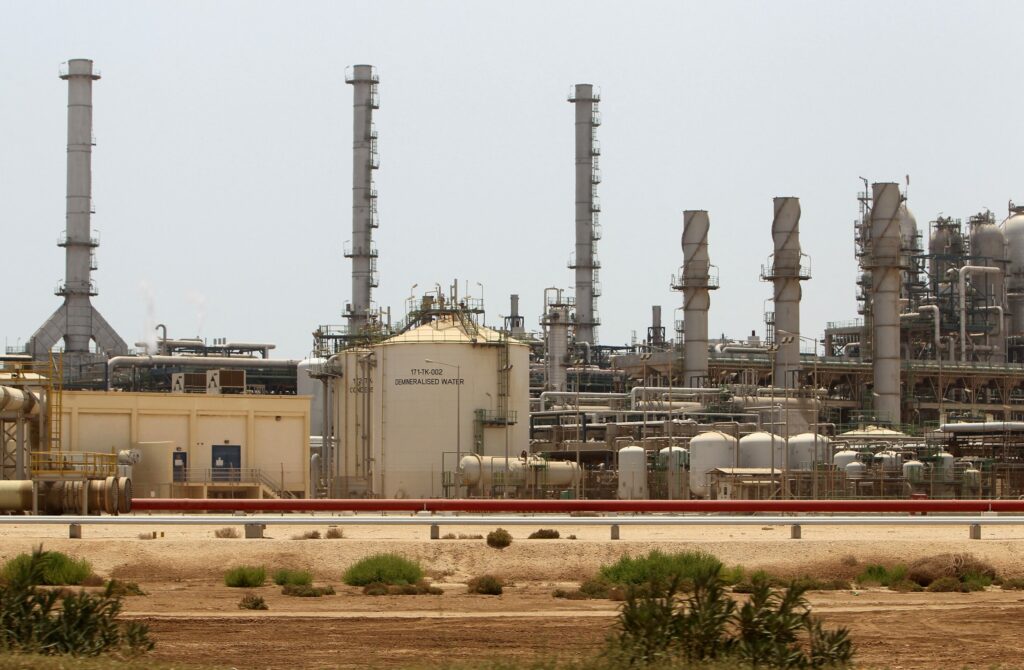
In retaliation for the attacks by the United States and Israel, Iranian missiles and drones have targeted the Arab Gulf at an unprecedented rate.
Targets have included oil installations, desalination plants, ports, airports, diplomatic compounds, tourism assets and digital infrastructure across the six monarchies. While the physical damage from these attacks has so far remained limited, the economic consequences are spreading rapidly to the region and beyond, including Europe.
Strikes against energy infrastructures reverberated immediately through global energy markets. Iranian hits on Qatar’s Ras Laffan - the operational centre of the country’s liquefied natural gas industry and one of the most important LNG export hubs globally - prompted QatarEnergy to declare force majeure, leaving importing countries without guaranteed deliveries.
As Qatar accounts for approximately 20 per cent of global LNG exports, force majeure pushed prices through the roof across the globe instantly. Even if security conditions stabilise rapidly, restoring LNG production requires time, implying at least four weeks of constrained supply.
Oil markets are also experiencing mounting pressure as a consequence of attacks against Bahrain as well as one of Saudi Arabia’s largest oil facilities, Ras Tanura. Brent crude briefly rose to the highest level recorded since mid-2024, by roughly 25 per cent and this remains contained only because Saudi Arabia has rerouted some exports through their Red Sea facilities and is tapping into its strategic reserves abroad, for the time being.
Indeed, even if production resumed, getting the oil and gas out would remain a challenge, given the ongoing blockage of the passage by the Iranian navy. Approximately one fifth of global oil and LNG supply normally passes through this narrow waterway connecting the Gulf to international markets, making it the most important energy chokepoint in the global system.
Even diverting exports, Gulf producers won’t be able to guarantee anywhere near normal output volumes.But Hormuz is also a fundamental node for non-energy trade, including vital imports for Gulf countries - such as fresh food – as well as critical commodities for the global economy.
Energy bottlenecks worsen in hormuz
With over two hundred vessels stranded or waiting to cross, this is a bottleneck that can only get worse, as freight rates jump up and war-risk insurance premiums increase roughly twelve-fold, with some insurers canceling coverage entirely.
These dynamics have not been contained by US President Donald Trump proposing to direct the US International Development Finance Corporation to provide political risk insurance and financial guarantees for vessels transiting the Gulf or signalling that the US Navy could begin escorting commercial tankers through the strait.
Even beyond Hormuz, the conflict has placed pressure on the Gulf’s role as one of the world’s principal connectivity hubs. Airspace closures, missile alerts and actual strikes against airports have already forced flight diversions across Saudi Arabia, the United Arab Emirates, Qatar, Bahrain, Kuwait and Oman. Passenger travel, cargo operations and time-sensitive supply chains all rely on the reliability of these transit corridors.
Beyond these immediate operational disruptions, the war also raises deeper questions about the long-term economic strategies pursued by Gulf governments. Over the past decade, states across the region have launched ambitious programmes designed to transform their economies beyond hydrocarbons.
Saudi Arabia’s Vision 2030 represents the most prominent example, but similar diversification strategies exist across the Gulf. The United Arab Emirates has invested heavily in positioning itself as a global hub for artificial intelligence and digital infrastructure. Qatar has expanded investments in research, education and knowledge-based industries. Tourism, logistics and financial services have also become central pillars of the region’s economic transformation strategies.
Recent strikes affecting high-profile targets - like the Fairmont hotel or an Amazon data centre in Dubai - highlight the vulnerabilities within this model and threaten the Gulf monarchies’ pivotal ambitions to be ever-more a global hub for the most critical geo-economic ventures, from AI to critical minerals.
These reputational risks carry tangible economic implications, as international companies evaluating long-term investments in the Gulf must now be much more alert to geopolitical exposure. Even limited attacks can increase the cost of capital, delay investment decisions and complicate long-term economic planning across the region. But the economic consequences are not confined to the Gulf.
Europe feels the shockwaves
The long wave impact of these disruptions has already been felt in Europe, whose exposure remains significant through energy markets, maritime trade routes and financial linkages. Since the sharp reduction of Russian pipeline gas imports following the 2022 energy crisis, the European Union has relied increasingly on LNG – including, Qatari LNG - delivered through global shipping routes.
If disruption continues, European utilities may once again be forced to compete for replacement cargoes on spot markets, recreating dynamics similar to those that drove the 2022 European gas crisis, pushing prices through the roof.
The 2022 crisis revealed the economic costs of energy dependence, yet progress toward structural resilience—through diversification and accelerated decarbonisation—has not fully eliminated exposure to geopolitical disruptions affecting global energy supply chains. Maritime disruption also threatens to increase costs along global trade routes linking Europe with Asia.
Protecting European economic interests therefore requires a more proactive approach toward the Gulf, in line with the Joint statement by GCC-EU Ministers’ emergency meeting on March 5. It is now imperative that Europeans follow through on what agreed, including pursuing a diplomatic off-ramp to the crisis to prevent further escalation, but also remaining actively engaged in preventing Iran from collapsing into a failed state, a scenario that would risk prolonging instability across the region and amplifying disruptions to the global economy on all fronts.
Other European countries, alongside France and Italy, should also strengthen practical cooperation to protect critical infrastructure – including energy installations, digital infrastructure and undersea cables - though operational defense support, reinforcing naval EU operations such as ASPIDES and ATALANTA, as well as deploying advanced soft-kill technological systems.
Preventing further escalation is therefore not only a regional security imperative but an economic one for Europe and the global system.
