

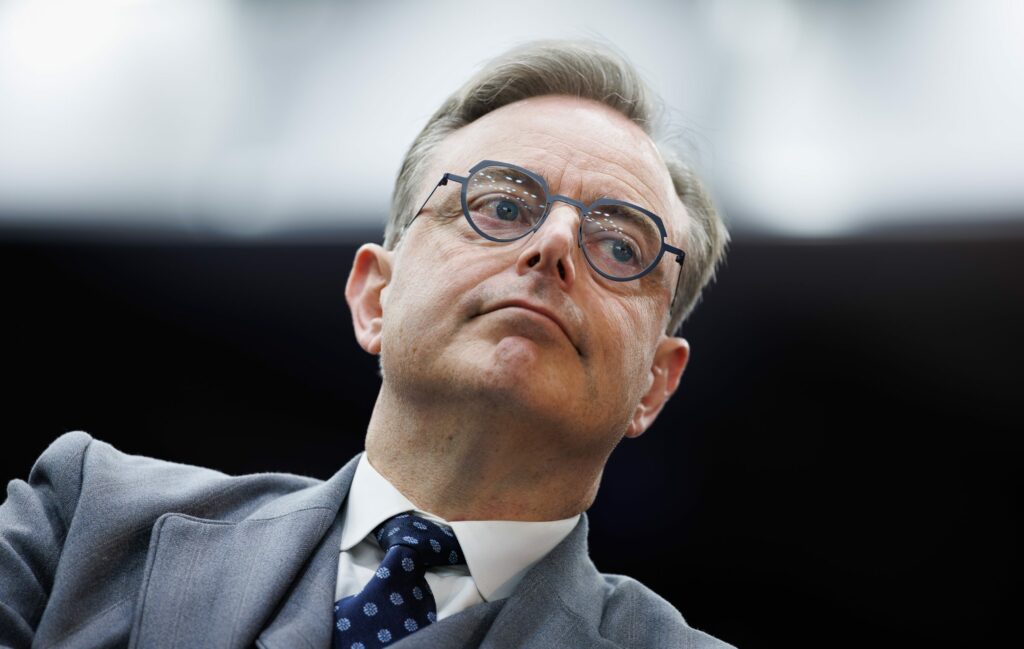
As Europe grapples with energy insecurity and the fatigue of a protracted conflict, Belgian Prime Minister Bart De Wever’s call for a "normalisation" of relations with Russia presents a tempting exit ramp.
However, this appeal to "realism" risks dismantling the very international legal order and security architecture that has protected the continent since 1945. By prioritising short-term fiscal relief over the long-term integrity of the UN Charter, such a shift would not bring peace. It would merely fund the next crisis.
In a report by The Brussels Times on a recent public discourse, Belgian Prime Minister Bart De Wever has proposed a fundamental shift in European foreign policy. He is calling for a "normalisation" of relations with the Russian Federation. Framed as a pragmatic response to economic stagnation and the perceived stalemate in Ukraine, the proposal suggests that Europe should prioritise a "frozen conflict" model to secure its industrial future.
While the Prime Minister presents this as a return to Realpolitik, a deeper academic and strategic analysis reveals it to be a miscalculation of systemic risks. To trade the foundational principles of European security for short-term economic relief is not realism. It is a strategic retreat that invites greater instability.
The UN charter: why "normalisation" is a legal impossibility
To treat the invasion of Ukraine as a manageable "disagreement" that can be moved past ignores the rigid legal framework of the United Nations Charter, which Belgium is sworn to uphold. The Prime Minister’s proposal to essentially accept a "frozen conflict" and resume trade, bypasses several jus cogens (peremptory) norms that cannot be waived for the sake of convenience.
The violation of Article 2(4) is at the heart of the issue. Article 2(4) is the cornerstone of modern international law, prohibiting the "threat or use of force against the territorial integrity or political independence of any state."
By calling for normalisation before Russia has withdrawn to its recognised borders, the PM is effectively suggesting that the EU should reward a blatant breach of this article. Legally, a state cannot "normalise" relations with an ongoing aggressor without becoming complicit in the erosion of the norm that prohibits territorial conquest.
The doctrine of non-recognition further underscores the danger of such a shift. Under international law (the Stimson Doctrine and subsequent UN resolutions), states have a legal obligation not to recognise territorial changes brought about by the illegal use of force.
Normalising relations while Russia occupies the Donbas or Crimea would constitute "de facto" recognition. This would not only invalidate the UN General Assembly resolutions that condemned the invasion but would also signal that Article 2(4) is optional if the aggressor holds enough economic leverage.
The failure of the "self-defense" loophole makes the legal and diplomatic implications even more serious. Russia has attempted to frame its actions as "collective self-defense" under Article 51 of the Charter. However, the international legal community, and the International Court of Justice, has overwhelmingly rejected this.
For a European leader to move toward normalisation is to provide diplomatic legitimacy to a perversion of Article 51, creating a legal precedent that any nation can claim "pre-emptive self-defense" to annex a neighbour's energy resources or territory.
Analysing the short-term gain vs. long-term cost
The PM’s argument centers on Economic Preservation. That is the immediate need to lower energy inputs. While the short-term relief is quantifiable, the long-term "externalities" are catastrophic. Let us consider three that are paramount:
The first is the credibility tax. Diplomacy operates on the currency of credibility. If the European Union signals that its sanctions and principles are "for sale" in exchange for cheaper commodities, it devalues every future diplomatic tool. The long-term cost is a Europe that can no longer deter aggression because its adversaries know its breaking point is merely a matter of fiscal quarters.
A second externality is the fragmentation of the Union. Logically, a move toward unilateral normalisation by a core EU member state creates a "security vacuum" in Eastern Europe. If Brussels moves toward Moscow, Warsaw and the Baltic states will seek security guarantees elsewhere, likely leading to a permanent fracture in European political integration.
A third externality is the moral hazard of "frozen conflicts." Strategically, a frozen conflict is rarely frozen. It is a period of re-armament. By providing the Kremlin with the economic oxygen of normalisation, Europe would be funding the very military modernisation that will inevitably threaten its borders in the next decade.
Deconstructing the "Korean model"
The Prime Minister’s reference to a "Korean-style" armistice is an imperfect historical analogy. The Korean armistice was underpinned by a massive, permanent US military presence and a clear line of demarcation.
In the current European context, a "frozen" Ukraine without a defeated or fundamentally transformed Russia is merely a tactical pause. Without a definitive resolution, "normalisation" becomes an act of appeasement.
A path toward authentic realism
A robust strategic framework suggests that Europe’s long-term prosperity is inseparable from its security. The logical path forward is not a return to the dependencies of yesteryears, but the acceleration of a new European architecture.
Firstly, this means strategic decoupling: permanently moving away from volatile, politically-leveraged energy sources. Secondly, it requires integrated defense, recognising that a secure Ukraine is the only "buffer" that allows the European economy to function without the threat of mobilisation. Lastly, it demands principled diplomacy, maintaining that normalisation is the result of a restored international order, not a precondition for it.
In the final analysis, Prime Minister De Wever’s call for normalisation appears to be an attempt to solve a 21st-century security crisis with 19th-century diplomatic trade-offs. It lacks the longitudinal vision required for contemporary statesmanship.
By prioritising the immediate requirements of the balance sheet over the enduring requirements of the UN Charter and continental security, the proposal risks a future where Europe is neither prosperous nor at peace.
True realism demands the patience to see a conflict through to a stable conclusion, rather than settling for a temporary quietude that invites a louder storm.
