

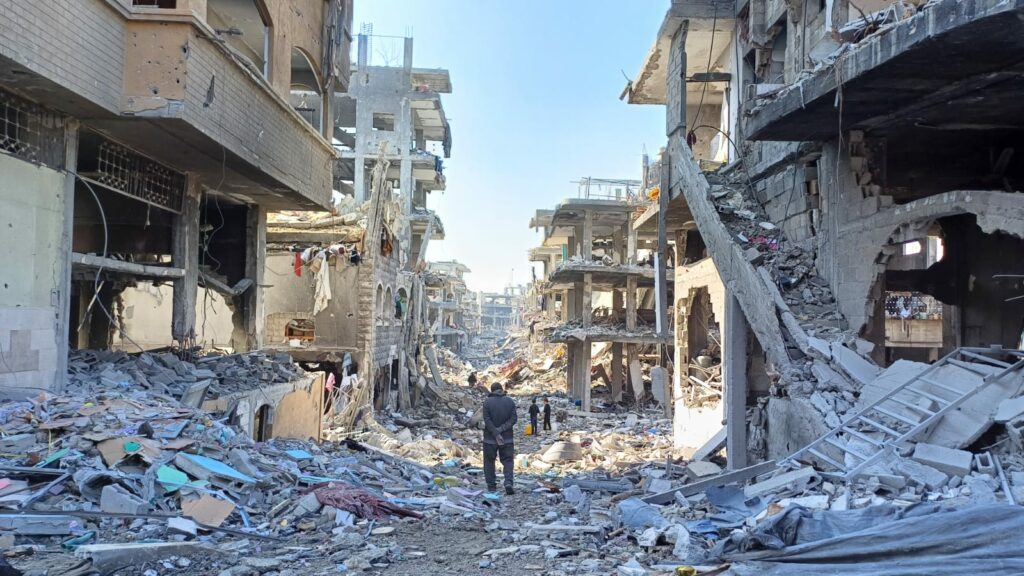
In Gaza, nearly 1.65 million meals continued to be delivered daily by the UN and NGOs partners through 185 kitchens across the country as of 28 February.
In Lebanon, around one in five people have been displaced by the escalating violence in the Middle East. In Ukraine, drones and missiles continue to destroy homes and infrastructure, leaving civilians dependent on emergency meals, shelter and psychosocial support.
These are not just numbers; they are lives saved by humanitarian action, now under threat as Europe debates its budget priorities. The question is: Will Europe turn its back on millions when a few euros per citizen could transform lives in communities affected by crises?
The contradiction between rising needs and declining support is precisely why VOICE and 90 humanitarian NGOs across Europe launched the campaign #HumanitarianActionWorks to show the tangible impact of humanitarian assistance and to challenge the misconceptions shaping today’s debate. But this conversation is not happening in a vacuum.
The European Union is currently discussing its next Multiannual Financial Framework (MFF), the long-term budget that will define Europe’s priorities for years to come. At a time of competing demands, humanitarian action risks being deprioritised. This makes it important to address the 5 myths influencing the debate.
First: Humanitarian action does not work.
Humanitarian action does not fuel any crises but responds to them in a fast and efficient way. The increase in global needs is driven by conflict, climate change and political instability. Humanitarian action saves lives, alleviates suffering and prevents situations from deteriorating further.
Second: Humanitarian funding takes away resources from Europeans.
Not one school in Berlin, Brussels or Rome will receive more laptops because of reduced humanitarian funding from Germany, Belgium or Italy. Humanitarian action accounts for a tiny fraction of total spending. Cutting this funding will not solve Europe’s domestic challenges. It will, however, reduce the ability to respond to crises affecting millions of people.
Third: Security should replace solidarity.
What happens in the Middle East, Africa, Latin America, Asia, impacts everyone around the globe, as the COVID Pandemic has shown us. A more stable world where fewer people go to bed hungry or fearing for their lives, is the very definition of a secure world. History has shown repeatedly that more weapons do not lead to more peace. Let’s not repeat the same mistakes.
Fourth: Europe cannot afford humanitarian action during geopolitical uncertainties.
Humanitarian assistance is one of the most cost-effective tools in Europe’s external action. For relatively limited resources, it delivers immediate and measurable results. Only 1 % of the current EU’s budget goes to humanitarian action. That translates into 4 EUR per EU citizen. In Brussels, it is the average price of a cappuccino. It’s not about the money; it’s about political will. ‘Investing’ in life-saving activities is not only the right thing to do, it does not even cost a lot, but it brings back so much more, lives saved, crises reduced, stability increased.
Fifth: NGOs are not efficient.
International, national, and local NGOs step in where states fail and where political leaders do not fulfil their responsibilities. A democratic world needs a lively, outspoken civil society to fill gaps and hold those in power accountable. NGOs operate in an accountable and transparent way. Often, they are the only actors capable of reaching communities in the most fragile contexts.
Through the #HumanitarianActionWorks campaign, humanitarian organisations across Europe are demonstrating what solidarity looks like in practice.
The campaign has already gained traction across European media and policy circles, and contributions from policymakers such as Members of the European Parliament Leire Pajín and Barry Andrews, reflecting the growing relevance of this debate.
As the EU prepares its next long-term budget, these realities must remain at the centre of the discussion. Europe has a clear choice: to increase its commitment to humanitarian action, or to step back at a time when needs are greater than ever.
The question is not whether humanitarian action works. The real question is whether Europe will continue to champion principled humanitarian action.
