

With a fragile Middle East ceasefire hanging in the balance, the Presidents of two international assemblies – bringing together parliamentarians from the 57-nation OSCE and the 46-nation Council of Europe – say there can be no lasting peace without the basic norms of human rights and international law.
Following days of dangerous escalation and incendiary rhetoric, a ceasefire between the United States and Iran was a welcome but fragile opening. We hope that it holds – and leads to a full peace deal based on intensive diplomacy grounded in international law and the protection of civilians.
The human toll of the recent hostilities — inflicted amid contested legal justifications and without a credible pathway to durable security — will endure, and the risk of renewed violence remains high. This is the moment to recommit, in relations with Iran and globally, to the rule of law as the only sustainable basis for peace.
As the leaders of two inter-parliamentary assemblies that since the end of the Cold War have worked tirelessly to promote democracy and security through an approach based on international law and human rights, we urge the international community to faithfully adhere to these principles at this critical juncture.
With the fall of the Berlin Wall, a new era began — for Europe and the world. Hundreds of thousands of peaceful protesters prevailed not through force of arms but through the force of law, legitimacy and conscience. In the end, even the world’s most heavily guarded border yielded when its guardians could no longer, and would no longer, stand against their own people.
More than three decades on, the promise of peaceful change has been tested. In Iran, courageous citizens have repeatedly taken to the streets to demand dignity and rights. Their protests have too often been met with lethal force. Credible reports speak of tens of thousands killed and many more detained — an unacceptable toll that underscores a simple truth: where the law is set aside, human rights are the first casualties.
The same truth holds in our nearer security landscape. Russia’s war of aggression against Ukraine shattered the hope that Europe’s post‑Cold War order would be sustained without constant vigilance. This war is first and foremost an assault on the lives and the will of the Ukrainian people — on a sovereign state that has chosen a European future.
It is also an assault on the UN Charter, the Helsinki Final Act, and the fundamental norms that keep all peoples — large and small — secure, as well as a blatant violation of the Council of Europe Statute, leading to the expulsion of Russia from the organisation after 26 years of membership.
Our response, as Europeans and as parliamentarians of the Council of Europe and the Organization for Security and Co-operation in Europe (OSCE), must be grounded in law. It is our duty to stand with those who face repression and violence not merely with words of solidarity, but with enforceable rules, institutions, and accountability. Just and durable peace is built with legal instruments — treaties, courts, monitors and mechanisms — not with empty promises.
From Helsinki to today: defending security through law
That conviction guides us across issues and regions. We support Ukraine’s self-defence under the UN Charter, sanctions on those who enable aggression, and accountability for war and other crimes, including through the Council of Europe’s Tribunal for the Crime of Aggression against Ukraine and the creation of an International Claims Commission. Accountability is indispensable for a comprehensive, just and lasting peace.
As interest in the Arctic’s resources and sea routes grows, great powers must accept that competition stops at the boundary of the rules. The Arctic, including Greenland, must remain a zone of co-operation governed by international law.
In Iran, we condemn violent repression of opposition and protest; demand the release of political prisoners; back targeted, evidence-based sanctions; and urge diplomatic and multilateral action to protect human rights defenders and uphold non-proliferation obligations.
In Venezuela, we call for a lawful, negotiated path towards a democratic transition, with free and fair elections under credible observation, respect for civil and political rights, and accountability, while ensuring civilian suffering is never instrumentalised and all external pressure complies with international law.
These positions are not about choosing sides among powers. They are about choosing the side of the law over the law of the strongest. Great‑power rivalry will remain a fact of international life; the question is whether it is contained by norms that bind everyone, everywhere.
The rules of the UN Charter, the OSCE’s acquis from Helsinki to Paris, the European Convention on Human Rights, and the body of international humanitarian and criminal law are not abstractions. They are the guardrails that keep crises from becoming catastrophes.
Our institutions have practical tools to strengthen those guardrails. The OSCE’s mechanisms — its field operations, early-warning tools, and the Vienna and Moscow Mechanism — shine a light where darkness breeds abuse, and build military transparency when mistrust runs high.
The Council of Europe’s system — from the rulings of the European Court of Human Rights to the independent legal opinions issued by the Venice Commission — turns principles into enforceable rights, while the Reykjavík process and instruments like the Register of Damage for Ukraine demonstrate Europe’s resolve to hold aggressors to account.
Our parliaments can align national laws with international commitments, ensure implementation of court judgments and treaty obligations, and give our diplomats the mandate and oversight they need to act consistently with those obligations.
Upholding our own commitments
Consistency is essential. If we demand compliance from others, we must also hold ourselves to the same standards — on the battlefield and in our own justice systems, in our migration policies and in our exports, in our rhetoric and in our budgets. Double standards erode the very authority we seek to invoke.
The Parliamentary Assembly of the Council of Europe (PACE) and the OSCE Parliamentary Assembly (OSCE PA) are strong voices for people who too often have none. As two of the largest assemblies of parliamentarians, they help defend and advance international law by debating, monitoring and insisting upon its implementation.
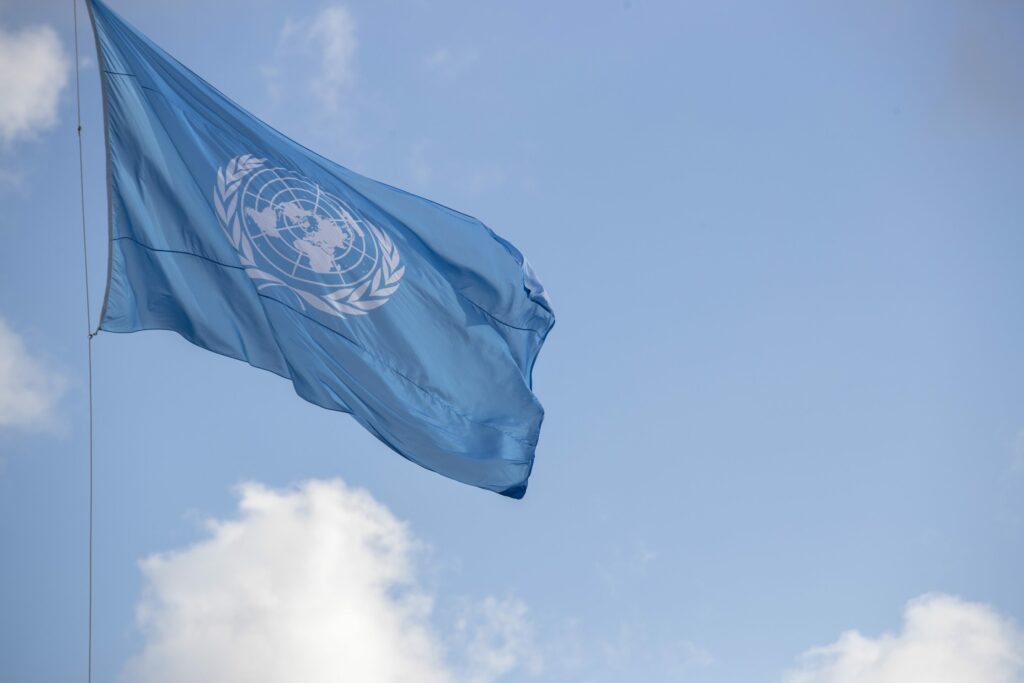
There remains a clear majority of MPs in our assemblies who believe in, and work for, the rule of law and international law. All Council of Europe member states and OSCE participating states remain bound by their obligations under international law, including the UN Charter. The principles enshrined in the Charter constitute the foundation of the international legal order and must be upheld consistently.
More than 50 years after the signing of the Helsinki Final Act, as the European Convention on Human Rights marks its 75th anniversary, and more than three decades after the fall of the Berlin Wall, let us renew a simple pledge: to make law our first resort, not our last; to protect civilians before politics; and to measure power by the capacity to uphold rights, not to override them.
The lesson of our time is that when law is selectively observed, no border, no institution and no society is truly safe. There can be no human rights without respect for international law — and there can be no lasting peace without both.
