
The political landscape of Brussels is undergoing a transformation that few would have predicted a year ago.
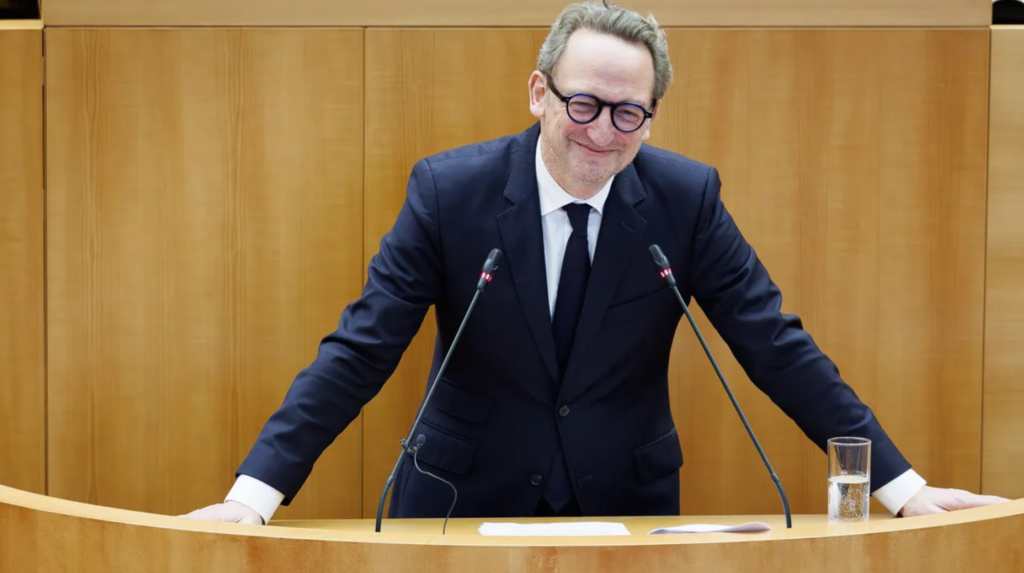
This is more so for those of us who have long championed sustainable mobility. With Boris Dilliès, the newly elected Minister-President, now framing cycling not as a competitor to the automobile but as a benefactor to it, we are witnessing a significant recalibration of urban discourse.
For the seasoned observer, this shift invites a dual reading. Is it a cynical political flip-flop, a calculated attempt to neutralise opposition? Or is it a genuine evolution toward political realism? That is the pragmatic recognition that in a dense, complex city like Brussels, the 'car-versus-bike' culture war has become a net negative for governance.
Whatever the reading, Dilliès’ rhetorical pivot is astute. By thanking cyclists for 'making space for drivers,' he has effectively dismantled the adversarial binary that paralysed the previous administration.
For those of us who are keen cyclists and have spent years fighting for protected lanes, this is, in many ways, a victory of normalisation. Cycling is no longer a niche, ideological pursuit. It is now recognised as a systemic necessity.
However, this 'Dilliès Consensus' leaves the traditional progressive and Green forces in a precarious, if not uncomfortable, position.
The dilemma for the Greens
For parties that have made pro-cycling infrastructure their raison d’être, having an opponent adopt your language and arguably, your policy trajectory, is disarming. It creates a 'success trap.'
When your primary political antagonist starts implementing the very measures you campaigned on, the traditional mechanisms of opposition begin to rust. If you continue to attack, you risk appearing dogmatic or obstructionist. If you remain silent, you lose your distinctive brand.
The Green movement in Brussels now faces a fundamental strategic inflection point. If the Minister-President is truly committed to this path, the 'activist' phase of policy-making for the Greens has reached its end. The Greens must now transition from being the architects of resistance to the guardians of implementation.
A strategy for the new era: Three pillars for the Greens
To remain relevant and influential in the new, 'pragmatic' Brussels, the Green movement must evolve its positioning:
First, the Greens should move the debate from 'why' to 'how.' The ideological debate on the necessity of cycling is largely won. The new battleground is delivery. The Greens should shift their focus to rigorous oversight, holding the government accountable for the technical quality, safety standards, and timelines of new infrastructure. If Dilliès is serious about his pragmatism, he will welcome this oversight. If he is not, the Greens become the essential 'quality control' for the city.
Second, they should redefine 'pragmatism' to include equity. Dilliès’ pragmatism focuses on traffic flow and commuter efficiency. The Greens should expand the definition of pragmatism to include social and spatial justice.
A truly pragmatic city is not just one that moves traffic efficiently. It is one that ensures mobility is inclusive of those who cannot afford a car and those who live in the most congested, polluted neighbourhoods. This provides a distinct 'value-add' dimension to the discourse that the current government’s efficiency-based narrative may overlook.
Finally, the Greens should claim the role of 'systemic architects.' Rather than fighting over individual lanes, they should position themselves as the designers of the next systemic leap: intermodal hubs, regional connectivity, and the integration of micro-mobility with public transport. By focusing on the system rather than the symptom, they can reclaim the role of visionaries.
Ultimately, the normalisation of cycling in Brussels is an achievement the Greens should claim, regardless of which party carries the banner. True political maturity lies in recognising that our ideas are stronger when they transcend party lines.
For the Greens, this is not a moment for mourning the loss of a battle. It is an invitation to elevate the war. The goal was never to win a partisan victory. The goal was to build a livable city. If the current administration is willing to help lay the bricks, the task of the Greens is not to tear the wall down, but to ensure it is built to last.
It is time for a new kind of opposition: one defined not by obstruction, but by a relentless commitment to the public good.
