

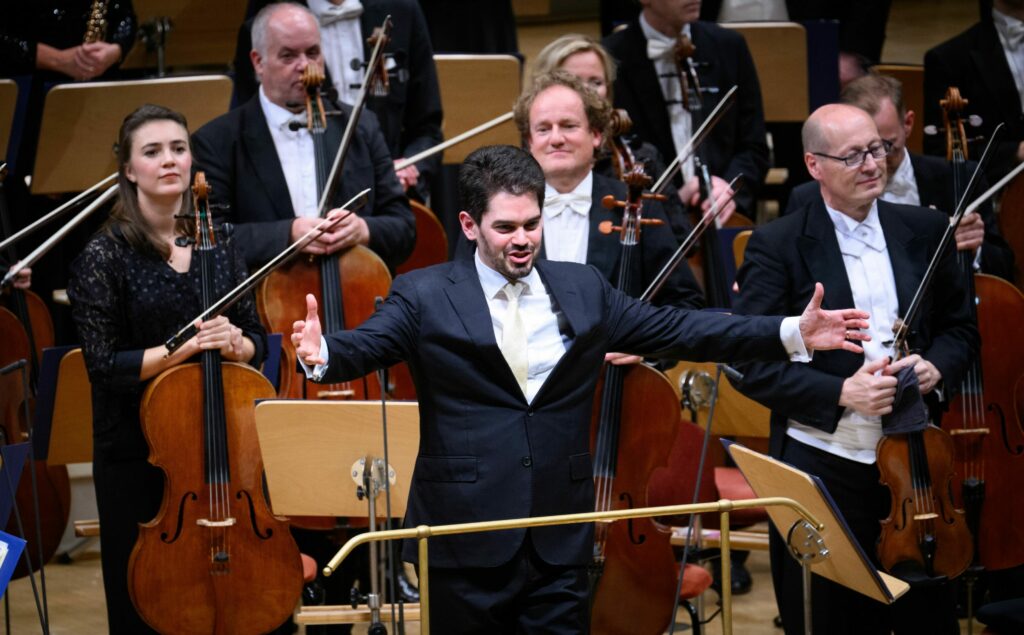
When culture becomes collateral in geopolitical disputes, do we lose our most effective tool for change?
This opinion editorial weighs the merits of the boycott against the enduring power of cultural diplomacy in a fragmented world.
In Brussels, where diplomacy is part of the city’s DNA, even a concert hall can become a stage for geopolitics. The recent call by the Flemish Greens to boycott Lahav Shani’s scheduled November performance at BOZAR has done exactly that. It has turned a future cultural event into a present political statement.
As a former Green councillor and lifelong supporter of the movement, I approach this moment with both empathy and reflection. New leadership rarely enjoys the luxury of easy first decisions. On this one, I admit to a quiet sense of relief: I am no longer in the room where such calls must be made. From a distance, one gains the privilege of reflection, and perhaps, perspective.
Truthfully, I might well have made the same call. But reflection invites a second question: is a boycott the most effective expression of Green values in an era where cultural diplomacy matters more than ever?
The instinct behind the boycott is clear and grounded in the Greens’ long-standing commitment to human rights and accountability. Cultural normalisation, the argument goes, should not proceed untouched by political reality. There is precedent for this thinking. The most notable is the role cultural boycotts played in isolating apartheid South Africa.
In that sense, the position is neither radical nor unexpected. It is consistent with a tradition of values-based politics. Yet consistency does not always guarantee effectiveness.
When culture carries more than politics
Cultural diplomacy operates differently from political diplomacy. It is quieter, less declaratory, but often more enduring. It is one of the few remaining spaces where individuals, not governments, encounter one another without preconditions.
A concert is not a communiqué. By calling for a boycott, we risk collapsing that distinction. The conductor is not the state. And cultural exchange, however imperfect, is not necessarily an endorsement of policy. When culture becomes collateral in geopolitical disputes, we may silence precisely those spaces where dialogue, fragile as they may, can still occur.
There is also a broader strategic concern. Europe’s global influence rests significantly on its openness, part of which is its ability to convene, host, and facilitate exchange. A reflex toward cultural exclusion, even when morally driven, may weaken that soft power advantage.
This is not a contest between right and wrong, but between approaches. Do we isolate to signal disapproval? Or engage to shape understanding?
The Greens, in this instance, have chosen isolation. It is a legitimate choice. But it is not the only one available to a political movement that has historically prided itself on innovation, not just in policy, but in method.
Expanding the options
There are ways to hold firm to principle without closing the space for engagement.
Allowing the performance to proceed, while embedding it in a broader programme of dialogue, could turn a contested event into a platform for reflection. Complementing it with parallel programming, amplifying Palestinian voices alongside Israeli ones, would add plurality rather than silence.
Encouraging artist-led collaborations or peace-oriented initiatives could go even further, using culture not as a fault line but as a bridge. And if pressure is the objective, it may be more effectively directed at political and economic levers, where responsibility is clearer and impact more direct.
Every new leader faces an early test. This may well be one for the Flemish Greens. The decision to call for a boycott speaks to conviction. But leadership also requires calibration. That is the ability to align principle with strategy.
If I may offer a quiet counsel as a co-Green:
Our strength has never been in choosing between principle and pragmatism, but in holding both in creative tension.
Keeping the door open
I began by admitting I might have made the same decision. Leadership demands action, often under pressure. But distance allows for a wider lens.
In a fragmented world, cultural diplomacy is not peripheral. It is one of the last remaining spaces where engagement is still possible without preconditions. To close it too quickly is to narrow the field of influence.
If politics is the art of the possible, then diplomacy, especially cultural diplomacy, is the art of keeping possibilities open. The question is not simply whether to boycott or not. It is whether we can respond in a way that is principled, strategic, and expansive.
That, perhaps, is the more Green answer.
