

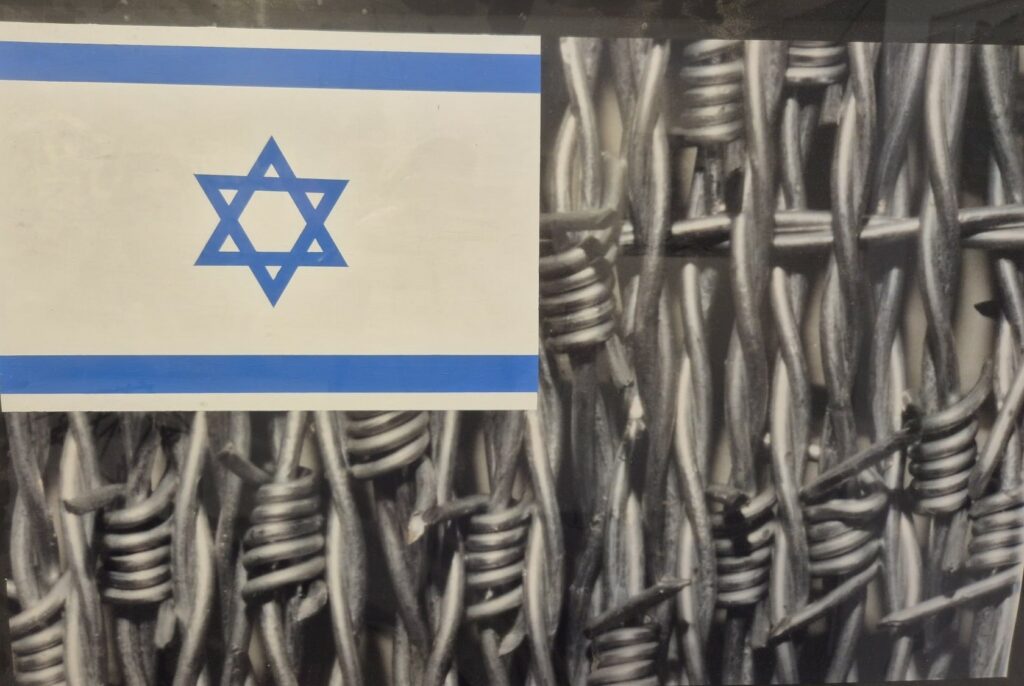
The upcoming elections in Israel were launched this week when a bill to dissolve the parliament was passed in its first reading.
By this Israel entered the most critical period in its history up to elections scheduled to take place in September or as planned in late October. Will Israel repeat the victory of the opposition party in the April elections in Hungary?
When Benjamin Netanyahu returned to power in 2022, his government used a Hungarian blueprint to ensure that he would not lose power again as Victor Orbán had done before him. But in contrast to him, Netanyahu had also another goal - the cancellation of the trial on charges of breach of trust, fraud, and bribery that has been going on against him for the past six years.
Victor Orbán came up with the Hungarian ‘protocol’. It transformed Hungary from a post-communist democratic state, which enjoyed the benefits of EU membership and its values, including a strong constitutional court, into an illiberal democracy state with a ‘hybrid regime’. His working method was to go first after the judges and then the media.
Surprisingly, Orbán, the leader of the Fidesz party, served as prime minister in parallel to Netanyahu. Since 2010, he worked to empty Hungarian democracy of its content. He concentrated the powers of the regime in his own hands, turned the parliament into a rubber stamp, and changed the constitution and the method of appointing judges so that the only criterion would be loyalty.
He also worked to neutralize free media. The public broadcasting corporation, media channels and billboard advertising were taken over by his cronies. Journalists were persecuted and prevented all access to information.
Orbán also focused on persecuting civil society organizations, defining them as ‘foreign agents’, and carrying out campaigns against philanthropists like George Soros. He persecuted the LGBTQ+ population and tried to outlaw the Pride Parade under the pretext of protecting children.
He did all this through legislative changes and the application of emergency orders during the COVID pandemic. Election laws were changed so that democracy would be dismantled ‘according to law’. The changes resulted in a ‘hybrid regime’.
On paper, the democratic institutions continued to exist but were emptied of independent gatekeepers and the checks and balances of a liberal democracy. These steps distanced Hungary from the rest of the EU. They prompted sanctions and court rulings that led to the suspension of billions of euros in EU funding.
Democratic backsliding in Israel
In Israel, the dismantling of democratic checks and balances was done in record time without the countermeasures that are in place against EU Member States that are going through a process of democratic backsliding.
In early January 2023, the Minister of Justice, Yariv Levin, launched a plan to implement a judicial coup d'état in Israel. This was the official date of the beginning of a sinister plan which not had been discussed in the elections in November 2022. The elections led to Netanyahu’s re-election and the formation of the most far-right government in Israel’s history.
From that pivotal moment, the Israeli government imitated and worked according to the Hungarian blueprint. First, it acted to undermine the independence of the judicial system through changing the composition of the committee for selecting judges, replacing independent gatekeepers in the ministries with political appointments, and promoting bills inspired by the Orbán administration in various areas.
The close ties between Netanyahu and Orbán included government ministers and were never hidden. Members of the Israeli coalition government travelled to Hungary for both diplomatic visits and visits to research institutes established by Orbán’s administration, such as the Danube Institute, the Center for Fundamental Rights, and the Conservative Political Action Conference (CPAC).
But unlike the Hungarian public, which was surprised by Orban's moves, the Israeli public had a distinct advantage - it knew what awaited it. The Israeli public also learned from Hungary. The Israeli government, which had noticed that the demonstrations in Hungary had faded quickly, did not expect the Israeli public to fight the judicial ‘reforms’ for almost three and a half years.
From the very start, human rights defenders and lawyers were quick to warn the Israeli public of what was to come. Following the excellent advocacy work of civil society organizations, the largest protest movement ever to exist in Israel arose.
The protest movement that took form after 7th of October 2023 became a civil platform for assistance to the public and continues until this day to fight the government's attempts to implement the judicial coup d'état while the wars drag on. Civil society participates actively in the legislative procedures in the Parliament (Knesset) and continues to demonstrate in the streets.
A repeat of the Hungarian victory
In April, the Israeli public watched with strong emotions the sweeping victory of The Respect and Freedom Party (Tisza). We shed a tear of excitement at the sight of the joy of the Hungarian public. But also, deep concerns flooded our hearts - can we also bring about change in Israel?
Can we also get rid of a government imbued with criminal norms that repeatedly seeks to break away from the rule of law and includes incompetent cronies? A government that brought the greatest disaster in the history of the country and on which watch 250 citizens were taken captives by a terrorist organisation. A prime minister who puts his political survival above the interest of the country.
The dismantling of a liberal democratic regime is done by undermining democratic institutions in the same order, but the reasons for each country are different.
In Hungary, the elections were about the character of the country. Will Hungary be a protégé of Russia, a corrupt and poor ‘mafia state,’ or a true and reliable partner in the EU which advocates the rule of law, media freedom and flourishes economically through EU funding and the internal market?
The spectacular victory in Hungary marks the way forward. Hungarians were tired of corruption. They wanted a prosperous and Western state based on the rule of law. Péter Magyar achieved the almost unbelievable. He defeated Orbán within the rules that Orbán himself had created, thanks to the support of civil society and the focus on the goal - regime change.
Saving Israel’s future
The elections in Israel will decide whether the country will be a country for all its citizens and a state governed by the rule of law. With an independent police force that serves all its citizens, fighting the rampant crime wave of killings in the Arab society.
With a new government striving for global humanitarian values instead of racism and violent messianism. Upholding fundamental rights, non-politicization of the public sector, eradicating corruption, preserving press freedom, protecting gatekeepers and enabling civil society. And of course, a government which will establish an independent state investigation commission into the disaster of 7th October.
So, without the EU and the promise of economic support, what can Israel learn from Hungary? The islands of Tisza! These discussion groups, part of civil society, operated every day in local communities across Hungary. They conducted extensive campaigns in favor of the opposition and higher voter turnout, persuading new voters to vote for change.
Civil society in Israel, which already is well organized and has vast experience of protests against the government, must focus its work on one goal: replacing Netanyahu’s regime and returning Israel to a liberal-democratic country which would regain the respect of the world. It must create ‘islands of change’, sending messages that will appeal to the widest possible audience among Jewish and Arab citizens.
And what about Israel’s future after the elections? The pre-election concerns were evident on the faces of the Hungarians. Their looks of concern have been replaced by looks of hope, but also of uncertainty. Magyar did not elaborate on his precise plans for the restoration of liberal democracy. But he promised to clean up government corruption and restore the independence of the judiciary and media freedom.
Likewise in Israel, the Israeli public needs to invest its strength in replacing the Netanyahu government by a government which pursuits peaceful political solutions to the conflicts with the Palestinians and the neighbouring countries while respecting international and humanitarian law. This will certainly strengthen Israel's position in the world and improve its relations with the EU.
Securing cooperation in all fields and preserving the EU-Israel Association Agreement will benefit both sides. A constructive partnership with the Arab political parties will almost certainly guarantee victory in the elections while changing society's attitude towards Israeli Arabs. What is certain is that removing Netanyahu from power, a triply indicted prime-minister, will bring about the necessary and long overdue change.
